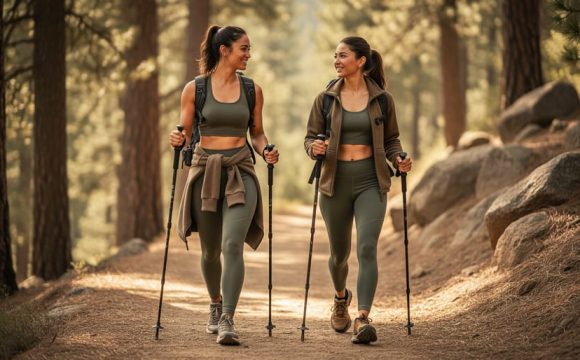
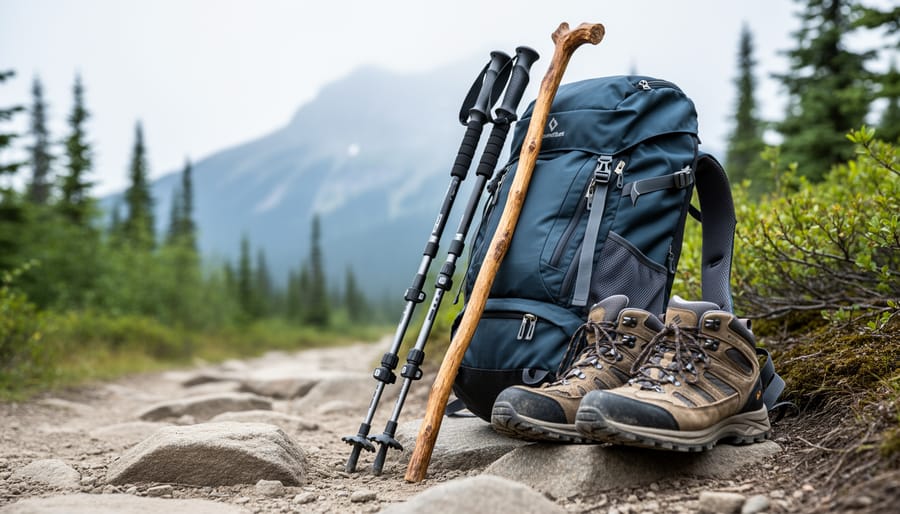

For most hikers tackling Canadian trails, adjustable trekking poles win out over traditional hiking sticks because they adapt to steep terrain changes, creek crossings, and the varied elevation profiles that define our backcountry routes. Trekking poles offer precision height adjustment and shock-absorbing features that traditional wooden or fixed-length sticks can’t match, making them the smarter choice for anyone exploring everything from the Rockies to the Canadian Shield.
That said, traditional hiking sticks still hold appeal for purists who value simplicity and prefer a single sturdy companion on well-groomed paths. The decision ultimately comes down to where you hike, how technical your routes are, and whether you prioritize packability or timeless reliability.
The confusion between these two tools is understandable. Both provide balance and reduce strain on your knees and joints, particularly during long descents. Research shows that poles can lessen the chances of an accidental fall and reduce impact on your legs, joints, feet, and back. But the differences in design, adjustability, and intended use create distinct experiences on the trail.
Modern trekking poles have evolved into sophisticated pieces of gear. Brands like Black Diamond, MSR, and Leki now offer models with telescoping shafts, interchangeable tips, and materials ranging from durable aluminum to featherweight carbon fiber that focuses on pack weight reduction. The Black Diamond Trail Back, for example, delivers versatile adjustability at a more accessible price point than premium models, while the Leki Legacy Lite emphasizes lightweight dependability for fast-and-light enthusiasts.
Understanding which tool suits your hiking style will help you plan your hiking trip with confidence and tackle Canadian trails more comfortably, whether you’re navigating rocky scrambles in Banff or cruising coastal paths in Newfoundland.
Quick Comparison: At a Glance
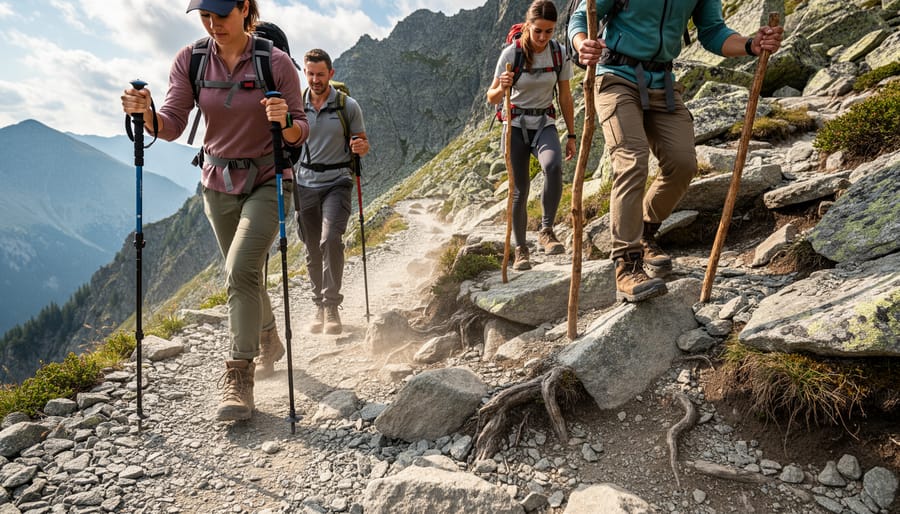
Choosing between hiking sticks and trekking poles comes down to what you value most: simplicity or versatility. Traditional hiking sticks offer a no-fuss, single-piece design that appeals to purists and casual walkers, while modern trekking poles bring adjustability and performance features that serious hikers depend on for varied Canadian terrain.
| Feature | Hiking Sticks | Trekking Poles |
|---|---|---|
| Adjustability | Fixed length | Adjustable height for terrain changes |
| Weight Range | Varies widely; often heavier | Lightweight options available; carbon fiber models reduce pack weight significantly |
| Materials | Wood, bamboo, or basic metal | Aluminum or carbon fiber with ergonomic grips |
| Price Range | $20-$60 | $30-$200+ depending on features |
| Packability | Not collapsible; full-length carry | Foldable or telescoping designs for compact storage |
| Best For | Day hikes on gentle trails, traditionalists | Backcountry trips, steep terrain, varied conditions |
The price spectrum reflects this divide. Affordable foldable options like the Trekology Trek-Z 2.0 target casual users who want basic pole functionality without premium costs. Mid-range choices like the Black Diamond Trail Back deliver durable aluminum construction with good adjustability at prices below top-tier models. Lightweight options such as the Leki Legacy Lite focus on dependability without excess weight, while specialized models like the MSR DynaLock Ascent Carbon combine a comfortable grip with compact, ergonomic design and versatility for demanding conditions.
For Canadian trails specifically, trekking poles shine when you’re tackling elevation changes, crossing streams, or navigating rocky terrain where poles can lessen fall risk and reduce strain on your legs, joints, and back. Hiking sticks work fine for flat forest paths or shoreline walks where you won’t need length adjustments.
What Hiking Sticks and Trekking Poles Actually Are
Traditional Hiking Sticks Explained
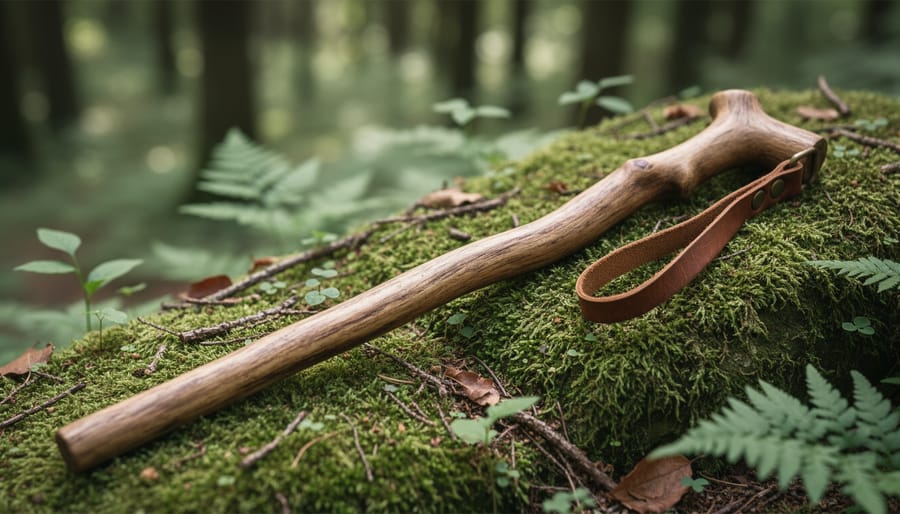
Traditional hiking sticks represent the original form of trail support, dating back centuries to when shepherds and travelers relied on sturdy wooden staffs for stability. Unlike modern trekking poles, these are fixed-length tools with a straightforward one-piece construction that requires no adjustment mechanisms or moving parts.
Most hiking sticks are carved from hardwoods like ash, hickory, or oak, chosen for their natural strength and ability to absorb shock. The classic design features a simple handle at the top, often just the natural curve of the wood or a basic carved grip, and typically includes a rubber or metal tip at the base for traction. Some modern versions use single-piece aluminum or composite materials, but they maintain the same fixed-length philosophy.
The simplicity is the point. There are no collapsing sections to maintain, no locks to worry about failing on the trail, and no complicated features to master. You grab your stick and go. This makes them appealing for casual day hikers who stick to familiar trails and don’t need length adjustment for varied terrain. They’re reliable on flat to moderately rolling paths where a consistent height works throughout the hike, and they carry a traditional aesthetic that some hikers simply prefer over technical gear.
Modern Trekking Poles Explained
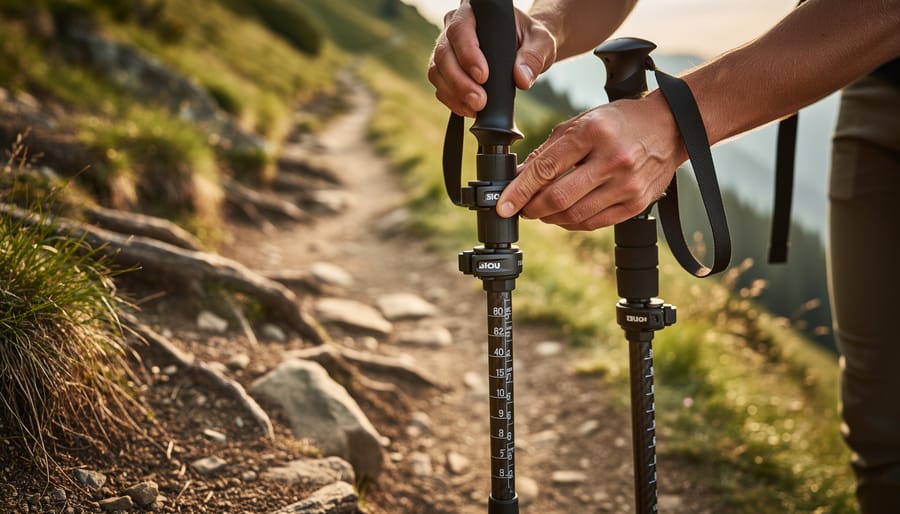
Modern trekking poles represent a significant evolution in hiking support technology, engineered specifically to handle the demands of backcountry terrain. Unlike their fixed-length predecessors, these poles feature adjustable shafts that let you modify the length on the fly, shorter for steep climbs, longer for descents, and customized to your exact height for flat sections. This adaptability makes them particularly valuable on Canadian trails where elevation changes can be dramatic.
The engineering behind contemporary poles focuses on two key innovations: materials and packability. You’ll find options in durable aluminum, like the Black Diamond Trail Back, which offers good adjustability and costs less than premium models while maintaining solid performance. For weight-conscious hikers, carbon fiber poles deliver specialized pack weight reduction, with some models weighing about four ounces less per pair than aluminum alternatives. The Leki Legacy Lite exemplifies this lightweight, dependable approach.
Collapsible designs have transformed how hikers carry poles when not in use. Foldable models like the Trekology Trek-Z 2.0, aimed at casual users seeking affordable options, collapse into compact packages that fit inside or strap to backpacks. The MSR DynaLock Ascent Carbon takes this further with its ergonomic, compact design paired with a comfortable grip that reduces hand fatigue on long treks.
These features combine to address a critical function: poles lessen the chances of accidental falls while reducing strain, fatigue, and impact on your legs, joints, feet, back, and body. That mechanical advantage explains why adjustable trekking poles have become the standard choice for serious backcountry hiking.
Head-to-Head: Comparing Key Features
Adjustability and Versatility
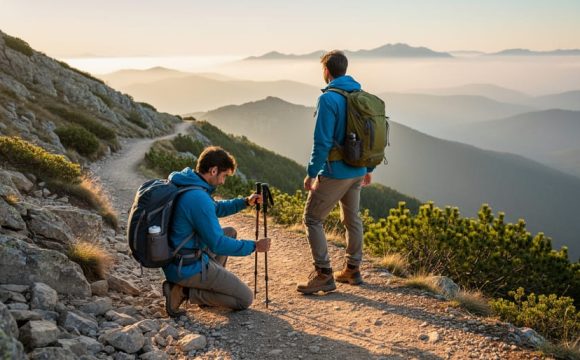
Trekking poles win on adaptability because you can dial in the perfect length for the terrain beneath your feet. When you’re climbing a steep pitch or navigating tight switchbacks on a mountain trail, you shorten the poles for better leverage and balance. Hit a descent and you lengthen them to reduce impact on your knees and maintain control on loose gravel or rock. The Black Diamond Trail Back offers this kind of adjustability at a price point below premium models, making it accessible for hikers who tackle varied Canadian routes. For those wanting maximum versatility, the MSR DynaLock Ascent Carbon combines length adjustment with an ergonomic, compact design that handles everything from prairie paths to alpine scrambles.
Traditional hiking sticks can’t match this on-the-fly tuning. They’re fixed at one length, which means you’re locked into that height whether you’re ascending a boulder field or crossing flat tundra. That works fine if your trails don’t change much, but Canadian hiking rarely stays that predictable.
Weight and Materials
Modern trekking poles typically use aluminum or carbon fiber construction, while traditional hiking sticks often feature wood or single-piece materials. The material choice directly impacts your pack weight on Canadian trails. Carbon fiber poles offer the most significant weight savings, roughly 4 ounces lighter per pair compared to aluminum equivalents. For backpackers counting every ounce, carbon fiber lightweight trekking poles focus specifically on pack weight reduction, making them ideal for multi-day trips through the Rockies or backcountry routes.
Aluminum poles strike a balance between durability and reasonable weight. The Black Diamond Trail Back exemplifies this approach with versatile, durable aluminum construction that handles rugged terrain without the premium price tag of carbon models. For hikers prioritizing dependability without excess weight, options like the Leki Legacy Lite deliver lightweight performance you can trust on demanding trails.
Traditional wooden hiking sticks weigh more but appeal to those who value simplicity and classic aesthetics over cutting-edge materials. Your choice ultimately depends on whether you’re willing to pay more (and handle poles more carefully) for weight savings, or prefer robust aluminum that tolerates rougher treatment.
Packability and Travel Convenience
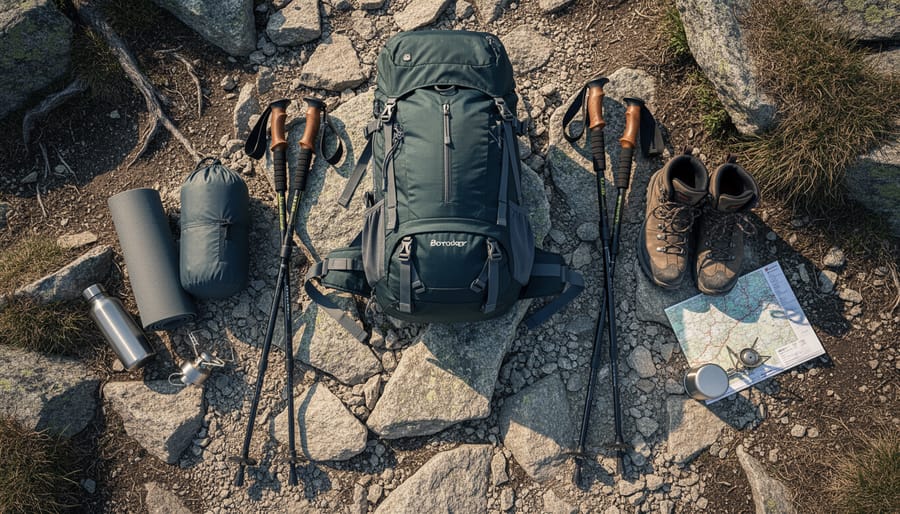
Foldable trekking poles transform into surprisingly small packages, making them the clear winner for travel and storage. The Trekology Trek-Z 2.0 collapses down to fit inside a backpack’s side pocket or even a checked suitcase, perfect for hikers flying to trailheads across Canada. These folding poles are most compact often shrinking to 15 inches or less. The MSR DynaLock Ascent Carbon takes this further with an ergonomic design that balances compactness with comfortable handling.
Traditional hiking sticks, by contrast, remain their full length regardless of whether you’re using them. A 48-inch stick stays 48 inches when you’re driving to the trailhead, stowing gear at camp, or trying to fit it in a car trunk alongside other equipment. They work fine if you hike close to home and don’t mind the extra bulk, but they’re impractical for airline travel or tight storage spaces.
Grip Comfort and Ergonomics
Modern trekking poles typically feature multi-density foam grips that mold to your hand over time, with extended sections below the main grip for quick hand repositioning on steep terrain. The MSR DynaLock Ascent Carbon exemplifies this approach with its comfy grip and ergonomic design that reduces hand fatigue during long descents. Traditional hiking sticks, by contrast, usually offer simple rounded handles in wood or basic rubber, which work fine for short outings but can create pressure points and blisters on multi-day Canadian backpacking trips.
The difference becomes obvious after eight hours on the trail. Ergonomic pole grips distribute pressure across your palm and include wrist straps that let you push down without gripping tightly, preserving hand strength for camp tasks. Traditional stick handles require a firm grip throughout your hike, leading to forearm fatigue and reduced circulation in cold weather. For anyone tackling the West Coast Trail or multi-day Rockies routes, that comfort advantage translates to better performance and less recovery time.
Durability and Stability
Modern aluminum trekking poles consistently outlast traditional wooden sticks in real-world trail conditions. Poles like the Black Diamond Trail Back use aircraft-grade aluminum that withstands repeated impacts against rocks, river crossings, and temperature swings without warping or splintering. Wood sticks, while aesthetically appealing, can crack in cold Canadian winters, absorb moisture during wet-season hikes, and develop weak points over time.
The stability advantage matters more than durability for most hikers. Trekking poles provide two additional points of contact with the ground, creating a stable four-point stance that noticeably reduces fall risk on loose scree, stream crossings, and mud-slicked trail sections. This four-point stability also reduces strain and impact on your legs and joints by distributing your body weight across the poles rather than forcing your knees to absorb every step down a rocky descent.
Traditional sticks offer one contact point, which helps with balance but doesn’t transform your stability the way dual poles do. That single-point support works fine on maintained trails with minimal elevation change, but becomes a limitation when technical terrain demands precise foot placement.
Price Points and Value
Trekking poles span a wide price range that typically reflects features and materials. Budget-friendly options like the Trekology Trek-Z 2.0 target casual users who want basic functionality without a major investment, making them accessible entry points for occasional hikers testing whether poles work for their style. Mid-range aluminum models like the Black Diamond Trail Back deliver solid performance, good adjustability, and durability at a cost below premium poles, often the sweet spot for regular Canadian trail users who need reliable gear without overspending.
Premium poles command higher prices through specialized materials and engineering. Carbon fiber models focus on pack weight reduction for ultralight enthusiasts, though they typically cost more than their aluminum counterparts. Traditional hiking sticks usually fall at the budget end of the spectrum, especially simple wood or fixed-length designs. When evaluating value, consider how often you’ll use the tool and the terrain you’ll tackle: a $40 pair might suit weekend walks, while serious backcountry mileage justifies investing in features that genuinely enhance comfort and reduce joint strain over thousands of steps.
Who Should Choose Hiking Sticks
Traditional hiking sticks remain the better choice for certain hikers and trail situations, even as adjustable trekking poles dominate the market. If you value simplicity over features or prefer the aesthetic and feel of a classic wood stick on your favorite local trails, the traditional approach still delivers.
Hiking sticks work particularly well for:
- Casual day hikers on familiar, relatively flat trails who don’t need length adjustment
- Those who prefer minimalist gear without moving parts, locks, or mechanisms to maintain
- Traditionalists who appreciate the connection to hiking’s heritage and the natural feel of wood
- Budget-conscious beginners testing whether they’ll actually use a hiking aid before investing in premium poles
- Hikers who consistently tackle similar terrain where a fixed length provides adequate support
If your typical outing involves short loops through provincial parks or gentle woodland trails where the elevation barely changes, a single hiking stick offers enough stability without the complexity of adjustable poles. The fixed length becomes a non-issue when you’re not constantly shifting between steep climbs and descents.
Hiking sticks also suit those who dislike fiddling with equipment. There’s no adjusting, no locking mechanisms to check, and no concern about a pole collapsing mid-stride. You grab your stick, hit the trail, and that’s it. For hikers who view their gear as tools rather than technology, this straightforward approach feels right.
Who Should Choose Trekking Poles
Trekking poles shine for hikers who demand versatility and performance across Canada’s diverse backcountry. If you’re logging serious mileage with a heavy pack, the strain-reducing benefits become non-negotiable, poles can lessen the chances of an accidental fall and reduce fatigue and impact on your legs, joints, feet, back, and body. That protection matters even more when you’re carrying 30-plus pounds over multi-day routes through the Rockies or coastal ranges.
Adjustable poles like the Black Diamond Trail Back or MSR DynaLock Ascent Carbon adapt instantly to steep climbs, river crossings, and flat stretches, giving you control that fixed sticks can’t match. The MSR’s comfy grip and compact, ergonomic design make long days more bearable, while its versatility handles everything from scree fields to muddy approaches. For weight-conscious backpackers, carbon fiber lightweight trekking poles deliver specialized pack weight reduction, typically about four ounces lighter per pair, without sacrificing strength.
Trekking poles make the most sense for:
- Serious backpackers carrying heavy loads over multiple days
- Hikers tackling varied terrain, from mountain passes to prairie trails
- Anyone with knee, hip, or ankle concerns who needs joint protection
- Travelers who value packability, foldable options like the Trekology Trek-Z 2.0 compress into small bundles for flights or road trips
- Trail runners and fast-packers who want lightweight, dependable support like the Leki Legacy Lite
The upfront cost runs higher than basic sticks, but the performance gap justifies the investment if you’re hitting the trails regularly or pushing into remote terrain where stability and fall prevention become safety essentials.
Dimension-by-Dimension Comparison
When you’re building out your list of hiking essentials for Canadian trails, understanding how hiking sticks and trekking poles stack up across critical dimensions helps you make the right choice.
Terrain Adaptability: Trekking poles win decisively here. Their adjustable length lets you shorten them for steep ascents and lengthen them for descents, while fixed hiking sticks lock you into one height regardless of trail conditions. On multi-day routes through varied Canadian landscapes, that flexibility proves invaluable.
Weight Savings: Carbon fiber trekking poles edge out traditional sticks by roughly 4 ounces per pair. The Leki Legacy Lite exemplifies this lightweight approach, though quality aluminum options like the Black Diamond Trail Back sacrifice minimal weight while offering excellent durability. Traditional wooden sticks typically weigh more and offer no pack-weight advantage.
Joint Protection: Both reduce impact, but trekking poles distribute strain more effectively across your upper body. They lessen the chances of falls and minimize fatigue on your legs, joints, and back during long descents, critical for aging knees on rocky Canadian shield terrain.
Travel Convenience: Foldable models like the Trekology Trek-Z 2.0 collapse into compact packages that fit inside backpacks, while hiking sticks remain full-length whether you’re using them or not. For fly-in backcountry trips, this difference matters significantly.
Hiking Sticks vs Trekking Poles Terms to Know
- Adjustability Range
- The ability to change pole length to match terrain, typically from around 24 to 55 inches on trekking poles, while hiking sticks remain fixed at one height. This feature lets you shorten poles for uphill climbs and extend them for descents.
- Basket Types
- Interchangeable attachments at the pole tip that prevent sinking into soft ground, with smaller baskets for packed trails and larger snow baskets for winter conditions. Most hiking sticks come with a single fixed basket or none at all.
- Shock Absorption
- Internal spring mechanisms in some trekking poles that reduce impact on joints during downhill hiking, though they add weight and aren’t necessary for everyone. Traditional hiking sticks rely on natural flex in the material for minimal cushioning.
- Locking Mechanisms
- The systems that secure adjustable pole sections in place, including twist locks, lever locks, and external clamps that vary in reliability and ease of use. Quality locking prevents dangerous pole collapse mid-stride on technical terrain.
- Carbide Tips
- Hardened metal points on pole ends designed to grip rock, ice, and hard-packed trails without wearing down quickly. Rubber tip covers protect these sharp points during storage and reduce noise on pavement.
Understanding these technical elements helps you evaluate features beyond basic comparisons. When you’re gearing up for challenging Canadian backcountry routes, knowing which specifications actually matter for your hiking style prevents overspending on unnecessary features. Pack your hiking first aid kit alongside whichever support option you choose, since proper preparation extends beyond just selecting the right poles or sticks for your adventure.
Common Questions About Choosing Between Sticks and Poles
Do I really need adjustable trekking poles, or will fixed-length hiking sticks work fine?
Adjustability matters most if you tackle varied terrain with steep climbs and descents, where shortening poles for uphill and lengthening them for downhill improves balance and reduces strain. Fixed-length sticks work well for relatively flat or gently rolling trails where you won’t need to adjust height frequently.
Are carbon fiber poles worth the extra cost compared to aluminum?
Carbon fiber poles can save about 4 ounces per pair and absorb vibration better, which makes a noticeable difference on long-distance hikes or backpacking trips where every ounce matters. For casual day hikers or those on a budget, durable aluminum options like the Black Diamond Trail Back deliver excellent performance at lower cost.
Can complete beginners start with simple hiking sticks instead of poles?
Absolutely, beginners often appreciate the simplicity of fixed hiking sticks since there’s nothing to adjust or configure. That said, affordable foldable poles like the Trekology Trek-Z 2.0 are designed specifically for casual users and offer more versatility as your hiking ambitions grow.
How much do trekking poles actually reduce fatigue and fall risk on Canadian trails?
Trekking poles can lessen the chances of an accidental fall and reduce strain, fatigue, and impact on legs, joints, feet, back, and body, which proves especially valuable on rocky or uneven terrain common across Canadian trails. The difference becomes most apparent during multi-day backcountry trips or when carrying a heavy pack.
Choosing the right support gear for your hikes ties into broader trail preparedness. If you’re planning multi-day excursions where poles will carry extra importance, reviewing general camping safety tips ensures you’re ready for the full range of backcountry conditions. The stability benefits of poles complement other safety measures, creating a more secure overall hiking experience.
Remember that personal preference plays a significant role in this decision. Some hikers never warm up to poles despite their technical advantages, while others find them indispensable from their very first trail. If possible, borrow or rent both options before committing to a purchase, especially if you’re investing in premium models.
For most Canadian hikers tackling varied terrain, from Rocky Mountain switchbacks to Ontario’s rocky Canadian Shield trails, trekking poles deliver clear advantages. Their adjustability handles steep climbs and descents better, while features like ergonomic grips and lightweight materials reduce fatigue on long backcountry trips. The ability to fold or collapse poles into a pack makes them practical for multi-modal adventures involving canoe portages or scrambling sections where you need your hands free.
That said, hiking sticks haven’t disappeared for good reason. If you stick to gentle day hikes on established trails, prefer the simplicity of grab-and-go gear, or simply enjoy the traditional feel of a solid wooden staff, they’ll serve you perfectly well without the complexity or cost of adjustable poles.
Your choice comes down to three factors: the terrain you actually hike, how often you’re on the trail, and what you’re willing to spend. Frequent hikers covering diverse Canadian landscapes will appreciate what poles offer. Weekend warriors on familiar routes might find a quality hiking stick does everything they need. Either way, both options beat going unsupported when the trail gets steep or slippery.