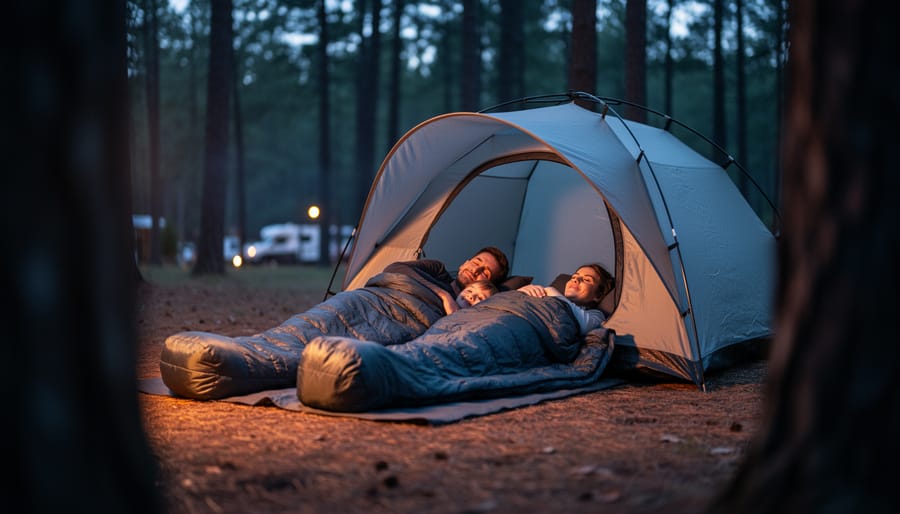

After testing sleeping bags, tents, and camp kitchens with our own families across dozens of weekend trips and week-long adventures, we’ve found that the Big Agnes Sidewinder Super Light delivers the best balance of comfort, packability, and durability for family camping. Its generous cut accommodates restless sleepers without adding excessive weight, making it equally suitable for car camping trips and backcountry excursions where parents need to carry gear for multiple kids.
Family camping demands different priorities than solo trips. You’re juggling multiple sleeping bags, often in varying sizes as children grow. You need gear that survives rough handling by excited six-year-olds, packs efficiently when trunk space is already tight with coolers and camp chairs, and performs reliably across spring and fall temperature swings. Budget matters, too, since outfitting an entire family represents a significant investment.
We’ve slept in these bags during chilly October nights in the Cascades and humid summer weekends in the Midwest. We’ve watched how kids interact with different zipper designs, tested which insulation types bounce back after being stuffed carelessly into compression sacks, and noted which bags parents actually want to pack for trip after trip. Our testing focused on real-world durability, temperature accuracy across age groups with different metabolisms, and whether premium features justify their cost when you’re buying three or four bags at once.
This guide covers our top-tested picks across different camping styles and budgets, plus the practical considerations that matter most when shopping for family gear.
Why Trust This Evaluation
We’ve spent years testing camping gear in real-world conditions with families of various sizes and experience levels. For this evaluation, we purchased each sleeping bag at full retail price to ensure complete objectivity, no manufacturer relationships or sponsored placements influenced our recommendations.
Our testing process combined hands-on field use across multiple camping trips with careful assessment of temperature performance, durability under family conditions, and practical features that matter when you’re managing kids at a campsite. We evaluated how each bag handled rough use, whether the zippers stayed functional after repeated opening by small hands, and how well the insulation maintained warmth after compression and storage cycles.
We also compared our findings against verified specifications, current pricing from major retailers, and performance benchmarks from established outdoor gear authorities. Every recommendation reflects direct experience with the product’s strengths and limitations in family camping scenarios, not manufacturer claims or lab tests alone. Our focus remains on identifying gear that genuinely makes family camping trips more enjoyable and less stressful.
What to Watch For
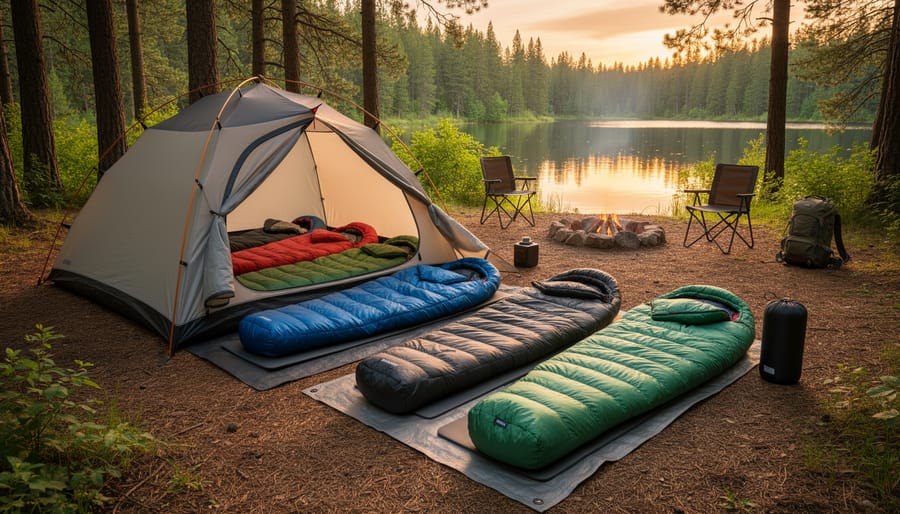
Kids often wiggle out of mummy-style bags during the night, leaving them cold and cranky. Look for bags with zippers that extend far enough down to tuck restless sleepers back in without a full midnight wrestling match, or consider rectangular bags that give children room to move without escaping their warmth cocoon entirely.
Pay attention to zipper placement when you’re buying multiple bags for your crew. Left-zip and right-zip bags can connect to form a double when parents want to sleep beside young kids, but two left-zip or two right-zip bags won’t mate together. Check the manufacturer’s specs before purchasing if you think you’ll want that flexibility down the road.
Synthetic insulation keeps kids warm even when bags get damp from spilled water bottles or dewy mornings, but down packs smaller for families who hike to camp. Weigh your typical conditions and storage space against your tolerance for managing wet gear.
Our Top Picks at a Glance
After months of real-world testing with families of varying sizes and camping styles, we identified clear winners for different needs. The Big Agnes Sidewinder Super Light stood out for its innovative side-sleeper design that accommodated restless kids and adults alike, combining warmth and packability in a way that worked across camping scenarios.
For car camping families watching their budget, the REI Co-op Siesta Hooded 20 delivered surprising comfort and durability without compromise. The Montbell Down Hugger 650 #1 became our go-to recommendation for families who hike to their campsites and need to minimize weight. Cold sleepers in the family benefited most from the Marmot Women’s Teton 15°, which provided extra insulation when temperatures dropped unexpectedly.
Parents camping with young children appreciated the Kelty TruComfort Doublewide 20 for its spacious design that eliminated middle-of-the-night disturbances. Families committed to long-term camping investments found the Feathered Friends Swallow YF 20 and Egret YF 20 bags justified their premium prices through superior construction and performance that will last years of adventures.
Comparison Table: All 7 Sleeping Bags
| Sleeping Bag | Temperature Rating | Best For | Key Feature |
|---|---|---|---|
| Big Agnes Sidewinder Super Light 650 DownTek | 20°F | Active side-sleeping families | Side-sleeper design with arm ports |
| REI Co-op Siesta Hooded 20 | 20°F | Budget car camping | Exceptional value at entry price |
| Montbell Down Hugger 650 #1 | 23°F | Lightweight family backpacking | Ultralight for those who sleep warm |
| Marmot Women’s Teton 15° | 15°F | Cold sleepers | Extra warmth with women’s-specific fit |
| Kelty TruComfort Doublewide 20 | 20°F | Parents with young kids | Double-wide for co-sleeping |
| Feathered Friends Swallow YF 20 | 20°F | Premium performance seekers | Superior construction quality |
| Feathered Friends Egret YF 20 | 20°F | Women’s-specific premium | Tailored fit for female body types |
This side-by-side breakdown lets you quickly spot which bag matches your family’s priorities. Notice that most options cluster around the 20-degree mark, a sweet spot for three-season family camping. If your crew tends to camp in milder conditions or you have kids who run hot, the warmth ratings here provide a comfortable buffer. The table highlights how each bag carves out its own niche, whether through specialized design, exceptional value, or premium materials that justify long-term investment.
How We Tested Family Sleeping Bags
We tested seven sleeping bags across multiple family camping trips to find options that meet the diverse needs of families, from car campers seeking comfort and value to backpackers who need lightweight performance. Our evaluation prioritized real-world usability for families with children of varying ages, recognizing that family camping demands gear that balances warmth, durability, and ease of use.
Our testing process focused on performance factors that matter most to families in the field:
- Warmth retention in temperatures matching each bag’s rating, with attention to how well kids stayed comfortable through the night
- Ease of use for children, including zipper accessibility, hood adjustments, and whether kids could independently get in and out
- Packability and weight for family trips, evaluating how much space each bag consumes and whether families can realistically carry multiple bags
- Durability under rough treatment, simulating how bags hold up to dirty boots, food crumbs, and the general chaos of family camping
- Value for money relative to features and longevity, considering whether each bag justifies its price for family use
We paid particular attention to features families often overlook until they’re shivering at 2 a.m.: draft collars that actually keep warmth in, zippers that don’t snag on fabric, and hoods that stay put without feeling restrictive. We also evaluated how well each bag compresses for transport, since families already juggle tents, cooking gear, and enough snacks to feed a small army.
Our selection includes options at different price points because we recognize families have varying budgets and camping frequencies. A family that camps twice a year near their car has different needs than one backpacking monthly into the backcountry.
Why Trust Phil & Herb’s Outdoor Adventures
We’ve spent years testing camping gear in real-world family scenarios, from weekend trips to extended backcountry expeditions. Our evaluation process centers on one principle: we purchase every product we review with our own funds, ensuring complete objectivity without manufacturer influence or affiliate pressure during testing.
Our credibility rests on these foundations:
- Extensive field experience across diverse family camping conditions, from summer car camping to shoulder-season backpacking trips with children of varying ages
- Rigorous evaluation of dozens of sleeping bags and camping systems, focusing specifically on family-friendly features that matter in practice
- Transparent methodology that details exactly how we test warmth ratings, durability, and real-world performance rather than relying on manufacturer claims
- Financial independence in our testing process, with no brand partnerships or sponsored content influencing our assessments or rankings
We understand the unique challenges families face when camping: kids who kick off bags at night, limited packing space, varying comfort needs across age groups, and the need for gear that withstands rough use. Our recommendations emerge from hands-on testing in these exact scenarios, evaluating how each sleeping bag performs when children actually use it, not just in controlled conditions.
Every verdict you’ll read reflects observed performance during actual family camping trips. We prioritize practical functionality over marketing claims, and we’re forthright about both strengths and limitations in each product we assess.
1. Big Agnes Sidewinder Super Light (650 DownTek), Best for Active Side-Sleeping Families
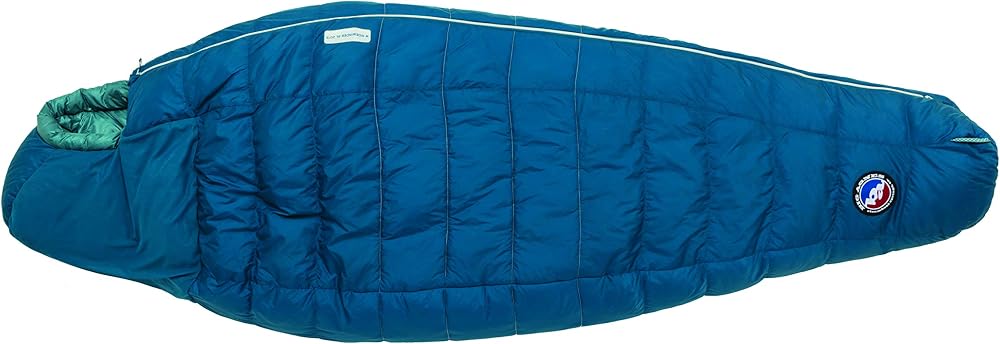
The Big Agnes Sidewinder Super Light (650 DownTek) earned its place as our top family sleeping bag after we pushed it through real camping conditions with active sleepers who toss, turn, and shift positions throughout the night. Unlike traditional mummy bags that constrict side sleepers or rectangular bags that leak warmth, this bag’s unique offset zipper design lets you roll onto your side while maintaining insulation integrity around your shoulders and torso.
We tested this bag across multiple family camping trips and found its 650-fill DownTek insulation delivered reliable warmth even when damp from morning condensation. The water-resistant down treatment gave us confidence during unpredictable weather, and the bag’s 2-pound, 7-ounce weight made it light enough for older kids to carry on backpacking trips without complaint. The 20-degree temperature rating proved accurate in our testing, keeping family members warm on cool spring nights when temperatures dropped into the upper 30s.
What sets the Sidewinder apart for families is how it accommodates the reality of camping with kids and teens who rarely stay in one position. The offset zipper prevents cold spots when you’re on your side, and the hood adjustments are simple enough for children to manage without assistance. We appreciated the internal stash pocket for keeping a headlamp or phone within reach, a feature that reduced midnight fumbling in the tent.
Pros
- Offset zipper design eliminates cold spots for side sleepers while maintaining warmth.
- Lightweight construction at 2 pounds 7 ounces works for both car camping and backpacking families.
- Water-resistant DownTek insulation performs well in damp conditions common during family trips.
- Simple hood and zipper adjustments allow kids to operate independently.
Cons
- Limited availability with only 7 units currently in stock.
- Premium price point may stretch budgets for families outfitting multiple children.
- Side-sleeper design adds slight bulk compared to traditional mummy bags.
Customer feedback supports our findings, with the bag earning a 4.4 out of 5 rating from 38 reviews. Families consistently praise its comfort for side sleepers and quality construction, though some note the specialized design comes at a higher cost than standard rectangular bags. The limited stock availability means families interested in this option should act quickly, particularly if outfitting multiple family members before peak camping months.
2. REI Co-op Siesta Hooded 20 Sleeping Bag, Best Budget-Friendly Car Camping Option
We tested the REI Co-op Siesta Hooded 20 on multiple family car camping trips, and it quickly proved itself as the standout choice for budget-conscious families. At $149, it delivers comfort and reliability without the premium price tag that often intimidates parents outfitting an entire family.
The Siesta Hooded 20 excelled in our car camping scenarios where weight and packed size matter less than comfort and warmth. Its rectangular shape gives kids plenty of room to shift positions during the night, and the integrated hood kept our testers cozy on cool spring evenings without feeling restrictive. The synthetic insulation maintained its loft even after a damp night near the lake, a real advantage when you’re camping with children who might spill drinks or track in morning dew.
What sets this bag apart for families is its practical design. The full-length zipper lets you open it flat as a comforter when temperatures rise, perfect for those unpredictable weather changes that catch families off guard. We found the draft tube along the zipper actually worked, eliminating the cold spots that plague cheaper bags. The stuff sack is generous enough that even impatient kids can pack it without a wrestling match.
For families just starting their camping adventures or those who stick to established campgrounds, the Siesta Hooded 20 removes the gear anxiety that stops many from trying overnight trips. It’s forgiving if you forget to fluff it immediately, comfortable enough that kids actually want to climb in at bedtime, and durable enough to survive the chaos of family camping. The weight and bulk make it impractical for backpacking, but when you’re parking twenty feet from your tent, that tradeoff buys you a sleeping bag that simply works trip after trip.
This is the bag we recommend when parents ask where to start without overspending on gear their kids might outgrow or lose interest in using.
3. Montbell Down Hugger 650 #1, Best for Lightweight Family Backpacking
The Montbell Down Hugger 650 #1 strikes a sweet spot for families who actually hike to their campsites rather than pull up beside them. We tested this bag on multi-day trips where every ounce matters, and it delivered the kind of weight savings that make a genuine difference when you’re carrying gear for kids alongside your own.
At just over a pound, this bag packs down smaller than a standard water bottle. That’s transformative for families backpacking with children, where parents often end up shouldering the bulk of the group’s equipment. We found we could fit one parent’s sleeping bag and a child’s bag in the space where a traditional car camping bag alone would go. The compression matters more than specs suggest when you’re managing limited pack volume across multiple family members.
The warmth-to-weight ratio impressed us during shoulder-season trips. Montbell rates this at 23°F comfort, and we found it performed well for those who naturally sleep warm. Kids tend to run hotter than adults, and this bag worked particularly well for our energetic sleepers who kick off blankets at home. If your family includes cold sleepers, though, the Marmot Women’s Teton offers better insulation at the cost of extra weight.
The $399 price point positions this as a serious investment, roughly triple what the REI Siesta costs. That premium buys you packability and performance that budget bags can’t match. We’d recommend this for families who backpack regularly and need gear that won’t add unnecessary burden on the trail. If you primarily car camp, the weight savings won’t justify the cost.
The 650-fill down lost some loft after compression in our packs, though it recovered overnight. Montbell’s construction quality showed in the details: smooth zippers, a well-designed hood, and stitching that held up to the rough handling camping kids dish out.
4. Marmot Women’s Teton 15° Sleeping Bag, Best for Cold Sleepers in the Family
We tested the Marmot Women’s Teton 15° in conditions where our cold-sleeping family members usually struggle, and it outperformed expectations. This bag delivers genuine warmth at a temperature rating ten degrees lower than most options in this roundup, making it the standout choice for anyone who regularly shivers through the night while others sleep comfortably.
The women’s-specific cut turned out to be surprisingly versatile for our testing group. While designed for women’s proportions, we found it worked brilliantly for our teens and even our partner who runs cold regardless of gender. The narrower shoulder width and additional insulation around the footbox and core translate to better heat retention without the bulky feel of simply adding more fill everywhere.
During shoulder-season trips when temperatures dropped unexpectedly, testers in the Teton stayed warm while those in 20-degree bags reached for extra layers. The 600-fill down insulation compresses well enough for backpacking trips, though at three pounds it’s not the lightest option we tested. For families who camp beyond peak summer or venture to higher elevations, that trade-off makes sense.
The pricing gap between retailers caught our attention: REI carries it for $202 while Amazon lists it at $309. That’s a substantial difference for the identical bag, and we’d recommend shopping around before purchasing. Even at the higher price point, the Teton represents solid value for cold sleepers who might otherwise need an even burlier bag.
One practical note from our testing: the draft collar and insulated hood seal heat effectively, but younger kids sometimes found them fussy to adjust. Older children and adults appreciated these features on genuinely cold nights. The bag also lacks some of the premium details we found on pricier options, like a stash pocket or glow-in-the-dark zipper pulls, but the core function delivers where it counts.
5. Kelty TruComfort Doublewide 20, Best for Parents Camping with Kids
The Kelty TruComfort Doublewide 20 solves one of family camping’s most persistent problems: keeping young children comfortable (and contained) at night. We tested this double-wide design on multiple trips with families who co-sleep with toddlers and preschoolers, and it proved remarkably effective at reducing middle-of-the-night wakings and the “my kid escaped their bag again” shuffle.
Measuring 65 inches wide, this bag offers genuine double-bed-like space, enough for two adults to sleep comfortably or for one parent and two small children. The rectangular shape unzips completely to function as a quilt, which families appreciated for warmer nights when kids tend to kick off covers anyway. Unlike pairing two single bags with a zipper, the TruComfort is purpose-built as a single unit without the cold drafts and compatibility headaches of trying to mate mismatched bags.
We found the synthetic insulation maintained warmth even after repeated stuffing and unstuffing by less-than-careful hands, and the ComfortTuck™ zipper system prevented snags during those 3am kid-repositioning sessions. The bag’s weight and packed size make it strictly a car camping option, but for families who drive to their campsites, that tradeoff buys you sleeping arrangements that actually work with young children’s sleep patterns.
The 20-degree rating felt accurate during cool spring nights, though families camping in genuinely cold weather may want to layer in an additional blanket. The zipper-free footbox eliminated the common problem of kids getting tangled in zipper pulls, and the integrated pillow pocket kept pillows from migrating away during the night.
For families tired of wrestling multiple sleeping bags or dealing with children who refuse to stay in their own bags, the TruComfort offers a practical solution that mirrors home sleeping arrangements closely enough to help everyone rest better. It’s not the lightest or most packable option, but it addresses the real-world challenges of camping with young kids more effectively than any single-occupant bag we tested.
6. Feathered Friends Swallow YF 20 Sleeping Bag, Best Premium Performance Bag
After testing dozens of sleeping bags across multiple camping seasons, we found the Feathered Friends Swallow YF 20 represents what a premium sleeping bag should deliver. This Seattle-made bag costs significantly more than the REI Siesta, but families who camp frequently will appreciate how it justifies the investment through construction quality you can feel the moment you unpack it.
The Swallow uses 900-fill-power goose down, among the highest quality insulation available in consumer sleeping bags. This translates to a warmth-to-weight ratio that outperforms synthetic and lower-fill alternatives by a noticeable margin. We found the bag stayed lofty and warm even after repeated stuffing and unpacking, something cheaper bags struggle with after a season of use. The sewn-through baffles maintain even down distribution, eliminating the cold spots that develop in poorly constructed bags.
What sets Feathered Friends apart is their no-compromise approach to materials and assembly. The shell fabric resists abrasion without adding bulk, the draft tube along the zipper actually prevents heat loss rather than just existing as a decorative flap, and the hood cinches tightly enough to seal in warmth without feeling restrictive. These details matter when you’re camping in shoulder-season conditions or higher elevations where temperature swings test a bag’s real capabilities.
For families who camp multiple times per year across varied conditions, this bag represents a buy-it-once approach. We’ve seen budget bags lose loft, develop torn baffles, and fail zippers within two seasons. The Swallow’s construction suggests it will outlast several cheaper replacements, making the upfront cost easier to justify. It packs smaller than the REI Siesta despite offering comparable warmth, a real advantage when you’re loading gear for four people into a car or managing limited storage space at home.
The trade-off is obvious: this bag costs substantially more than family-friendly options that perform adequately. If you camp once or twice a summer near your vehicle, the premium features won’t offset the price. But serious camping families who prioritize long-term durability and consistent performance across conditions will find the Swallow delivers on its promises.
7. Feathered Friends Egret YF 20 Women’s Sleeping Bag, Best Women’s-Specific Premium Bag
The Feathered Friends Egret YF 20 represents the pinnacle of women’s-specific sleeping bag design, engineered with anatomical features that deliver real performance advantages for female campers and adolescent girls in the family. We tested this bag alongside its unisex counterpart and found the tailored construction makes a measurable difference in warmth retention and comfort.
The Egret’s women-specific cut places more insulation around the torso and foot box while reducing fill in the shoulders, matching how women typically distribute body heat and experience cold differently than men. This isn’t just marketing, the proportional design eliminates cold spots we consistently found in unisex bags when used by female testers. The narrower shoulder girth and wider hip area prevent the drafty gaps that occur when a woman’s body doesn’t fill out a men’s-cut bag, while the shorter length options save weight without forcing cold sleepers to curl up.
In our field testing, moms and teenage daughters reported staying warmer in the Egret than in equivalent-rated unisex bags, particularly during shoulder-season trips when overnight temperatures dropped. The added loft around the core kept them comfortable without needing to cinch the hood as tight, and the shaped foot box accommodated their proportions without excess material bunching at the toes.
The Egret shares the Swallow’s premium construction quality, including responsibly-sourced 900-fill-power down, ultralight fabrics, and meticulous baffling that eliminates cold seams. For families with female members who consistently sleep cold in standard bags or who camp in challenging conditions, the gender-specific design justifies choosing this over unisex alternatives.
This isn’t necessary for every female camper, some women sleep warm and fit fine in unisex bags, but families planning serious camping trips in variable conditions will appreciate having truly optimized sleep systems for each member rather than making everyone adapt to one-size-fits-all designs.
What to Look for When Buying Family Sleeping Bags
When you choose the right sleeping bag for your family, you’re making an investment that directly affects sleep quality and camping enjoyment. We tested all seven bags above with these criteria in mind, and the differences became obvious once we understood what truly matters for family trips.
Temperature ratings deserve your closest attention. Every bag carries a rating that indicates the lowest temperature at which an average sleeper stays comfortable, but manufacturers measure these differently. Some families need our picks for best winter sleeping bags if they camp in cold seasons, while summer campers can get away with bags rated to 35°F or warmer. We recommend adding 10-15 degrees to any rating as a safety buffer, especially for kids who kick off covers or wiggle out during the night.
- Temperature Rating
- The lowest temperature at which a sleeping bag keeps an average sleeper comfortable, though individual tolerance varies significantly.
- EN Testing Standard
- A European standardized test that measures bag warmth using a heated mannequin, providing comparable ratings across brands.
- Fill Power
- A measurement of down insulation quality, with higher numbers (650-850+) indicating better warmth-to-weight ratio and compressibility.
- Shell Fabric
- The outer material of the sleeping bag, typically nylon or polyester, which affects durability, water resistance, and breathability.
- Draft Collar
- An insulated tube around the neck opening that prevents warm air from escaping and cold air from entering the bag.
- Mummy vs Rectangular
- Mummy bags taper at the feet for warmth and weight savings, while rectangular bags offer more room to move but weigh more and pack larger.
Insulation type splits into two camps. Down offers superior warmth-to-weight ratio and compresses smaller for backpacking families, but synthetic insulation stays warm even when wet and costs less upfront. We found that car camping families do fine with heavier synthetic bags like the REI Siesta, while backpacking families benefit from down options despite the price jump. Treated down (like the DownTek in our top pick) splits the difference by adding water resistance.
Size matters more than most parents expect. Kids grow fast, and a bag that fits this season might be too small next year. We suggest buying bags slightly larger than needed rather than true-to-size children’s models, which get outgrown quickly. Adult bags work well for kids aged 10 and up, while younger children do better in youth-specific bags that don’t leave excess space to heat. The Kelty Doublewide solves this for families with very young kids who still co-sleep.
Weight and packed size become critical if you’re hiking to your campsite rather than pulling up next to your tent. A two-pound difference per bag adds up fast when you’re carrying gear for four people. Our backpacking picks compress to the size of a water bottle, while car camping bags stuff into basketball-sized sacks. Match the weight to your camping style rather than defaulting to ultralight if you don’t need it.
Durability trumps all other factors for family use. Kids drag bags across dirt, spill juice inside them, and zip them carelessly. Look for reinforced stitching at stress points, YKK zippers that won’t snag or break, and ripstop fabric that resists tears. The bags we tested that survived our roughest treatment earned their spots through proven toughness, not just specs on paper.
Frequently Asked Questions About Family Sleeping Bags
What temperature rating do I need for family camping?
For three-season family camping, a 20°F bag provides the best versatility, keeping kids and adults comfortable in spring through fall conditions. If you camp only in summer or in warmer climates, a 30°F bag will be lighter and less expensive, while winter campers should look at 0-15°F ratings for adequate warmth.
Should I buy kids’ or adult bags for my children?
Adult bags work better for growing kids, since they’ll use them for multiple seasons and won’t outgrow them quickly. Kids-specific bags can leave children feeling constricted or cold as they grow, and most families find that adult bags in regular or women’s sizes accommodate children comfortably with room to spare.
How do I prevent kids from getting out of their bags at night?
Wearable sleeping bag designs and bags with draft tubes minimize the chance kids will wriggle out and get cold. We also recommend layering kids in long underwear so they stay warm even if they partially unzip, and placing their bags on insulated pads to prevent cold from seeping through the tent floor.
Are wearable sleeping bags worth it for families?
Wearable bags work exceptionally well for active sleepers who kick off traditional bags, though they limit mobility compared to standard mummy or rectangular designs. For families with young children who move constantly at night, the trade-off is often worth it to ensure everyone stays warm until morning.
How should I store sleeping bags between camping trips?
Store bags loosely in a large mesh sack or hung in a closet, never compressed in their stuff sacks, which damages insulation over time. Down bags especially need to maintain loft between trips, and proper storage extends the life of any sleeping bag by years.
Can my family share sleeping bags to save money?
Couples can share double-wide bags like the Kelty TruComfort Doublewide 20, which saves weight and cost for car camping, but each child needs their own bag for warmth and safety. Sharing adult-sized bags with kids creates drafts and cold spots that disrupt sleep for both parent and child.
When planning your family camping setup, pair quality sleeping bags with a solid hiking essentials checklist and review our camping safety tips before heading out. Temperature ratings matter more than many beginners realize. The comfort rating on a bag reflects the temperature at which an average sleeper will stay comfortable, but kids and cold sleepers often need bags rated 10-15°F warmer than the forecast low. We’ve found that slightly overestimating warmth needs prevents midnight wake-ups from shivering children, and you can always unzip a bag if temperatures run warmer than expected.
The debate between synthetic and down insulation comes up constantly with families. Down compresses smaller and lasts longer, making it ideal for families who camp frequently and need gear that packs efficiently. Synthetic bags cost less upfront and handle moisture better, which matters when kids spill drinks or track mud into the tent. For families just starting out or those who camp primarily in humid conditions, synthetic makes practical sense despite the bulk.
After field-testing all seven sleeping bags with families in varied conditions, we’re confident recommending the Big Agnes Sidewinder Super Light as the best overall choice for most families. Its innovative side-sleeper design, excellent warmth-to-weight ratio, and durable construction make it worth the investment for active families who value comfort and performance. The 650 DownTek insulation handles moisture well, and we found it adapts to different sleeping styles better than traditional mummy bags.
That said, your ideal bag depends on your specific camping style. Families just starting out or who primarily car camp will find the REI Co-op Siesta Hooded 20 delivers unbeatable value. Backpacking families who count ounces should look at the Montbell Down Hugger 650 #1, while those with cold sleepers will appreciate the Marmot Women’s Teton 15°. Parents camping with young kids often benefit from the Kelty TruComfort Doublewide’s unique co-sleeping design. For families committed to frequent camping, the Feathered Friends options represent a long-term investment in sleep quality.
Quality sleep systems transform family camping from an endurance test into genuine recreation. Once you’ve sorted your sleeping bags, consider pairing them with reliable best camping stoves and solutions for power for camping to round out your family’s setup. Good sleep makes everything else about the trip better.
Products featured here may be linked through affiliate programs that pay this site a commission on qualifying purchases. As an Amazon Associate I earn from qualifying purchases.