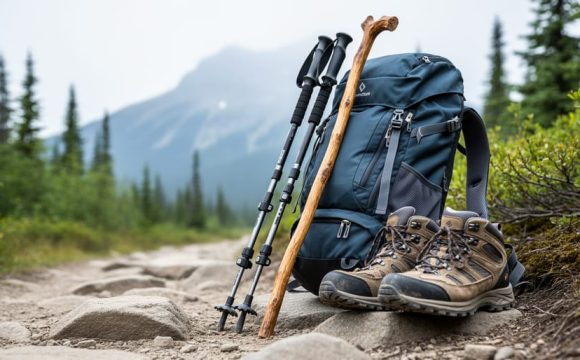
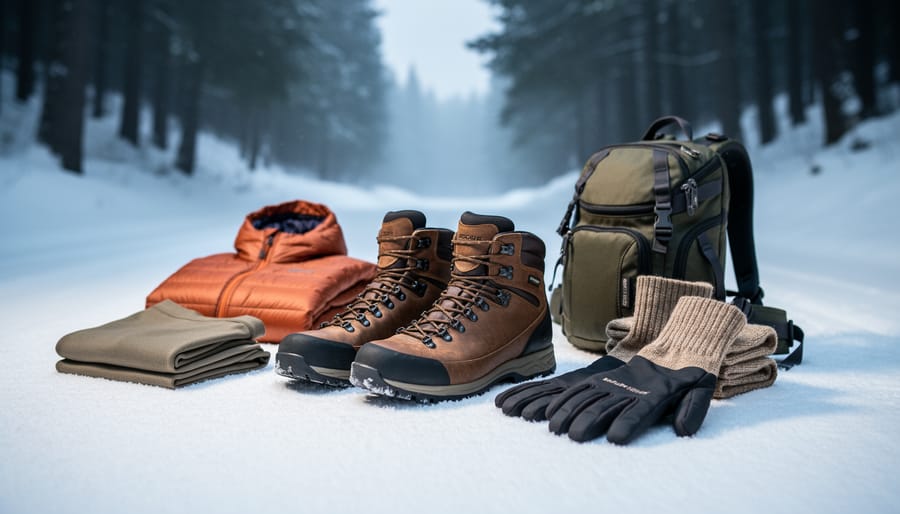

The best winter hiking gear is a system, not a single hero item: insulated waterproof boots, a moisture-wicking base layer, a packable insulating jacket, warm socks, and gloves that keep working when your hands get wet. Get those five right and most cold-weather days become comfortable instead of miserable.
In the interest of transparency, we earn a commission on some purchases made through links on this site. As an Amazon Associate I earn from qualifying purchases.
The smartest buying decision starts with your feet. Boot insulation is rated in grams, and the number matters more than it looks. Tom’s Hiking says 200g suits a moving hiker in most conditions, while 400g suits somebody slower, colder, or out for longer in real cold. Of the eight winter boots it ranks, five run 200g, two run 400g, and one skips grams for a sub-zero rating.
That’s the insulation-by-pace idea we’ll use throughout this guide. Below, you’ll learn the key factors that separate good gear from merely warm gear, see the main types compared side by side, and read objective reviews of eight products, including the NORTIV 8 Men’s Waterproof Hiking Winter Snow Boots and the Columbia Men’s Firecamp Boots. We close with scenario-based picks and the mistakes beginners make most.
What to Look for in Winter Hiking Gear: Key Buying Factors
Choosing winter hiking gear gets easier once you know what each feature actually does. Here’s a plain-English rundown.
Insulation is the material that traps your body heat. Boots and jackets often list it in grams, and a higher number means more warmth, though not always more comfort on the trail.
Waterproof vs. water resistant trips up a lot of beginners. Water resistant fabric sheds light snow or drizzle for a while. Waterproof gear has a membrane or sealed construction that keeps water out even when you’re standing in slush.
Breathability is how well a fabric lets sweat vapor escape. Moisture-wicking means it pulls sweat off your skin so it can evaporate instead of sitting against you.
Here’s the part many people miss: sweat management matters as much as warmth. If you pile on insulation and then sweat through it on a climb, that damp layer chills you the moment you stop. That’s why materials that stay warm when wet are worth seeking out for the layers closest to your skin.
Here’s a quick checklist to keep in mind while you shop:
- Insulation: the heat-trapping material, so match the amount to how hard you’ll be moving.
- Waterproofing: keeps slush and snowmelt out, which is vital for boots, gloves and shells.
- Breathability: lets sweat escape so you don’t get clammy and cold.
- Fit with thick socks: try boots on with your winter socks so toes can still wiggle.
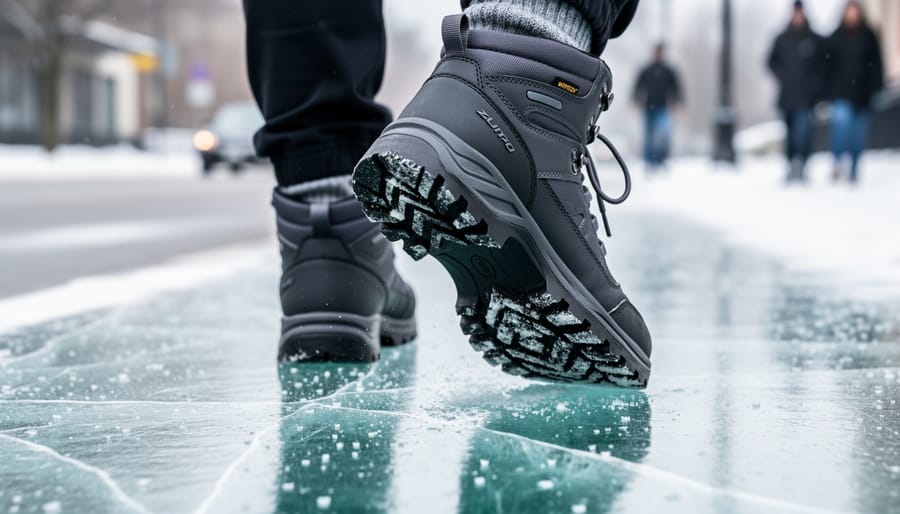
- Traction: a grippy outsole for frozen, icy or packed-snow ground.
- Packability: how small an insulating layer squashes down in your pack for breaks.
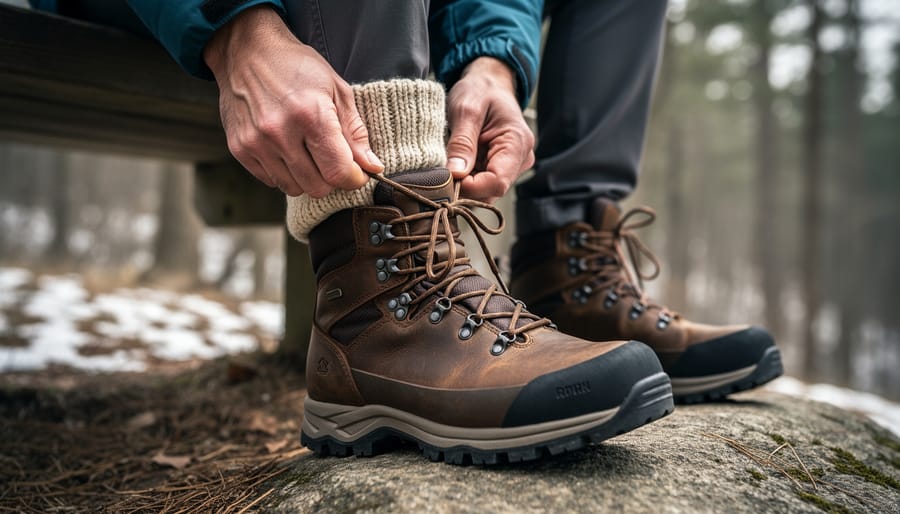
Fit deserves a second look. Boots that feel perfect with thin socks can pinch once you add thick wool, and a tight boot cuts circulation, which makes your feet colder, not warmer. Always leave a little room.
Finally, think about the ground itself. Frozen trails are slick, so check the sole pattern and rubber before you buy. Good traction protects you far more than any extra layer of warmth.
Insulation Ratings Explained: 200g vs. 400g and Beyond
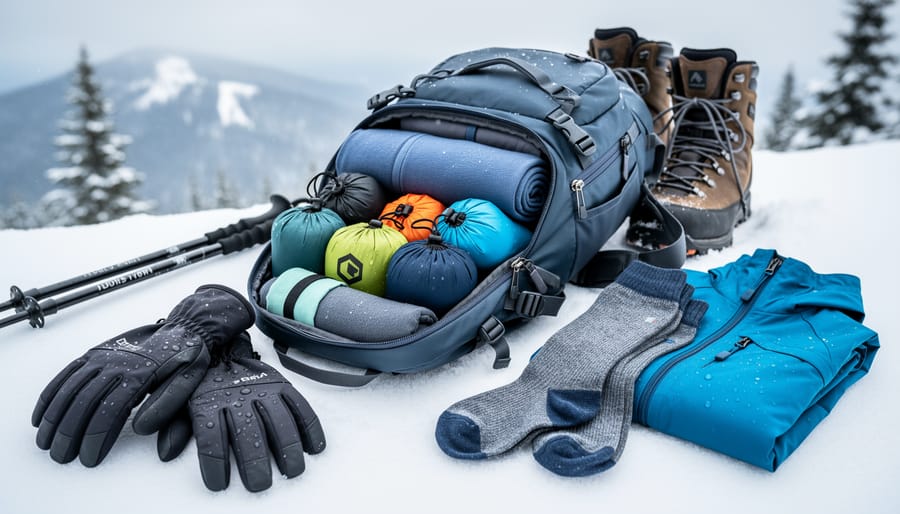
Insulation grams can feel like a secret code, but the idea is simple. The number describes how much insulating fill is packed into the boot, and more grams generally means more warmth (and more heat trapped when you’re working hard). It isn’t a temperature rating, so think of it as a dial for how much warmth you want, not a promise about how cold you can go.
A helpful reference here is Tom’s Hiking, which updated its winter hiking boots page on 28 August 2026. The page ranks eight boots, and the insulation breakdown tells you a lot about what’s common. Five of them run 200g insulation, two run 400g, and one skips grams entirely and uses a sub-zero rating instead. According to the site, the ranking draws on published specs, the makers’ own material data, testing that other reviewers have put in print, and Amazon buyer reviews. That’s a sensible mix of sources, though it’s worth treating any single ranking as a starting point rather than the final word.
The guidance that matters most is how Tom’s Hiking matches insulation to the hiker. They say 200g suits a moving hiker in most conditions. That makes sense, because when you’re walking briskly your body generates plenty of heat, and too much insulation can leave your feet sweaty and, eventually, cold. Their take on 400g is that it suits somebody slower, colder, or out for longer in real cold, the kind of day when you’re standing around, taking photos, or covering ground at a gentle pace.
So before you fall for a bigger number, ask yourself how you actually hike. If you tend to run warm and keep a steady pace, 200g is often plenty. If you move slowly, feel the cold easily, or plan long days out, the extra warmth of 400g can earn its place.
Types of Winter Hiking Gear Compared: Boots, Layers, Socks and Gloves
Winter hiking gear works as a system, and each piece has a different job. The classic layering formula is simple: a base layer that wicks sweat, a mid layer that traps heat, and a shell that blocks wind and moisture. Boots, socks, and gloves round out the setup.
| Gear type | Main job | What to prioritize | Roster example |
|---|---|---|---|
| Boots | Warm, dry, stable footing | Waterproofing, traction, room for thick socks | NORTIV 8 Snow Boots |
| Base layer | Wick sweat, hold warmth near skin | Breathable, soft fabric | Fleece-lined thermal underwear |
| Insulating layer | Trap body heat | Packability, hood, easy on and off | Outdoor Ventures Puffer Jacket |
| Socks | Cushion and warm the feet | Merino blend, snug but not tight | Merino Wool Crew Socks |
| Gloves | Protect hands from cold and wet | Waterproofing, dexterity | Carhartt Insulated Glove |
Beginners often spend plenty on a big puffy jacket and then skimp on the layer touching their skin. Yet that base layer decides whether you stay dry on the climb. Another common slip is overbuying warmth for your feet. Tom’s Hiking notes that 200g insulation suits a moving hiker in most conditions, while 400g makes more sense if you’re slower, colder, or out for longer in real cold. More insulation isn’t automatically better if you’re working hard.
Boot style matters too. Insulated snow boots, like the NORTIV or ALEADER, lean toward warmth and easy comfort, which is great for snowy walks and shorter outings. Technical hiking boots, like the LOWA Renegade, put more emphasis on support and grip for rugged or icy ground. Neither is wrong. They just fit different trips.
One more tip: spend your effort where failure hurts most. Cold feet and wet hands can end a hike fast, so those deserve attention before extras.
Our Winter Hiking Gear Picks: Eight Options Reviewed
The eight picks below cover footwear, base layers, socks, a jacket, and gloves, so you can see how the pieces of a winter system fit together. Each one is assessed on its stated features and customer ratings, not on hype. Keep in mind that ratings and stock reflect listings at the time of research, and both can change, so double-check before you buy.
NORTIV 8 Men’s Waterproof Hiking Winter Snow Boots: A Popular Entry Point

The NORTIV 8 Men’s Waterproof Hiking Winter Snow Boots are a common first stop for budget-conscious beginners, and the numbers show why. They hold a 4.5 out of 5 rating from 13,979 customer ratings, and they were in stock at the time of research.
They suit snowy day hikes and moderate trails where you want dry feet without investing in a technical mountaineering boot. A few things are worth checking before you buy.
First, fit. Winter boots need room for thick socks, so try them on with the pair you’ll actually wear, and make sure your toes can still wiggle. A snug boot restricts circulation, and that makes feet colder.
Second, grip. Look closely at the outsole lugs, since packed snow and frozen ground are a different test than a wet trail.
Finally, confirm the waterproofing details and the insulation level on the listing. As a rough guide, 200g suits a moving hiker in most conditions, while 400g suits slower or longer outings in real cold.
LOWA Men’s Renegade Evo Ice GTX High Rise Hiking Shoes: The Technical Option

The LOWA Renegade Evo Ice GTX is the more technical pick on this list. It’s a higher-cut boot, which generally means more ankle support when you’re picking your way over rocky, uneven, or icy ground. The “GTX” in the name points to a Gore-Tex waterproof membrane, so you can expect wet snow and slush to stay outside.
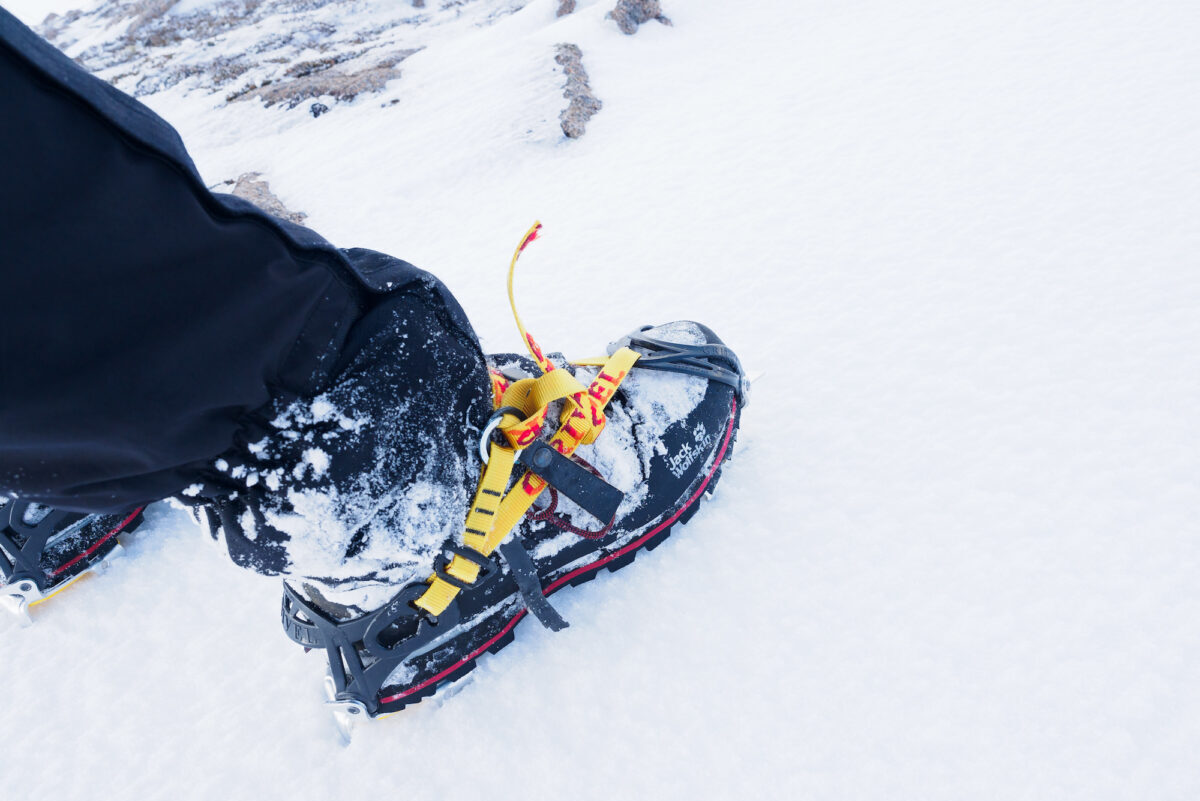
Because this is built more for hiking than for strolling, it’s worth checking the sole and grip before you commit. On frozen, mixed terrain, traction matters as much as warmth, so look at the lug pattern and think about whether you’ll pair it with microspikes on glare ice. I’d also confirm how it fits with your thicker winter socks, since a boot with a precise, performance-oriented fit can feel snug.
It has a 4.3 out of 5 rating from 108 customer ratings. That’s a solid score, but the sample is much smaller than some of the other picks here, so treat it as a good sign rather than a final verdict. Stock was limited at the time of research, with only 3 left.
Best for: experienced hikers tackling mixed terrain who want support and a waterproof build.
ALEADER Men’s Winter Waterproof Insulated Shell Warm Inner: A Warm Snow Boot Choice

The ALEADER insulated snow boot is built for warmth first, which makes it a different animal from a technical hiking boot. It carries a 4.4 out of 5 rating from 11,894 customer ratings and is currently in stock.
Think about pace. Tom’s Hiking notes that a moving hiker does fine with lighter insulation, while someone slower, colder, or out longer in real cold benefits from more. A snow boot like this leans toward the second camp, so it suits snowy walks, shorter outings, and stretches where you’re standing around more than striding uphill.
Waterproofing is a headline feature here, which helps in slush and wet snow. Fit deserves a check before you commit. Try the boots on with the thick winter socks you plan to wear, since a snug fit cuts circulation and leaves your toes colder, not warmer.
Compared with a technical hiking boot, expect less emphasis on precision and long-distance support. That’s a fair trade for easy terrain and comfort.
Thermal Underwear for Men Long Johns Set Fleece Lined Winter Cold: Your Base Layer

The base layer does two jobs. It adds warmth right against your skin, and it moves sweat away from your body so you don’t get chilled when you slow down. This fleece-lined thermal set is built for that role. It holds a 4.6 out of 5 rating from 14,331 customer ratings and was in stock at the time of research.
In a layering system, it sits closest to your skin, with an insulating mid layer and a waterproof shell going over the top. That’s the same logic behind picking boot insulation by pace: a moving hiker generates plenty of heat, so you don’t want to overdo it.
Fleece lining is cozy, but it can run warm on a steady uphill. If you tend to overheat, start the hike a little cool and unzip or shed your outer layers before you build up sweat. Before you buy, check the fabric listing for how breathable it is, and try the set on with your other layers to make sure nothing bunches or restricts your stride.
Mens Merino Wool Crew Socks Thermal and Warm Socks: Small Gear, Big Comfort

Socks are the quiet workhorse of a winter hiking system, and merino wool earns its spot for a few practical reasons. It keeps insulating even when it gets damp, which matters because feet sweat no matter how cold it is. It also resists odor, so a few days on the trail won’t leave you regretting your choices, and the natural fiber cushions every step on long descents.
These Mens Merino Wool Crew Socks Thermal and Warm Socks come as a 3-pack aimed at winter work, hiking and running. They hold a 4.5 out of 5 rating from 37,871 customer ratings and were in stock at the time of research. A multi-pair pack is handy because it lets you rotate a fresh, dry pair in partway through a long day, which is one of the easiest ways to keep your feet comfortable.
One thing to watch is thickness. A thicker sock adds warmth but also takes up room, so try your boots on with the exact socks you plan to wear. Snug is fine; pinched is not, since tight boots can actually restrict circulation and leave your toes colder.
Outdoor Ventures Men’s Packable Hooded Puffer Jacket Insulated Winter: A Layer for Breaks and Camp

The Outdoor Ventures Men’s Packable Hooded Puffer Jacket Insulated Winter Coat earns a spot in this guide as a layer for stopping, not for striding. Puffy insulation traps a lot of heat, which is exactly what you don’t want while grinding up a climb. Wear it on the move and you’ll likely sweat through your base layer, then pay for it at the next rest stop.
Where it shines is the pause. Pull it on over your other layers when you stop for lunch, a photo break, or the first chilly hour at a cold camp, and you hold onto the warmth your body just made. Its packable design means it can compress into your pack until you need it, and the hood adds welcome warmth around your head and neck when you’re standing still.
Keep the limits in mind. Puffers generally don’t stop strong wind or wet snow on their own, so carry a shell for storms. Customers rate this jacket 4.5 out of 5 from 104 ratings. That’s a smaller sample than the bigger sellers here, so treat it as a good sign rather than a final verdict. It was in stock at the time of research.
Carhartt Men’s Waterproof Insulated Knit Cuff Glove: Keeping Hands Working

Hands are the first thing to complain when temperatures drop, and the Carhartt Men’s Waterproof Insulated Knit Cuff Glove is built to keep them working. It earns a 4.6 out of 5 from 37,153 customer ratings, and it was in stock at the time of research.
The pairing of insulation and a waterproof build is the draw. That combination suits wet snow, slushy trailheads and cold mornings when your fingers need to stay dry. The knit cuff helps seal out drafts at the wrist, which matters more than most people expect.
The trade-off is dexterity. Insulated, waterproof gloves are bulkier than liners, so pulling a map from a pocket or working a stubborn zipper can feel clumsy. Gripping a pair of trekking poles is usually fine, though, and a snug fit helps. Try them on with a thin liner underneath before you commit.
Wet gloves lose their warmth fast, so pack a spare pair or a dry liner. Tuck them somewhere easy to reach, ideally alongside your first aid kit.
Columbia Men’s Firecamp Boots: A Cozy Pick for Casual Winter Walks

The Columbia Men’s Firecamp Boots are a cozy option for lighter winter walks and cold camp use. They carry a 4.7 out of 5 rating from 964 customer ratings, and they showed as in stock at the time of research. That’s a smaller sample than some picks here, so treat the score as a good sign rather than a final word.
These aren’t built like a technical hiking boot, and that’s fine. For short, snowy strolls and evenings around camp, comfort and warmth matter more than aggressive support.
Before you buy, check three things:
– Grip: Look closely at the outsole lugs, and test the boot on a slick surface if you can.
– Insulation level: Confirm the rating. As Tom’s Hiking notes, 200g suits a moving hiker in most conditions, while 400g suits someone slower or out longer in real cold.
– Fit: Try them on with your thickest winter socks.
If longer miles are on your list, pair this with our guide to the hiking essentials and plan your hike around your boot’s strengths.
Matching Your Winter Hiking Gear to Your Pace and Conditions: Recommendations
Not every winter hike calls for the same setup, so it helps to match your gear to how you move and how cold it really is. The 200g versus 400g guidance from Tom’s Hiking is a handy anchor: 200g suits a moving hiker in most conditions, while 400g suits someone slower, colder, or out longer in real cold.
| Hiker type or conditions | What to prioritize | Roster picks to consider |
|---|---|---|
| First-time snowy day hiker | Waterproofing, a roomy fit for thick socks, a simple layering base | NORTIV 8 boots, Thermal Underwear Long Johns Set, Mens Merino Wool Crew Socks |
| Fast-moving hiker who runs warm | Breathability and sweat management over bulk | Thermal Underwear Long Johns Set, Mens Merino Wool Crew Socks, Carhartt Waterproof Insulated Glove |
| Slower or longer outing in real cold | Extra warmth for stops, spare dry hand and foot gear | ALEADER Insulated boots, Outdoor Ventures Puffer Jacket, Columbia Firecamp Boots |
| Technical or icy terrain | Support, a waterproof membrane, secure grip | LOWA Renegade Evo Ice GTX |
If you’re new to this, start simple. A waterproof boot, a fleece-lined base layer and merino socks cover most snowy day hikes, and you can add pieces as your outings get longer. Fast hikers who generate plenty of heat should lean toward lighter insulation and keep the puffer in the pack for breaks, since overheating and sweating through your layers is the quickest way to get cold.
For slower days or real cold, warmer boots and a packable puffer earn their place. The LOWA is the pick when ice and rugged footing are the main concern. Don’t forget your lower half, either. Our guide to winter hiking pants covers how to round out the system.
Common Winter Hiking Gear Mistakes to Avoid
Even seasoned hikers make a few of these slips, so no judgment here. Here are the most common ones and how to fix them.
Buying boots too snug. Thick winter socks take up room, and a tight boot squeezes out the air that keeps your toes warm. The fix is to size with your cold-weather socks on and leave a little wiggle room at the toes.
Wearing cotton is the next one. It soaks up sweat and holds it against your skin, which leaves you chilled the moment you stop moving. Swap it for merino wool or a synthetic fabric that wicks moisture away.
Over-insulating a moving hike is just as sneaky. If you’re working hard, 200g insulation usually does the job, and a heavy setup can leave you sweating through your layers. Start a touch cool, and add or shed layers as your pace changes.
Skipping spares is a classic, too. Damp gloves and socks sap warmth fast, so pack a spare pair or a liner of each in a dry bag.
Finally, trusting a rating alone can steer you wrong. A high score doesn’t tell you whether a boot fits your foot or your terrain, so read the details and match the gear to your own pace and conditions.
Winter Hiking Gear FAQs
What do I need for winter hiking?
The basics are a layering system (base layer, insulating layer, waterproof shell), insulated and waterproof footwear with warm socks, and gloves. Add a hat and a spare pair of socks or gloves so a wet pair doesn’t end your day.
Is 200g or 400g insulation better?
It depends on how you hike. Tom’s Hiking says 200g suits a moving hiker in most conditions, while 400g suits someone slower, colder, or out for longer in real cold.
Do I need waterproof boots?
For snow and slush, yes, waterproofing helps keep your feet dry, and dry feet stay warmer. If you hike mostly in cold, dry conditions, a water-resistant boot can work, but wet terrain makes waterproofing worth having.
What should I wear under hiking pants?
A snug, moisture-wicking base layer like fleece-lined thermal underwear is a good starting point. Skip cotton, since it holds sweat and chills you fast. If you run warm on climbs, choose a lighter weight so you don’t overheat.
Socks deserve a quick word of their own, since they’re easy to get wrong. Pick them with your boots in mind: they should be warm but not so thick that your toes feel squeezed, because a tight fit cuts circulation and actually makes your feet colder. Try boots on with the exact socks you plan to wear.
Choosing winter hiking gear doesn’t have to be overwhelming. The big idea is simple: match what you wear and carry to your pace, the conditions, and how long you’ll be out. A fast-moving hiker who runs warm needs a very different setup from someone strolling slowly through snow, and that’s okay.
Whatever you pick, keep your feet, hands, and base layer dry. Dry feet and hands keep a cold day enjoyable, while a damp base layer can turn it miserable fast. Pack spare socks and gloves, check how your boots fit with thick socks, and layer so you can adjust as you warm up or cool down.
You don’t need everything at once. Start with the essentials: a reliable pair of boots, a moisture-wicking base layer, warm socks, and good gloves. Then add to your system as you learn what your own body and favorite trails demand. Every outing teaches you something new.
Take it one cold, beautiful hike at a time. We’ll see you out there.