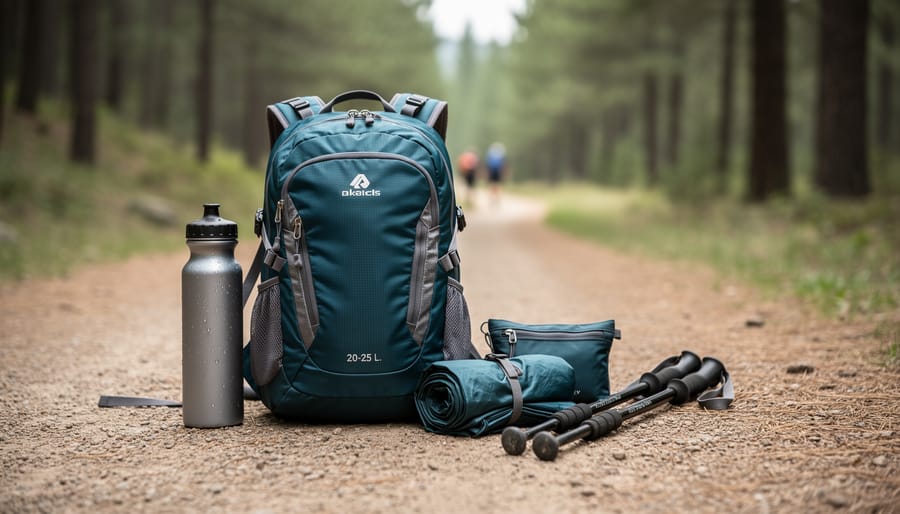

A small hiking backpack is a 15-25 liter daypack designed to carry gear for four to eight hours on the trail, and the best models weigh around 20 ounces while offering enough room for water, layers, snacks, and safety essentials. Unlike oversized all-purpose bags that encourage overpacking and strain your shoulders, these specialized daypacks match the realities of most hiking trips where you’re back at the trailhead before dark.
The shift toward smaller packs reflects how modern hikers actually use their gear. You don’t need 40 liters of space for a morning summit push or an afternoon loop through the state park. What you need is a pack that disappears on your back, organizes your essentials efficiently, and won’t fatigue you on steep climbs.
The challenge is that “small” means different things to different manufacturers, and capacity alone doesn’t tell you whether a pack will work for your torso length, hiking style, or the gear you actually carry. A 22-liter pack with poor weight distribution feels heavier than a well-designed 25-liter model. We’ve tested dozens of small hiking backpacks across varied terrain to identify which models deliver the best balance of comfort, organization, and durability. Top performers like the Gregory Zulu 24, Osprey Sportlite 25, and REI Co-op Flash 22 prove you don’t need to sacrifice features for weight savings, and understanding what separates these packs from mediocre options will help you avoid buyer’s remorse and enjoy more comfortable miles on the trail.
What Makes a Small Hiking Backpack Different
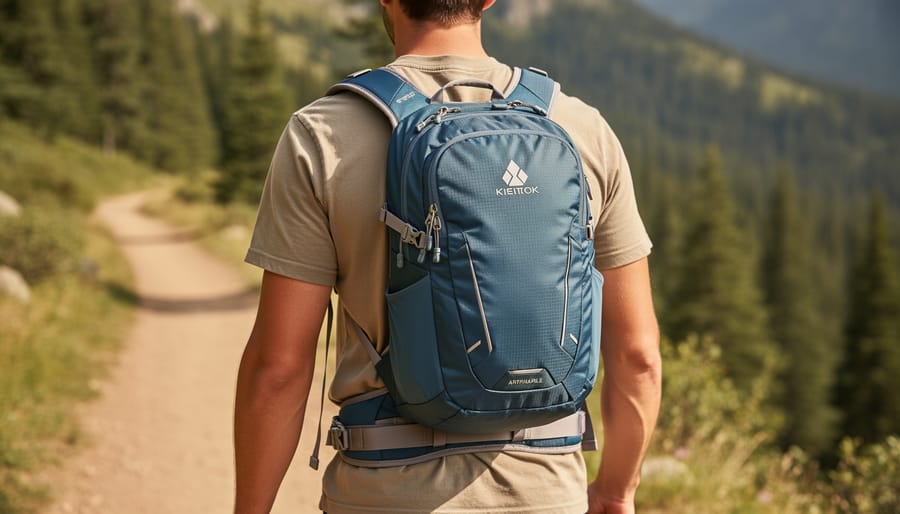
Small hiking backpacks occupy a sweet spot between minimal summit packs and overnight expedition gear. These daypacks typically fall in the 15-30 liter capacity range, designed specifically for single-day excursions where you need more than a water bottle but far less than a sleeping bag and tent. The distinction matters because multi-day packs (40-70L) come with suspension systems and features you simply don’t need for a few hours on the trail, adding weight that slows you down. Casual daypacks, meanwhile, lack the durability and technical features required for rugged terrain.
Weight targets separate serious day hiking packs from general-use bags. Most quality small hiking backpacks weigh approximately one pound, with the best ultralight options hitting 20 ounces or less. Every extra ounce compounds over distance because pack weight affects endurance more than casual hikers realize. A 25-ounce pack feels trivial in the store, but that five-ounce difference from a 20-ounce model adds up across ten miles and 2,000 feet of elevation gain.
The real difference lies in intentional design choices. Small hiking backpacks balance features with minimalism, they include essentials like hydration compatibility, weather protection, and comfortable straps while stripping away excess buckles, zippers, and compartments that bloat weight. For a five-hour hike, you need quick access to water and snacks, not eighteen pockets and load-lifter straps designed for week-long treks.
Essential Features to Consider
Capacity and Organization
The sweet spot for most day hikers falls between 20-25 liters. This range handles the typical load: water, snacks, a first-aid kit, extra layers, and a rain shell without feeling bulky. If you consistently hike with just the essentials and embrace a minimalist approach, a 15-liter pack delivers everything you need while keeping weight to an absolute minimum. On the flip side, photographers, families carrying shared gear, or those who prefer extra comfort items should lean toward the upper end at 25-30 liters.
Pocket design matters more than total capacity. Look for external side pockets that hold water bottles securely without requiring you to remove the pack. An external bladder sleeve, like the one found on the Osprey Sportlite 25, makes refilling your hydration system far easier on the trail compared to wrestling with an internal reservoir. A top lid or front stretch pocket provides quick access to snacks, sunscreen, or a map without digging through the main compartment.
Most day hikers overestimate their capacity needs. Before choosing a pack, lay out your typical gear and mentally sort it: what you need during the hike versus what stays packed until breaks. A well-organized 22-liter pack often carries as much useful gear as a poorly designed 30-liter pack that forces you to excavate for essentials.
Weight and Materials
Pack weight directly impacts your energy expenditure on the trail, every ounce you carry multiplies over thousands of steps and elevation changes. For small hiking backpacks, the sweet spot sits at 20 ounces or less, with many quality options hovering around the one-pound mark. Below this threshold, you’ll barely notice the pack itself, allowing you to focus on the hike rather than the gear.
Material choice drives the weight-durability equation. Ultralight ripstop nylons in the 70-210 denier range cut ounces but require more careful handling around sharp rocks or branches. Heavier fabrics resist abrasion better yet add weight you’ll carry all day. Look for reinforced stress points, shoulder strap attachments, bottom panels, and load-bearing seams, where manufacturers add durability without bulk.
Construction methods matter as much as fabric weight. Taped seams and bar-tack stitching at critical junctions prevent failure without layering excess material. Some manufacturers use strategically placed heavier fabric only where contact occurs most, keeping the main body lightweight. The REI Co-op Flash 22 exemplifies this approach, balancing minimalist design with practical longevity.
Consider your hiking environment when weighing these trade-offs. Maintained trails with minimal bushwhacking forgive lighter materials, while scrambly routes or heavy brush demand tougher fabrics despite the weight penalty.
Comfort and Fit
Even short hikes turn miserable when your pack digs into shoulders or bounces with every step. Comfort starts with the suspension system, the internal frame or structure that transfers weight from your shoulders to your hips. For small hiking backpacks, this doesn’t mean heavy frames; most use lightweight tensioned mesh back panels or foam structures that keep the pack stable without adding ounces.
Back panel ventilation becomes critical during high-output activities or warm-weather hiking. Look for designs that create air channels between your back and the pack fabric, often through a mesh suspended panel or raised foam ridges. The Gregory Zulu 24 excels here with its FreeFloat system that allows airflow while maintaining load stability. These ventilated designs prevent the sweat-soaked back that plagues solid-panel packs on summer trails.
Shoulder straps should be contoured and lightly padded without bulk. Too much padding adds weight you’ll carry all day; too little causes pressure points under load. Width matters, narrow straps concentrate weight, while slightly wider designs (around 2-3 inches) distribute it better. The Osprey Sportlite 25 demonstrates how minimal padding can still provide comfort when paired with proper contouring and load distribution.
Hip belts on small packs spark debate. Ultralight purists skip them entirely to save weight, while others want the option to transfer load on longer days. A simple webbing belt adds negligible weight and helps stabilize the pack without the bulk of padded models found on larger backpacks. Consider whether your typical day hike involves enough weight (over 15 pounds total) to benefit from hip support.
Hydration Compatibility
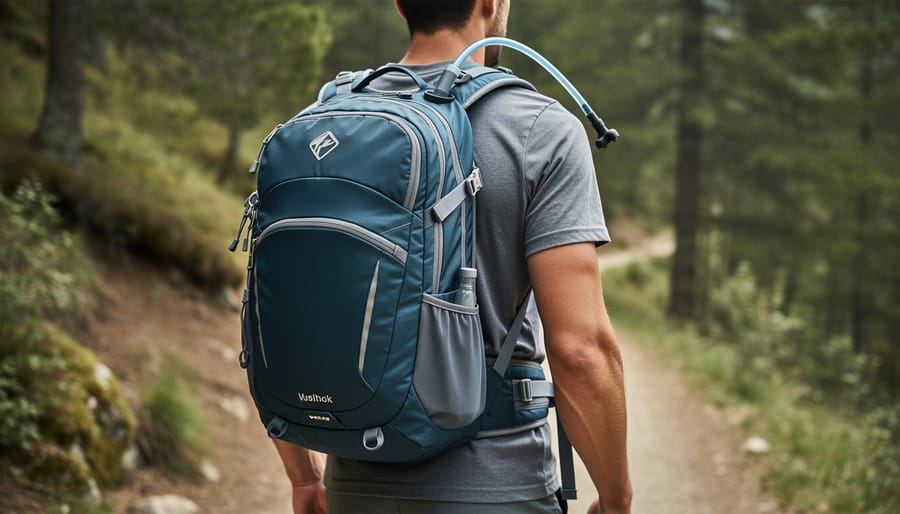
Most small hiking backpacks offer two primary hydration options: internal reservoir sleeves or external water bottle pockets. Internal bladder sleeves sit against your back panel and feed a drinking tube through the shoulder strap, efficient for hands-free sipping but requiring you to stop and unpack to refill. The Osprey Sportlite 25 takes a smarter approach with its external bladder sleeve, letting you access and refill your reservoir without digging through your main compartment. Side water bottle pockets provide quicker access for frequent drinks but can throw off weight distribution if you’re only carrying one bottle. Look for stretch-mesh pockets that secure bottles on rough terrain rather than loose sleeves. Some ultralight packs like the REI Co-op Flash 22 keep things minimal with simple bottle pockets and skip dedicated reservoir sleeves entirely to save weight. Consider your drinking habits: frequent sippers benefit from bladder systems, while those who prefer stopping for water breaks might find bottle pockets perfectly adequate.
Weather Protection and Accessibility
Weather protection on small hiking backpacks comes down to three elements: the pack fabric itself, a rain cover, and how quickly you can access critical items when conditions turn. Most daypacks use water-resistant treatments like DWR coating on nylon or polyester fabrics, which shed light rain and morning dew but aren’t fully waterproof. For extended downpours, look for packs that include a stowable rain cover or have a dedicated pocket to carry one, these lightweight shells protect your entire load when storms roll in. Quick-access features matter just as much: top-lid pockets, hip belt compartments, and side stretch pockets let you grab rain gear, snacks, or navigation tools without stopping to dig through the main compartment, keeping you moving efficiently on the trail.
Types of Small Hiking Backpacks Compared
Ultralight Minimalist Packs
Ultralight minimalist packs strip away every non-essential feature to hit sub-20 oz weights that disappear on your back. These bare-bones designs appeal to experienced hikers who’ve refined their gear list down to the absolute minimum and know exactly what they need for a day on the trail. You won’t find padded hip belts, complex pocket systems, or heavy-duty fabrics, just a simple stuff sack with shoulder straps, often made from ultralight ripstop nylon or Dyneema composite materials.
The trade-off is clear: you sacrifice comfort features and organizational compartments for weight savings that become noticeable over long distances and elevation gain. Most ultralight packs in the 15-18L range lack internal frames or substantial back padding, which works fine when you’re carrying under ten pounds but feels less comfortable with heavier loads. These packs suit fast-paced hikers doing high-mileage days with minimal gear, think ultralight shelter, spare layer, snacks, and water. If you regularly carry camera equipment, extra clothing layers, or lunch for two, a full-featured lightweight pack makes more sense than forcing your gear into an ultralight design.
Full-Featured Lightweight Day Packs
Full-featured lightweight day packs strike the ideal balance for most hikers who want genuine comfort and smart organization without lugging around unnecessary bulk. These packs typically weigh between 18-24 ounces and fall in the 20-25 liter capacity range, enough room for layers, snacks, water, and essentials without tempting you to overpack.
What sets this category apart is thoughtful design that doesn’t sacrifice usability for weight savings. You’ll find properly padded shoulder straps, functional hip belts that actually transfer load, mesh back panels for ventilation, and multiple pockets positioned where you can reach them without stopping. These aren’t stripped-down race packs, they’re engineered for all-day comfort on varied terrain.
The construction typically uses durable ripstop nylon rather than ultra-thin fabrics, meaning these packs handle brush, rocks, and regular use without babying. Expect features like trekking pole attachments, side compression straps, internal organization sleeves, and dedicated hydration compartments. Most include a rain cover or water-resistant coating.
This category dominates sales because it solves the real-world needs of weekend warriors and regular trail hikers alike. You get the efficiency of lightweight design with the practical comfort that makes long days enjoyable rather than endurance tests.
Budget-Friendly All-Purpose Packs
Budget-friendly packs typically land in the $50-80 range and hover around 1.5 pounds, slightly heavier than premium ultralight models but still manageable for day hiking. These options use less expensive fabrics like ripstop polyester instead of high-tech nylons, and they streamline features to hit accessible price points. The trade-off means fewer ventilation channels, simpler suspension systems, and basic webbing rather than anatomically-shaped straps.
That said, affordable doesn’t mean inadequate. Solid budget picks deliver weather resistance, decent organization with multiple pockets, and hydration compatibility, the fundamentals most casual hikers actually use. They work well for occasional outings, family hikes, or anyone building their first outdoor kit without overcommitting financially. If you hike monthly rather than weekly and don’t obsess over ounce-counting, a budget pack handles standard day trips just fine while leaving money for better boots or a quality rain shell.
Technical Day Packs
Technical day packs occupy a specialized niche designed for demanding terrain where a standard hiking pack becomes a liability. These streamlined designs strip away bulk in favor of close-to-body profiles that won’t throw off your balance on exposed scrambles or fixed-cable routes. Look for reinforced gear loops positioned for ice axes or trekking poles, compression straps that cinch the load tight against your back, and minimal external pockets that won’t snag on rock.
Capacity typically runs 18-22 liters, enough for layers, emergency gear, and snacks, but deliberately smaller than recreational day packs to maintain agility. The back panel sits flatter and rides higher on your torso to preserve your center of gravity when you’re moving three points of contact up steep terrain. Most technical packs sacrifice hip belts entirely or use thin webbing versions, relying instead on load-lifter straps and chest stabilization to secure the weight during dynamic movement. These aren’t the packs you’d choose for leisurely trail walks, but they’re purpose-built tools for alpine approaches, via ferrata routes, and any hike where your hands occasionally need to join the climbing effort.
Top Picks Worth Considering
Best for Comfort and Breathability
The Gregory Zulu 24 stands out as the top choice when comfort and ventilation take priority over shaving every ounce. Its FreeFloat suspension system creates a gap between the pack and your back, allowing continuous airflow that prevents the sweaty-back syndrome common with frameless ultralight designs. This makes it ideal for humid climates, summer hiking, or high-output activities where you’re moving fast with trekking poles and generating heat.
The tradeoff is weight, it’s heavier than minimalist alternatives, but the padded shoulder straps and supportive hip belt distribute load exceptionally well for all-day wear. You’ll appreciate this design when logging eight-plus miles in warm conditions where lesser packs would leave you drenched and uncomfortable. The Zulu 24 proves that comfort doesn’t have to mean bulk, delivering premium carrying experience in a genuinely compact package.
Best Lightweight Design with Smart Features
The Osprey Sportlite 25 nails the balance between carrying comfort and weight savings, coming in at just over a pound while offering thoughtful organization that pricier ultralight packs often skip. Its standout feature is the external hydration sleeve, a simple but brilliant design that lets you slide a bladder in from the outside without unpacking your gear, making refills at trailside streams effortless.
The pocket layout reflects actual trail use rather than feature bloat. You get a stretchy front mesh pocket that swallows a rain jacket or fleece, dual side water bottle pockets sized for standard one-liter bottles, and a zippered top lid compartment for quick-grab items like sunscreen or snacks. The hip belt includes small pockets perfect for phones or energy bars you want within reach.
Despite the minimal frame, the back panel ventilation and load distribution work surprisingly well for packs in this weight class. The shoulder straps are properly contoured and padded enough for all-day comfort without adding unnecessary bulk. It’s proof that smart engineering beats simply adding more foam and straps.
Best Value for Weight-Conscious Hikers
The REI Co-op Flash 22 has earned its reputation as a go-to choice for hikers who want to shed pack weight without emptying their wallet. This stripped-down daypack delivers exactly what matters, a comfortable carry system and just enough organization, while weighing in well under the one-pound average for daypacks.
What makes the Flash 22 stand out is its refusal to compromise on the essentials. You get a simple, clean design with a comfortable back panel, adjustable sternum strap, and adequate pocket placement for quick access to snacks and layers. REI focused on keeping weight minimal by eliminating unnecessary features rather than using exotic ultralight materials, which keeps the price accessible for budget-conscious hikers.
The pack excels for those who’ve already dialed in their day hiking kit and know they don’t need elaborate suspension systems or a dozen pockets. It’s particularly popular among fast hikers and peak baggers who value simplicity and won’t miss the bells and whistles found on heavier models. The straightforward design also means less can go wrong over years of use, making it a reliable workhorse for consistent day-trippers.
Best Ultra-Compact Option
For hikers who genuinely travel light or need a dedicated summit pack, 15L options like the SKYSPER Hiking Bag hit the minimalist sweet spot. These ultra-compact packs work perfectly when you’re carrying just the essentials, a rain shell, snacks, first aid kit, and water, without the bulk of unnecessary organization features. They’re ideal as secondary packs for peak bagging from a base camp or for fast morning hikes where you need only a hydration bladder and a few items. The trade-off is clear: you sacrifice storage and padding for extreme packability and weight savings. If your typical day hike involves layers, lunch, a camera, and emergency gear, you’ll quickly outgrow this capacity range. But for minimalists who’ve refined their kit to the absolute basics, a 15L pack disappears on your back while still carrying what matters.
Common Mistakes to Avoid When Buying
Overestimating Capacity Needs
Most hikers instinctively reach for a 30L pack when a 20L would serve them better. That extra ten liters acts like a permission slip to add “just in case” items, a second fleece, extra snacks, backup gear you’ll never touch. Each unnecessary liter translates to real ounces on your back. A Gregory Zulu 24 filled to capacity can weigh noticeably more than an REI Co-op Flash 22 packed efficiently, not because of the pack itself but because of what that extra space tempts you to carry. Empty space begs to be filled, and your shoulders pay the price over eight miles of elevation gain. Start by listing what you actually use on a typical day hike, then choose the smallest pack that fits those essentials comfortably rather than sizing up for hypothetical scenarios.
Sacrificing Fit for Features
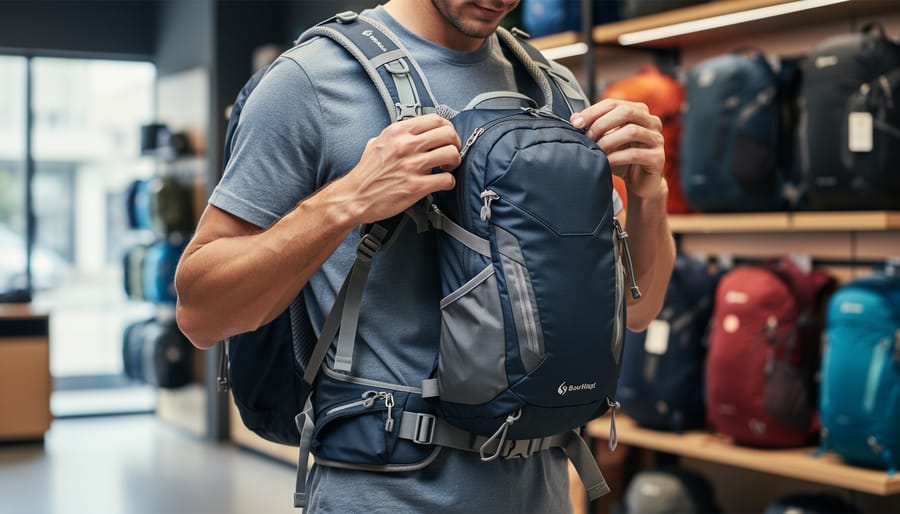
A pack loaded with organizational pockets, compression straps, and gear loops means nothing if the torso length doesn’t match your back or the shoulder straps dig into your neck after an hour. Fit determines whether you’ll actually enjoy carrying the pack mile after mile, while features just determine where you stash your snacks. The best-designed pack in the world becomes a liability if it sits too high, rides too low, or creates pressure points on your shoulders and hips. Try packs adjusted to your actual torso measurement with realistic weight inside, around 10-15 pounds for a day hike, and walk around the store for at least ten minutes before deciding.
Ignoring the Weight Penalty
Every ounce you carry multiplies over distance and elevation. A pack that weighs 28 ounces instead of 18 ounces adds 10 ounces, barely noticeable in the store, but that’s an extra 625 ounces lifted per mile on a trail with moderate elevation changes. Over an eight-mile day hike with 2,000 feet of climbing, you’ve unnecessarily hoisted nearly 40 extra pounds. This is why experienced hikers obsess over pack weight and prefer options around 20 ounces or less. The difference between a one-pound daypack and a two-pound model seems trivial until your shoulders and lower back remind you at mile five. Choose the lightest pack that still meets your essential feature requirements, not the one with every possible bell and whistle.
Buying Without Testing Under Load
Testing an empty pack in-store reveals almost nothing about how it will perform on the trail. A pack that feels comfortable with no weight can dig into your shoulders or create painful pressure points once loaded with five to ten pounds of actual hiking gear. The suspension system, hip belt effectiveness, and overall balance only become apparent under realistic load conditions.
Before committing to a purchase, load your prospective pack with at least eight to ten pounds, roughly what you’d carry on a typical day hike with water, snacks, layers, and safety items. Walk around the store for at least ten minutes, adjusting straps as needed. Pay attention to any rubbing, pressure points, or shifting as you move. If buying online, use the return window to test the pack on a short local trail before your first real adventure.
How to Match Your Pack to Your Hiking Style
Choosing the right small hiking backpack starts with honest reflection about your typical outings. If you primarily tackle 2-4 hour hikes on well-maintained trails with minimal gear, a 15-18 liter pack like the SKYSPER Hiking Bag gives you exactly what you need without the weight penalty of unused space. Weekend warriors who mix easier day hikes with occasional all-day adventures should target the 22-25 liter sweet spot, packs like the REI Co-op Flash 22 or Osprey Sportlite 25 handle both scenarios without forcing you to own multiple packs.
Your climate and season heavily influence the right capacity choice. Desert hikers in summer can get away with smaller volumes since layering is minimal, while shoulder-season adventurers in variable mountain weather need room for extra insulation and rain gear. If you regularly hike in conditions requiring microspikes, an extra layer, or photography equipment, lean toward 25 liters rather than convincing yourself you’ll pack lighter.
What size pack do I need for 2-4 hour hikes?
A 15-18 liter pack handles most short hikes comfortably, carrying water, snacks, a first aid kit, and a light jacket. This capacity works well when you’re not bringing extra layers or specialized gear.
Do I need a hip belt on a small pack?
Hip belts become valuable once your loaded pack exceeds 10-12 pounds, which happens easily with water, food, and camera gear even in small packs. Skip it only if you’re truly ultralight and carrying under 10 pounds total.
Can one small pack work for all seasons?
A 24-25 liter pack with compression straps adapts well across seasons, you can cinch it down for summer minimalism and expand it for winter layers. Smaller volumes sacrifice this flexibility.
Consider your packing personality honestly. Minimalists who genuinely stick to the ten essentials and nothing more will appreciate packs targeting approximately one pound or around 20 ounces, like the ultralight category. If you’re the “just in case” type who brings extra socks and multiple snack options, fighting against your nature with an undersized pack creates frustration on every outing. Match your actual habits, not your aspirational ones, and you’ll reach for the same pack trip after trip.
The right small hiking backpack should feel like it’s not there. Start by listing your actual hiking essentialsday hike food and first aid kit to determine what capacity you truly need, not what sounds impressive. Most hikers discover they need less space than they think.
Prioritize fit and weight over flashy features. A 20-ounce pack that disappears on your back beats a heavier model loaded with pockets you’ll never use. Test your top choices with realistic weight before purchasing, walking around the store for at least ten minutes with gear inside. Pay attention to hot spots, pressure points, and whether the pack stays stable when you move.
The ultimate test comes on the trail. When you’re three miles in and focused on the view instead of adjusting straps, you’ve found the right pack. Make your choice based on how you actually hike, not how you imagine hiking, and you’ll be ready for confident adventures throughout 2026 and beyond.