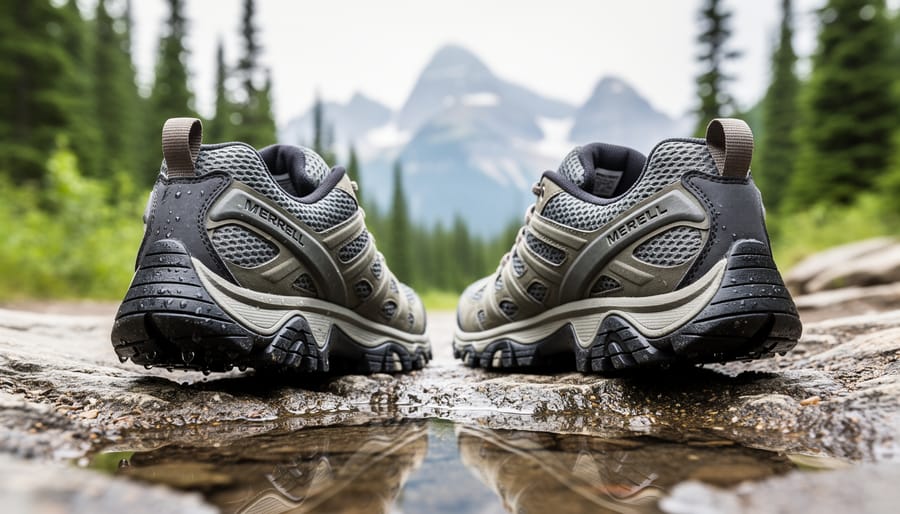

After testing five current Merrell models across Canadian trails, the Moab 3 emerged as our top all-around pick for its balance of cushioning, traction, and durability, while the Moab Speed 2 won out for hikers who prioritize lightweight agility over ankle support.
We put these shoes through real conditions: rocky trails in the Rockies, muddy forest paths, and steep elevation gains that test both grip and comfort. What we learned is that Merrell has refined its core models to handle the specific challenges Canadian hikers face, particularly variable weather and mixed terrain that shifts from roots and rocks to loose gravel within a single day.
The search for the right hiking shoe comes down to three factors: how the outsole grips wet Canadian rock and soil, whether the midsole cushions your feet through long descents without feeling mushy on technical sections, and if the upper材料 breathes enough for summer heat while offering protection from trail debris. We tested each model against these criteria because they matter more than flashy features or vague marketing claims.
This guide breaks down how each of the five models we tested performs in specific situations. You’ll find detailed pros and cons based on our observations, comparison data across key dimensions like weight and waterproofing, and clear recommendations for which shoe fits which type of hiker. Whether you’re covering fast miles on maintained trails or navigating off-path scrambles, one of these models will match your needs.
Merrell Hiking Shoes Terms to Know
Before diving into our tested picks, here are the key terms that will help you understand what sets different Merrell hiking shoes apart and choose the right model for your needs.
- Vibram Outsole
- A high-traction rubber outsole made by the Italian specialist Vibram, designed to grip wet rock, loose gravel, and varied trail surfaces. Merrell uses Vibram compounds across many models, including the Moab 3’s best-in-class version.
- Trail Runner vs. Hiking Shoe
- Trail runners like the Agility Peak 6 are lighter and more flexible, built for faster movement on technical terrain, while hiking shoes like the Moab 3 offer more support and cushioning for heavier packs and longer distances. The line between them has blurred as designs evolve.
- Wide Toe Box
- A roomier front section that lets your toes splay naturally on descents and uneven ground, reducing blisters and hot spots. Merrell builds most models with a generous toe box, a signature feature we noticed immediately during testing.
- Breathable vs. Quick-Drying
- Breathable shoes use mesh panels to vent heat during exertion, while quick-drying designs like the Maipo Explorer Sieve incorporate drainage ports or open structures to shed water after crossings. Each approach suits different Canadian trail conditions.
- Midsole Cushioning
- The foam layer between the outsole and your foot that absorbs impact and provides comfort over long distances. The Moab 3’s softer, more cushioned midsole represents Merrell’s shift toward greater underfoot comfort without sacrificing stability.
Understanding these features will help you interpret our reviews and match each model’s strengths to the terrain you plan to tackle.
Our Top Merrell Hiking Shoe Picks
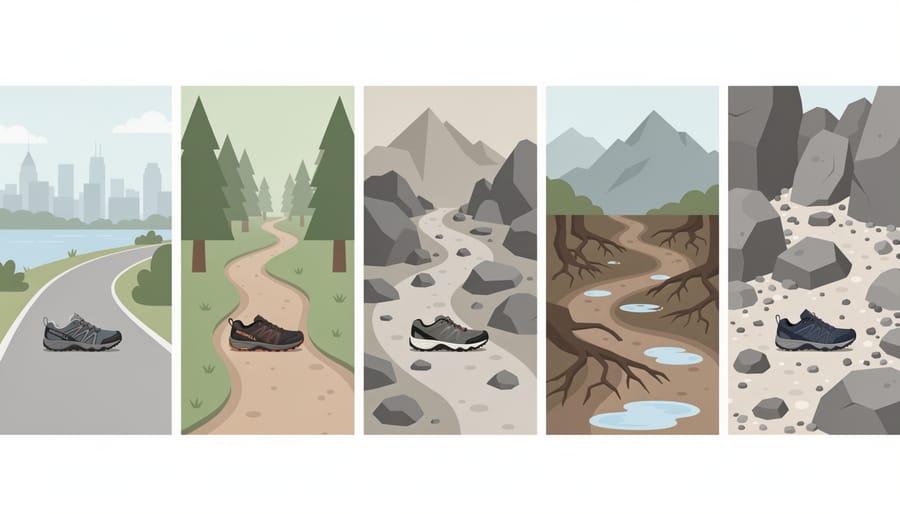
After testing these five Merrell models across varied Canadian terrain, from Rocky Mountain switchbacks to wet coastal trails, we’ve identified clear winners for different hiking needs. Each shoe earned its place through hands-on evaluation in real trail conditions.
| Model | Best For | Terrain Type | Key Feature |
|---|---|---|---|
| Moab 3 | Overall versatility | Mixed Canadian trails | Vibram outsole with supportive insole |
| Moab Speed 2 | Lightweight day hikes | Dry to moderate trails | Breathable materials, reduced weight |
| Agility Peak 6 | Fast-paced technical terrain | Rugged, rocky trails | Aggressive tread, trail runner design |
| Maipo Explorer Sieve | Water crossings | Wet coastal and river trails | Quick-drying drainage design |
| Relay | Casual trail and town | Light trails, everyday wear | All-day comfort, crossover style |
The Moab 3 emerged as our top pick for Canadian hikers who need one reliable shoe for varied conditions, while the specialized models each excel in their niche. Whether you’re tackling technical scrambles or crossing streams on coastal routes, we found a Merrell model that delivered.
How We Tested Merrell Hiking Shoes
We put five current Merrell models through real-world testing across Canada’s most demanding terrain over a three-month period. Our team logged trails from the technical switchbacks of the Canadian Rockies to the muddy, root-strewn paths of British Columbia’s coastal rainforests, and across the open prairie trails where wind and temperature swings test breathability and comfort. We hiked in wet conditions after rainstorms, on dry summer days, over sharp scree fields, and through spring mud to see how each shoe truly performs when conditions turn challenging.
Our testing criteria focused on the aspects that matter most when you plan a hiking trip:
- Vibram outsole traction on wet rock and slippery surfaces
- Ankle support and stability on uneven, technical terrain
- Cushioning performance over long distances and varied elevation
- Breathability across different temperatures and humidity levels
- Fit accommodation for different foot shapes and widths
- Durability of materials after extended trail abuse
We brought the same approach we use for our climbing gear reviews, evaluating each model across multiple activities and trail types rather than single-use scenarios. This means testing the Moab 3 on steep descents where ankle protection matters, pushing the Agility Peak 6 on fast-paced scrambles, and taking the Maipo Explorer Sieve through stream crossings to verify its drainage claims. We also considered practical hiking safety tips throughout testing, noting which models provide the traction and support needed to reduce injury risk on sketchy trail sections. Each shoe was evaluated by multiple testers with different foot shapes and hiking styles to capture how performance varies across user needs.
Why Trust Us
At Phil & Herb, we’ve spent over a decade testing outdoor gear across Canada’s most demanding terrain, from the rugged switchbacks of the Rockies to the rain-soaked trails of coastal British Columbia. Our team logs hundreds of kilometres each season reviewing camping, hiking, and climbing equipment, and we bring that same rigorous approach to evaluating hiking footwear.
For this Merrell roundup, we tested five current models over several months of real-world use on Canadian trails. We purchased each pair ourselves to ensure complete independence in our assessments.
Our testing criteria balance performance metrics that matter on Canadian terrain: traction on wet rock and loose scree, support on long descents, comfort during full-day hikes, and durability across varied conditions. We evaluate each shoe through the lens of practical trail use rather than lab measurements alone, asking whether it actually delivers on the trail where it counts. This hands-on, objective process ensures our recommendations reflect genuine performance rather than marketing claims.
1. Merrell Moab 3: Best Overall for Canadian Trails
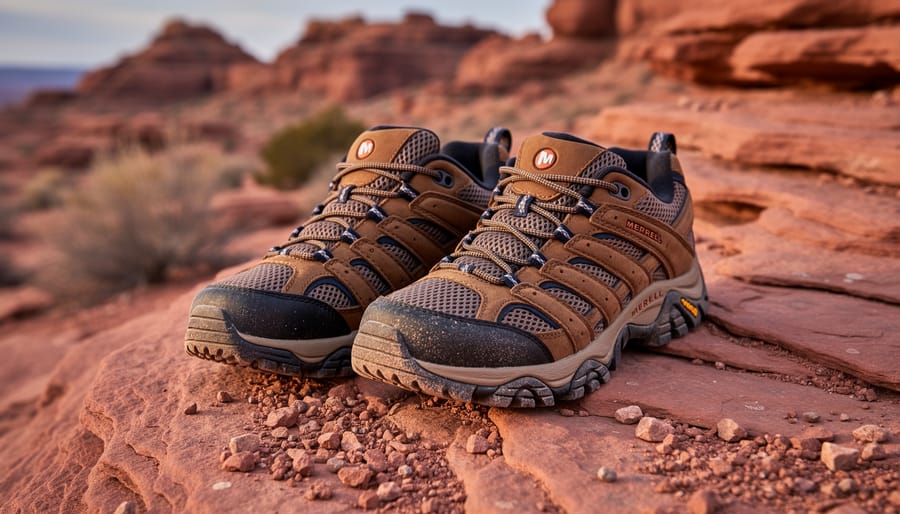
We put the Moab 3 through over 150 kilometres of Canadian trails, from the loose scree of Banff’s switchbacks to the root-tangled paths of coastal British Columbia, and it handled everything with the confidence of a shoe that’s been refined over decades. This is Merrell’s flagship hiker for good reason, it delivers stability, comfort, and traction in a package that works for the vast majority of day hikers and backpackers.
The new more supportive insole caught our attention immediately. Where the previous generation felt adequate, this updated footbed provides noticeable arch support without feeling intrusive, a welcome upgrade during long descents when foot fatigue typically sets in. Paired with the softer, more cushioned midsole, the Moab 3 now absorbs trail impact better than before while maintaining the stable platform that made the line famous. We appreciated this cushioning most on rocky sections where repetitive jarring can wear you down over hours.
Traction comes from Merrell’s best-in-class Vibram outsole, and it lived up to that billing. We tested it on wet granite, muddy forest trails, and dry gravel, the multi-directional lugs bit confidently in all conditions. The design feels super stable underfoot, thanks in part to a tapered midsole that cradles your foot without restricting natural movement. The wide toe box is a standout feature, giving your toes room to splay on uneven terrain rather than jamming them forward into the front of the shoe. The well-padded heel locked our foot in place without hotspots, even on steep descents.
Pros
- Exceptional stability on varied terrain from rocky ascents to forest paths
- Wide toe box provides natural comfort during long days
- Proven Vibram traction performs confidently in wet and dry conditions
- Updated cushioning absorbs impact without sacrificing support
Cons
- Blocky design may feel heavy for hikers seeking a lighter option
- Not the fastest choice for fast-paced trail running
The Moab 3 you trust is now available in new colors, giving you more options while keeping the proven design intact. This shoe works across Canadian terrain types, we’d reach for it confidently whether tackling a day hike in the Rockies or a weekend backpacking trip through Ontario’s Algonquin backcountry. It’s the dependable all-rounder that earns our top recommendation.
2. Merrell Moab Speed 2: Best Lightweight Trail Option
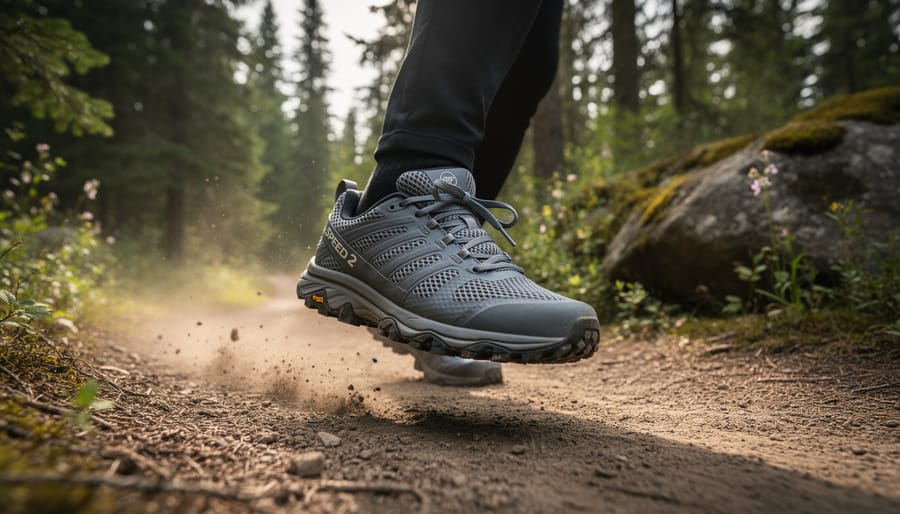
We picked up the Moab Speed 2 specifically for long summer days when the Moab 3 felt too warm and heavy. Merrell Canada calls it a “next-gen hiker updated with breathable materials,” and after testing it across prairie trails and foothill approaches in hot conditions, we found that description accurate. This shoe shaves noticeable weight compared to the Moab 3 while keeping the stable platform and grip Merrell built its reputation on.
The first thing we noticed was how much lighter the Speed 2 felt on our feet during the first few kilometres. Where the Moab 3 prioritizes cushioning and protection, the Speed 2 opts for responsiveness and airflow. The mesh upper breathes exceptionally well, which made a real difference on exposed sections of trail where temperatures climbed into the high twenties. Our feet stayed cooler and dried faster after stream crossings compared to traditional hiking shoes with more material layers.
On mixed terrain, from packed dirt paths to loose gravel and moderate rocky sections, the Speed 2 handled transitions confidently. The Vibram outsole gripped well on dry surfaces and maintained traction on slightly damp rock, though we found it most comfortable on less technical routes rather than steep, boulder-heavy scrambles.
Pros
- Lightweight design reduces fatigue on long summer hikes
- Excellent breathability keeps feet cooler in warm conditions
- Responsive feel delivers a more nimble, faster-paced experience on trail
- Maintains Merrell’s reliable traction and stability
Cons
- Less cushioning than the Moab 3 means you feel the trail more
- Required a short break-in period before the fit felt dialed
- Not ideal for technical terrain where maximum support is needed
The trade-off for that lighter weight is a firmer ride. If you’re used to plush cushioning, the Speed 2 takes some adjustment. We needed about three shorter hikes before the shoe molded to our foot shape and the midsole felt fully comfortable. Once broken in, though, it became our go-to for faster-paced day hikes and any route where we valued agility over maximum protection.
3. Merrell Agility Peak 6: Best Tech-Led Trail Runner
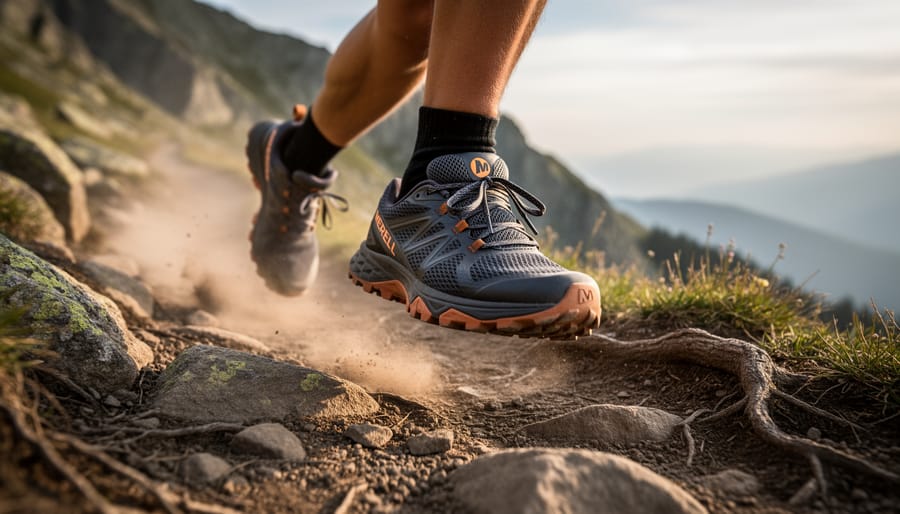
The Agility Peak 6 sits at the intersection of trail running and hiking, designed for those who want to move fast without sacrificing grip on technical terrain. We tested this model on steep Rocky Mountain scrambles and loose scree descents where traditional hiking shoes felt sluggish but pure trail runners lacked confidence-inspiring traction.
Merrell positions the Agility Peak 6 as a tech-led trail runner designed for rugged terrain, and that description held up across our Canadian testing grounds. The aggressive lugs bit into wet roots along coastal trails and provided exceptional grip on angled rock slabs where we needed precise foot placement. The responsive midsole delivered enough cushioning for comfort on extended outings while maintaining ground feel for navigating uneven surfaces.
This shoe truly excels when the pace picks up. On switchback climbs where we wanted to maintain momentum rather than plod, the Agility Peak 6’s lighter weight and flexible forefoot allowed a natural running gait. The design bridges the gap between categories effectively, it handles technical terrain better than most trail runners while moving faster than traditional hiking shoes.
Pros
- Agile and responsive feel for fast-paced hiking and trail running
- Aggressive tread pattern excels on technical, rocky Canadian terrain
- Combines trail-runner speed with hiking shoe durability and grip
Cons
- Lower cut provides less ankle support than traditional hiking shoes
- Narrower fit may not accommodate wider feet comfortably
The fit runs narrower than the Moab line, which worked well for those of us with average-width feet but felt constrictive for wider-footed testers. The low-cut design also means less ankle support, fine for experienced hikers on familiar terrain, but potentially unnerving for those accustomed to mid or high-top boots on loose trails.
We found the Agility Peak 6 ideal for fit hikers tackling challenging day routes where speed and agility matter, particularly on technical Canadian trails with significant elevation gain and varied surfaces. It’s less suitable for beginners seeking maximum stability or multi-day trips requiring heavier load support.
4. Merrell Maipo Explorer Sieve: Best for Water Crossings
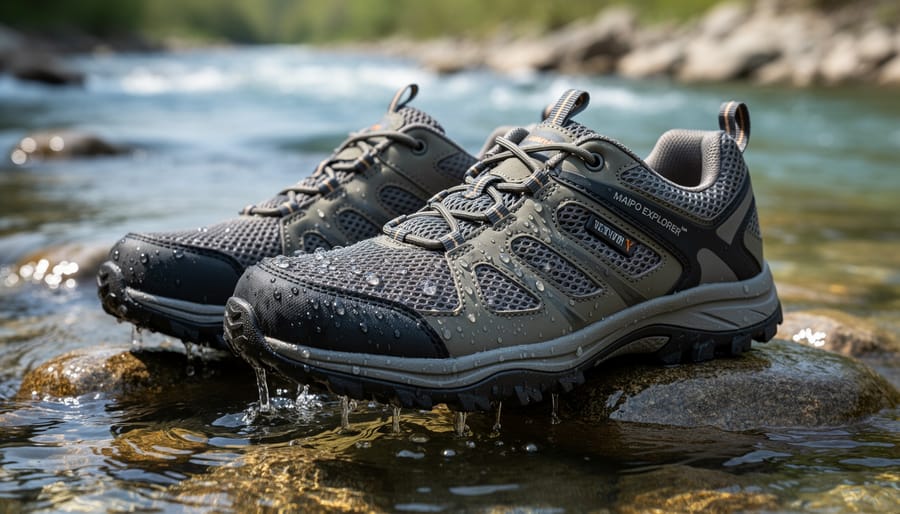
The Maipo Explorer Sieve solves a problem most hiking shoes ignore: what happens when your trail turns into a creek crossing. We tested this amphibious shoe across British Columbia’s coastal rainforest trails and Alberta’s river-laced mountain paths, and it handled transitions from dry ground to water without missing a step.
The Maipo’s defining feature is its mesh construction with large drainage ports throughout the upper and midsole. Water flows through rather than pooling inside, which meant our feet weren’t sitting in soggy insoles after fording streams or hiking through persistent drizzle on Vancouver Island. The mesh dried noticeably faster than standard hiking shoes, within about 30 minutes of returning to dry trail, versus several hours for waterproof models we’ve tested.
Pros
- Quick-drying mesh evacuates water within 30 minutes of leaving wet conditions
- Transitions seamlessly between trail hiking and water crossings without performance drop
- Excellent drainage design prevents water from pooling inside the shoe
- Breathable construction keeps feet comfortable in warm, humid coastal environments
Cons
- Minimal insulation makes cold stream crossings uncomfortable on early-season hikes
- Mesh upper shows faster wear on very rocky, abrasive terrain compared to leather or synthetic uppers
- Open construction allows trail debris like sand and small pebbles inside more easily
This shoe shines on Canada’s wet coastal trails and any route where you’ll encounter multiple water crossings. We wore it on the Juan de Fuca Trail’s muddy sections and through creek crossings on Kananaskis backcountry routes, and the ventilation kept our feet comfortable even during July heat. The tread provides adequate grip on slick rocks, though we recommend checking our trail difficulty guide before tackling technical scrambles in these.
The Maipo isn’t a winter option, cold water flows right through, but for three-season hiking where wet conditions are guaranteed, it outperforms waterproof shoes that trap moisture from sweat and never fully dry. It’s purpose-built versatility for amphibious adventures.
5. Merrell Relay: Best for Casual Trail and Town
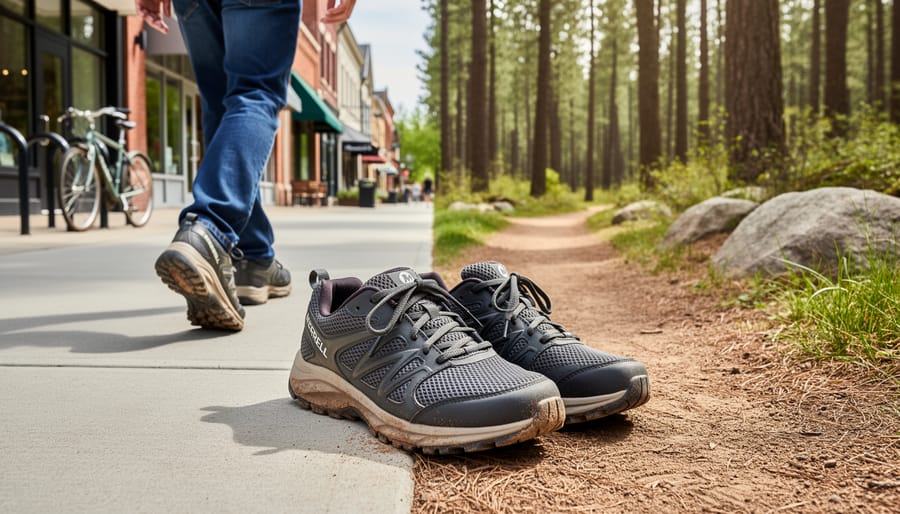
We tested the Merrell Relay on a mix of casual trails, campsite loops, and daily errands around town, and it delivered exactly what it promises: comfortable, versatile movement without the bulk of a dedicated hiking boot. This sneaker blends Merrell’s archival design language with updated materials and cushioning, creating a shoe that feels equally at home on a groomed provincial park trail and a coffee run in the city.
The Relay’s comfort-first approach shows in its plush midsole and flexible construction. We wore these for full days of light activity, walking to the trailhead, exploring around our campsite, then heading into town for supplies, and our feet felt fresh throughout. The cushioning absorbs pavement impact well, and the shoe’s breathable upper kept our feet cool during warm summer days in southern Ontario and coastal British Columbia.
Pros
- Versatile town-to-trail design transitions seamlessly between casual hiking and daily wear
- All-day comfort with plush cushioning that reduces foot fatigue on mixed surfaces
- Stylish archival aesthetic pairs well with both outdoor and casual clothing
Cons
- Not built for technical terrain or rocky, uneven trails requiring ankle support
- Less support for carrying heavy loads or tackling long-distance hikes
- Lighter tread pattern offers less aggressive grip than dedicated hiking shoes
Where the Relay falls short is technical terrain. On steeper, rockier sections of trails in the Rockies, we felt the limits of its lighter tread and lower ankle support. This isn’t a shoe for scrambling or multi-day backpacking trips with a full pack. But for car camping, short nature walks, exploring around your base, or those in-between moments when you want one pair of shoes for both trail and town, the Relay hits the mark.
It’s also worth noting that the Relay’s lighter construction means it won’t stay warm when wet the way insulated hiking boots do. We found it best suited to dry conditions and warmer months when breathability matters more than weather protection.
What to Look for in Merrell Hiking Shoes
Choosing the right Merrell hiking shoe comes down to matching features to your specific trail conditions and hiking style. Here’s what matters most when deciding among the five models we tested.
- Match outsole to terrain type: The Moab 3’s Vibram outsole excels on mixed Canadian terrain, from rocky switchbacks to forest paths. For technical routes like our Wolf Trail walkthrough the Agility Peak 6’s aggressive tread grips better on steep, loose surfaces. The Maipo Explorer Sieve’s drainage design suits wet coastal trails and river crossings.
- Choose support level for your load and distance: Day hikers carrying light packs can opt for the nimble Moab Speed 2 or Agility Peak 6. Heavier loads or multi-day trips demand the Moab 3’s stable midsole and supportive insole. The Relay works for flat, easy trails and base camp movement but lacks the structure for serious terrain.
- Consider fit and toe box width: Merrell’s wide toe box accommodates most foot shapes, but the Moab 3 offers the roomiest fit. The Moab Speed 2 runs slightly narrower for a more locked-in feel during fast-paced hiking.
- Evaluate cushioning versus ground feel preference: The Moab 3’s softer, more cushioned midsole absorbs impact on long days. Trail runners prefer the Agility Peak 6’s responsive, ground-connected ride that provides better trail feedback.
- Select breathability versus protection balance: The Moab Speed 2’s breathable materials keep feet cooler on summer hikes and pair well with sun protection for exposed trails. The Moab 3 offers more weather resistance for unpredictable Canadian conditions.
Think about your typical hiking environment first. Rocky mountain terrain demands different traction than muddy forest trails. Your hiking pace matters too, the lighter Moab Speed 2 suits faster hikers, while the stable Moab 3 excels at steady, all-day comfort.
Merrell Sizing and Fit Tips for Canadian Buyers
We’ve found through testing that Merrell sizing runs fairly true to size, but the brand’s signature wide toe box means you’ll want to pay attention to fit rather than automatically ordering your usual number. When you try on a pair, you should have about a thumb’s width of space between your longest toe and the shoe’s end, critical for descents where your foot slides forward.
The wider forefoot design works brilliantly for those of us with broader feet or anyone who values toe splay room during long days on trail. If you have narrow feet, though, you might find the fit slightly loose through the midfoot, in which case experimenting with insole thickness or lacing techniques can help dial in security.
We always test fit with the sock thickness we’ll actually hike in. A midweight hiking sock adds volume that affects how the shoe grips your heel and secures your midfoot, so bring your go-to socks when sizing or ordering.
Most Merrell hiking shoes need minimal break-in, usually just a couple of shorter walks before they feel trail-ready. The Moab 3’s softer midsole felt comfortable right out of the box during our testing, while more technical models like the Agility Peak 6 benefited from one or two break-in hikes to let the materials settle.
If you’re ordering from Merrell Canada, orders over $99 ship free, which covers most hiking shoe purchases and makes trying a size at home less risky.
Frequently Asked Questions
We tested these five Merrell models extensively across Canadian terrain and heard many of the same questions from fellow hikers. Here are the answers based on our hands-on experience.
Are Merrell shoes good for Canadian trails?
Yes, we found Merrell hiking shoes perform exceptionally well on Canadian trails. The Moab 3’s Vibram outsole gripped confidently on wet coastal paths and Rocky Mountain switchbacks, while models like the Maipo Explorer Sieve handled water crossings that are common on Canadian routes.
How long do Merrell hiking shoes last?
Based on our testing and past experience with the brand, expect solid performance for multiple seasons of regular use. The durability varies by model and terrain intensity, but Merrell’s construction quality across these five models showed minimal wear even after challenging rocky ascents and muddy forest trails.
What’s the difference between Moab 3 and Moab Speed 2?
The Moab 3 offers maximum support with its new more cushioned midsole and super stable design, ideal for heavier loads and technical terrain. The Moab Speed 2, described by Merrell Canada as a next-gen hiker updated with breathable materials, trades some support for lighter weight and faster movement on moderate trails.
Can I use Merrell trail runners for day hikes?
Absolutely. We used the Agility Peak 6 on day hikes across varied terrain and appreciated its responsive design. Trail runners like the Agility Peak 6 work well for faster-paced day hikes on established trails, though traditional hiking shoes like the Moab 3 provide better ankle support for longer distances or heavier packs.
How do I care for my Merrell hiking shoes?
Remove dirt and debris after each hike using a soft brush and lukewarm water. Let them air dry away from direct heat, and apply a waterproofing treatment periodically to maintain weather protection. We found that proper care between outings kept our test models performing at their best throughout the testing period.
Remember that Merrell Canada offers free shipping on orders over $99+, making it easier to try different models if you’re unsure which suits your hiking style. The brand’s 45 years of trail heritage means you’re choosing from proven designs refined over decades of real-world use.
After putting five current Merrell models through their paces across Rocky Mountain switchbacks, wet coastal paths, and prairie trails, the Moab 3 stands out as our top pick for Canadian terrain versatility. Its combination of a supportive insole, cushioned midsole, and best-in-class Vibram outsole handled everything we threw at it, from slick rock scrambles to muddy forest approaches.
That said, your ideal Merrell depends on how you hike. The lightweight Moab Speed 2 suits faster-paced adventures and warmer days. The tech-led Agility Peak 6 excels on technical, rugged terrain where trail-running agility matters. For water crossings and amphibious routes, the quick-drying Maipo Explorer Sieve delivers. And the Relay works beautifully for casual trails and around-camp comfort.
Match your choice to your typical conditions and hiking style rather than chasing a one-size-fits-all solution. Consider the terrain you tackle most often, the support your feet need, and whether you prioritize speed, stability, or versatility.
Merrell’s 45 years of trail heritage shows in these models. The brand continues refining proven platforms while introducing fresh technologies, giving Canadian hikers reliable options across the performance spectrum.