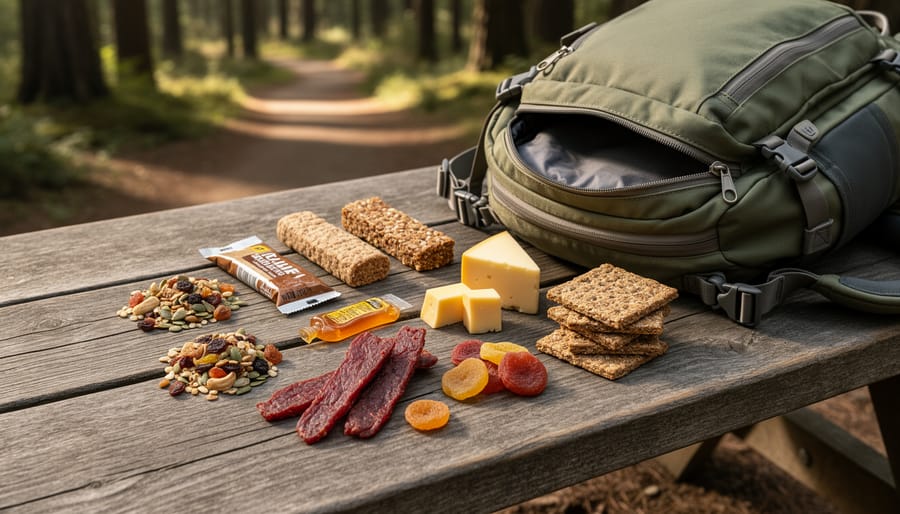

The eight best hiking foods for 2026 are trail mix, energy bars, nut butter packets, dried fruit, jerky, honey or energy gels, cheese, and whole-grain crackers. Each offers a proven balance of calories, portability, and shelf stability that keeps you fueled without weighing down your pack.
Choosing the right food can make or break your trail experience. We’ve tested dozens of options across day hikes and multi-day treks, and these eight consistently deliver the energy you need when hunger strikes miles from the trailhead. The key is matching calorie density to effort level while keeping weight and spoilage risk low.
When you plan a successful hike nutrition deserves as much attention as your route map. Backcountry nutrition is highly personal, but certain foods have earned their place in our packs through real-world performance. The selections below focus on items that travel well, require no refrigeration, and provide quick energy or sustained fuel depending on your needs. We’ll cover why each food works, how to pack it efficiently, and which situations call for one option over another. Whether you’re tackling a two-hour loop or an all-day summit push, you’ll find practical recommendations that actually hold up on the trail.
How We Choose Our Trail Foods
Choosing hiking food isn’t about grabbing whatever’s on sale at the gas station on your way to the trailhead. We select every item in our packs based on five core criteria that we’ve refined through years of day hikes in conditions ranging from desert heat to alpine cold.
First is caloric density: how much energy you get per ounce of weight. On a day hike where every ounce counts, foods delivering 120 to 180 calories per ounce earn their place. Weight-to-energy ratio matters because carrying a pound of apples gives you roughly 240 calories, while a pound of mixed nuts delivers over 2,500 calories.
Shelf stability determines whether food survives temperature swings from a 45-degree morning to an 85-degree afternoon in your pack. We avoid anything that melts, spoils, or turns into mush by noon. Ease of consumption on the move means you can eat it with one hand while still hiking, without elaborate prep or cleanup.
Personal testing matters more than marketing claims. We’ve carried every recommendation on multiple hikes, noting how it performed in real conditions. Backcountry nutrition is highly personal and subject to diverse interpretation. Your caloric requirements depend on your body weight, hiking intensity, and duration. As a starting point, most day hikers need 200 to 300 calories per hour of moderate hiking, with a macronutrient split favoring carbohydrates for quick energy (50 to 60 percent), moderate fats for sustained fuel (25 to 35 percent), and some protein for recovery (15 to 20 percent).
What works for us might not work for you. Some hikers thrive on constant small snacks, others prefer eating larger amounts at planned stops. Test options on shorter local hikes before committing them to a full-day adventure.
1. Trail Mix: The Classic Energy Blend
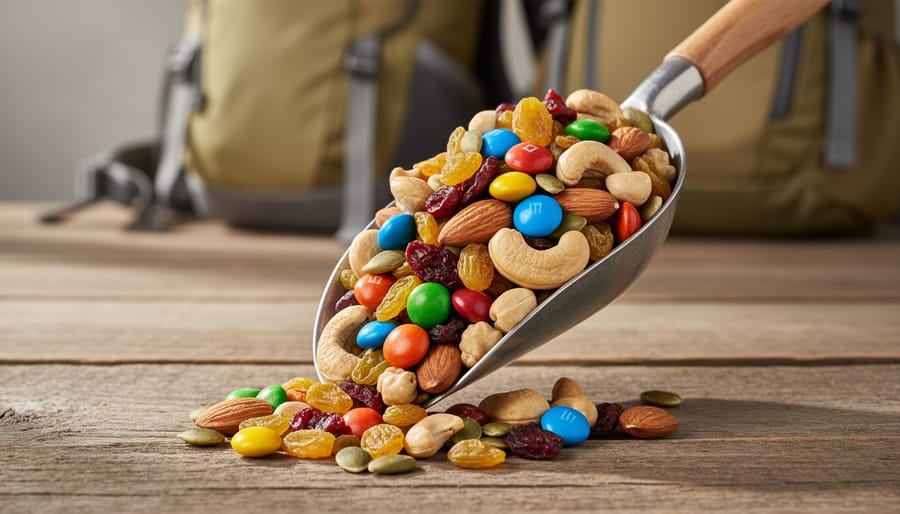
Trail mix earns its reputation as hiking’s most versatile fuel because it delivers all three macronutrients in one portable package. The combination of nuts (healthy fats and protein), dried fruit (quick carbohydrates), and optional additions like dark chocolate or seeds creates a caloric powerhouse that your body can access both immediately and over time. During a steady climb, the sugars from fruit provide fast energy while the fats from nuts sustain you for the long haul.
What makes trail mix particularly effective is the customization factor. We build ours with a 2:1 ratio of nuts to dried fruit, which keeps the calorie density high without overwhelming your palate with sweetness. Almonds and cashews offer the best weight-to-energy payoff, while cranberries or raisins add just enough natural sugar to keep things interesting. Throw in some dark chocolate chips for morale on tough sections.
When buying pre-made trail mix, read the ingredient list carefully. Many commercial versions load up with yogurt-covered items, candy pieces, and excessive salt that add weight without proportional nutrition. Look for simple blends focused on raw or dry-roasted nuts with minimal added ingredients. Store-bought options work fine for day hikes, but building your own lets you dial in exactly what your body responds to on the trail.
The real advantage shows up around mile four when you need quick energy but don’t want to stop. Trail mix works one-handed while you keep moving, and it never requires refrigeration or special packing considerations.
2. Energy Bars: Compact Fuel in Your Pocket
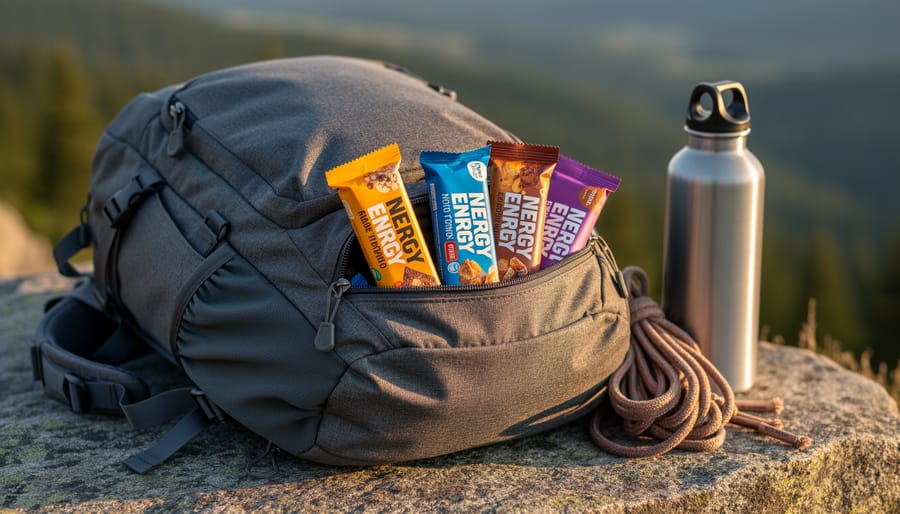
Energy bars earn their place in every hiker’s pack because they deliver reliable calories in a format that won’t leak, melt completely, or require two hands to eat. We’ve tested dozens on actual trails, and the best ones share specific characteristics that matter when you’re three miles from the trailhead.
Look for bars with at least 200 calories and a mix of carbohydrates, protein, and fats. The ideal ratio depends on timing: bars eaten early in your hike can be higher in fats and protein for sustained energy, while those saved for midday refueling should emphasize quick-burning carbs. Check the ingredient list for whole foods you recognize (nuts, oats, dates) rather than a chemistry experiment of isolated proteins and synthetic vitamins.
Texture changes dramatically with temperature. Chocolate-coated bars turn into gooey messes above 75°F, while some protein bars become rock-hard in cold weather. We pack nut-based bars with minimal coating for summer hikes and opt for softer, fruit-forward options when temperatures drop. Test your chosen bars in conditions similar to your planned hike.
Timing matters for energy bars in your fueling strategy. Eat one 30 to 45 minutes into your hike to top off your glycogen stores before you feel hungry, then follow with smaller snacks every hour. This prevents the energy crash that comes from waiting until you’re famished. Keep one bar accessible in a hip belt pocket or jacket rather than buried in your pack, because the best hiking food is the food you’ll actually eat when you need it.
3. Nut Butter Packets: High-Calorie Convenience
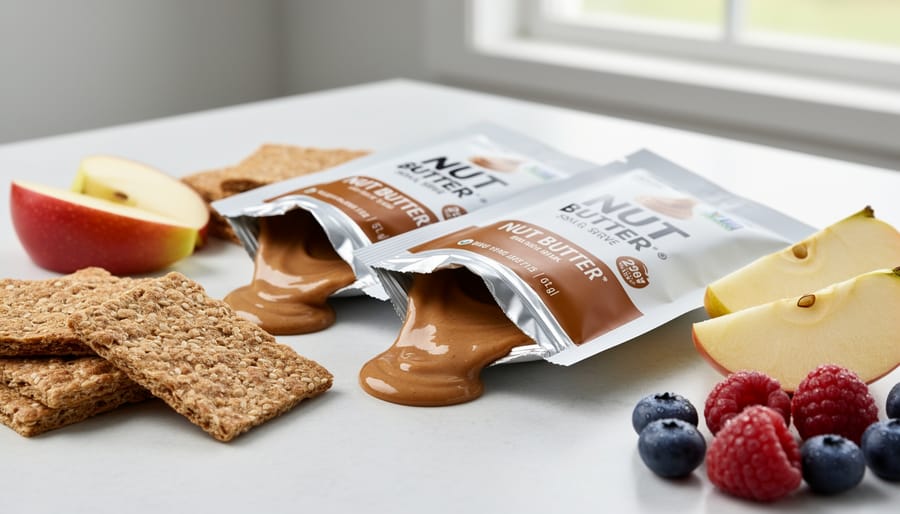
Single-serve nut butter packets deliver more calories per ounce than almost any other portable hiking food. A typical almond or peanut butter packet packs 180-200 calories into a lightweight, crush-proof pouch that takes up minimal pack space. That caloric density makes them particularly valuable when you need quick energy without stopping for a full snack break.
The healthy fats in nut butter provide sustained energy that outlasts simple carbohydrates, while also helping your body absorb fat-soluble vitamins from other foods. We’ve found them most useful during steep climbs or when we need a calorie boost but don’t want to unpack a full meal. The individual packets eliminate the mess of carrying an open jar and prevent you from rationing yourself too conservatively when your body actually needs the fuel.
You can eat nut butter packets straight from the pouch, squeeze them onto crackers or dried fruit, or use them to make quick trail sandwiches with tortillas. Almond butter tends to be slightly thinner and easier to squeeze in cold weather, while peanut butter offers more protein per serving. Cashew and sunflower seed butter work well for those with nut allergies. The packets remain stable in your pack for months without refrigeration, making them reliable for last-minute hikes when you haven’t had time to shop for fresh options.
4. Dried Fruit: Natural Sugar for Sustained Energy
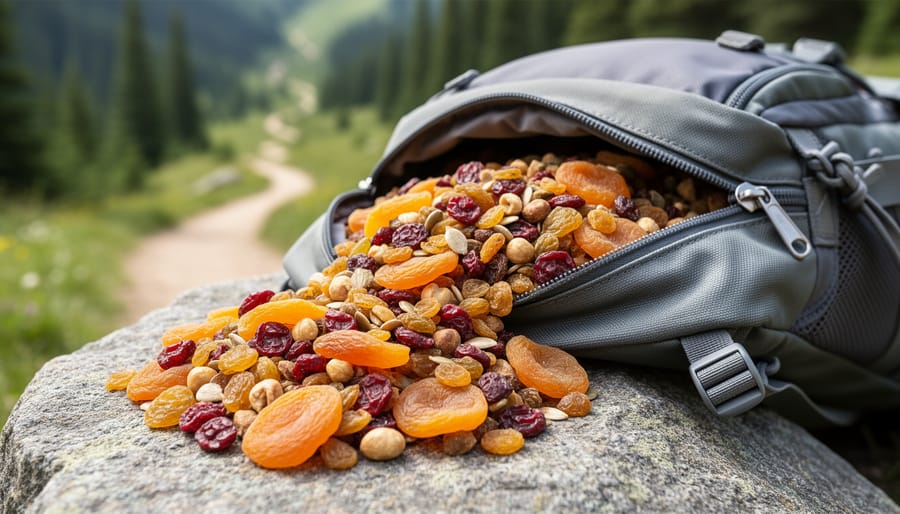
Dried fruit delivers concentrated natural sugars that your body converts quickly into usable energy, making it ideal for those mid-hike moments when you need a boost. Because the dehydration process removes 75-90% of water content, you get a calorie-dense snack that weighs almost nothing in your pack. A quarter-cup of dried apricots packs about 80 calories and fits in your palm.
The natural fructose in dried fruit provides sustained energy without the crash you might get from refined sugar. Your body processes these simple carbohydrates efficiently during physical activity, which means you’ll feel the energy within 15-20 minutes of eating.
Not all dried fruit survives backpack abuse equally well. Apricots, mango slices, and banana chips hold their shape and don’t turn into a sticky mess at the bottom of your bag. Raisins and cranberries are nearly indestructible and won’t leak even if you sit on your pack. Dates work well but can clump together in warm weather. Softer options like figs or pineapple chunks tend to compress and stick, though they taste great if you eat them early in the hike.
Skip anything with added sugar coating, which makes your fingers sticky and adds unnecessary calories. Look for varieties with no added sulfites if you have sensitivities, though sulfite-treated fruit keeps its color better during storage.
5. Jerky: Protein-Packed Trail Staple
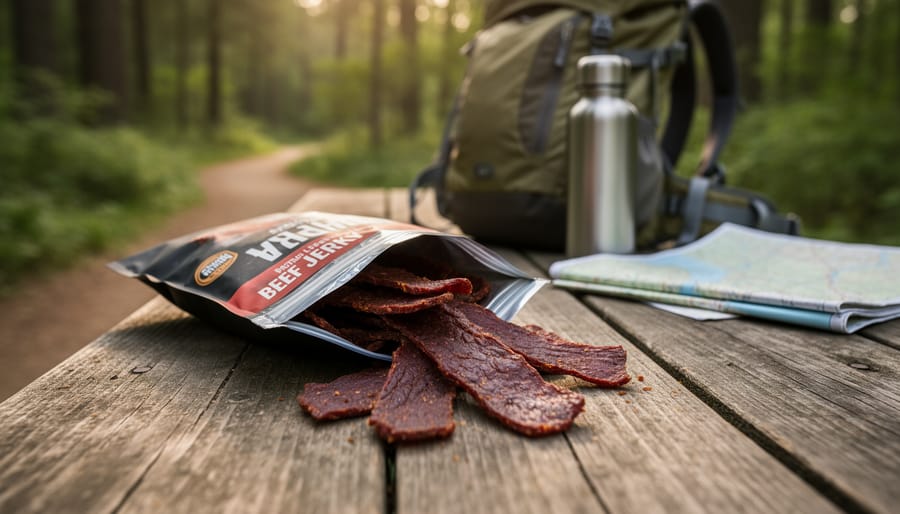
Jerky delivers one of the highest protein-to-weight ratios you’ll find in any trail food, making it particularly valuable when you need muscle recovery support during or after a long hike. A single ounce typically provides 9-12 grams of protein while weighing almost nothing in your pack, and it requires zero refrigeration even in warm weather.
The sodium content that some people avoid in everyday eating actually becomes an advantage on the trail. When you’re sweating through elevation gains or hiking in summer heat, you’re losing electrolytes that need replacement. Jerky’s natural salt content helps maintain electrolyte balance without requiring you to carry separate supplements or drink mixes.
Beyond traditional beef jerky, your options have expanded considerably. Turkey jerky offers a leaner profile with similar protein content, while salmon jerky adds omega-3 fatty acids and a different flavor profile that breaks up the monotony of sweet trail snacks. Plant-based versions made from mushrooms, soy, or seitan now provide comparable texture and protein for vegetarian hikers, though they sometimes come with a higher price point.
The shelf stability is nearly unmatched. Quality jerky lasts months in a pack without refrigeration, won’t melt in heat or freeze solid in cold, and maintains its texture through rough handling. Just remember that bears consider all scented items as food, so proper storage protocols apply whether you’re on a day hike or overnight trip.
6. Cheese and Crackers: Savory Satisfaction
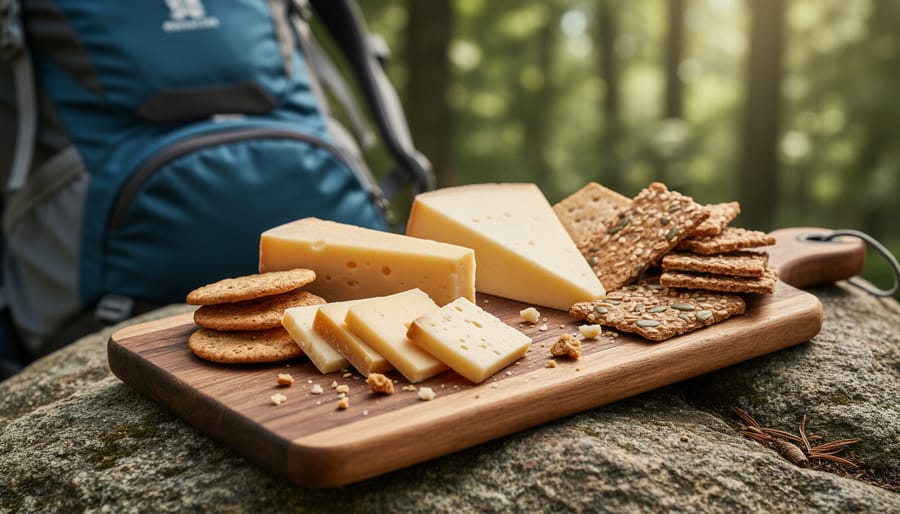
Hard cheeses like aged cheddar, Parmesan, Gruyère, and Gouda are excellent hiking companions because they hold up without refrigeration for a day hike and deliver concentrated calories, fat, and protein. These varieties have low moisture content, which prevents them from turning into a melted mess in your pack. We’ve carried blocks of aged cheddar on full-day hikes in summer heat without issues.
For crackers, durability matters more than you might think. Thin wheat crackers shatter into crumb dust within the first mile. We pack sturdy options like water crackers, thick whole-grain varieties, or even pita chips that can take the jostling of a loaded pack. Some hikers pre-slice cheese at home and layer it between crackers in a hard-sided container, creating ready-to-eat sandwiches that save time on the trail.
The savory contrast to sweet trail foods is more than a taste preference. After hours of sugary energy bars and dried fruit, the salt and fat in cheese and crackers can make the difference between forcing down calories and actually enjoying your fuel. This psychological boost helps maintain consistent eating throughout the day.
Pack cheese and crackers in a rigid container at the top of your pack where they won’t get crushed under heavier gear. A small plastic food storage box works perfectly and doubles as a plate when you stop for a snack break.
7. Fresh Fruit: Morning Hike Bonus
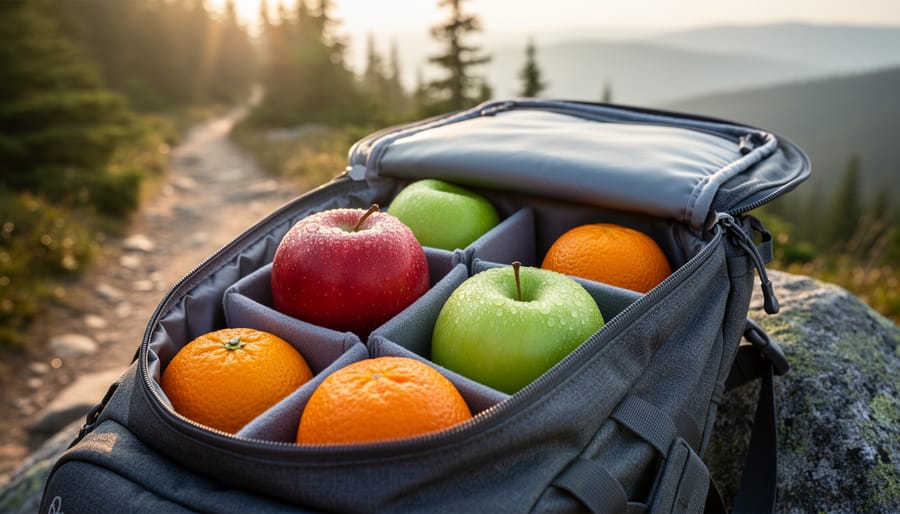
We pack an apple or orange on nearly every morning hike because sturdy fresh fruit adds variety to the usual dry snacks and contributes meaningful hydration, a medium apple delivers about 85% water content along with natural sugars for energy. Unlike softer fruits that bruise easily, thick-skinned apples and oranges survive the pack jostle if you wrap them in a bandana or tuck them into a side pocket away from sharp corners of your other hiking essentials.
Timing matters. We eat fresh fruit within the first two hours on the trail, before the weight becomes annoying and before any bruising turns the apple mealy. An orange at the first rest stop feels refreshing on hot days when you’re already thinking about sun protection and hydration. Once you finish it, toss the core or peel in a sealed bag to pack out, remember that all scented items, including fruit peels and cores, must be properly stored since bears consider anything with a scent as food.
Fresh fruit works best on shorter day hikes where the extra weight and bulk make sense. For longer treks or multi-day trips, dried fruit delivers similar benefits without the fragility.
8. Energy Gels and Honey Packets: Quick-Hit Fuel
Energy gels and honey packets deliver concentrated simple carbohydrates that hit your bloodstream within 15-20 minutes, making them ideal for those moments when you’re halfway up a steep climb and your energy drops noticeably. Unlike the sustained fuel from trail mix or nut butter, these quick-hit options provide fast glucose to your muscles when you need an immediate boost.
Gels work best during sustained efforts like a long ascent or when you’ve pushed too hard and feel your pace flagging. Honey packets offer similar rapid energy with a more natural ingredient list, just pure sugar that your body processes quickly. Both pack easily into hip belt pockets for mid-climb access without stopping to dig through your pack.
The key to avoiding stomach issues is using these sparingly and always with water. Taking a gel or honey packet on an empty stomach or without adequate hydration can cause cramping or nausea. We treat them as targeted tools rather than primary fuel, one packet during a challenging climb, not multiple throughout the day. They’re also part of broader safety tips for day hikes: carrying quick energy means you have backup fuel if a hike takes longer than planned or conditions become more demanding than expected.
Packing and Storing Your Hiking Food
How you organize your food makes a difference in both accessibility and safety on the trail. Pack items you’ll eat first near the top of your pack, and separate your snacks into meal-sized portions before you leave home, this prevents having to dig through your entire bag at every rest stop. Use resealable bags or small containers to protect items like crackers and fresh fruit from getting crushed, and keep your first aid kit and emergency supplies separate from your food so you can quickly grab what you need. Some of the specialty items we’ve mentioned may need to be ordered online in advance, so plan your food shopping at least a week before your hike.
Bears consider anything with a scent as food, which extends beyond just your snacks to include bottles, soaps, fuel, and cooking gear. On day hikes in bear country, keep all food and scented items in a sealed bag inside your pack rather than in external pockets, and never leave your pack unattended on the trail. When you stop to eat, consume everything you open rather than saving half-eaten items, and pack out all wrappers and trash, leaving nothing behind protects both wildlife and future hikers who use the trail.
Key Details to Know
Before you hit the trail, keep these critical details in mind to ensure safe, effective fueling on your hike:
- Calculate your caloric needs based on hike intensity and duration, most day hikers need 200-300 calories per hour of moderate activity, more for strenuous climbs.
- Pack 20-30% extra food beyond your planned needs as a safety buffer for unexpected delays or increased energy expenditure.
- Store all scented items properly, bears consider anything with a scent to be food, including wrappers, empty containers, sunscreen, and bug spray, not just the food itself.
- Test new foods on short hikes first to identify any digestive issues before relying on them during longer or more remote adventures.
- Balance quick-energy carbohydrates with sustained-release fats and proteins throughout the day rather than loading up on simple sugars alone.
- Order specialty items online in advance if your local stores don’t carry preferred options, especially if you have specific dietary requirements.
- Pack food in crush-resistant containers or protected compartments to prevent turning your energy bars into crumbs halfway through the hike.
These fundamentals apply regardless of which specific foods you choose from our eight recommendations. The key is matching your nutrition strategy to your personal metabolism, the demands of your route, and the realities of backcountry food safety.
Common Questions About Hiking Food
The questions below come up on nearly every group hike I lead, so let’s clear them up with answers based on what actually works on the trail.
How many calories do I need for a day hike?
Most day hikers need 200-300 calories per hour of moderate hiking, but backcountry nutrition requirements are highly personal and subject to diverse interpretation based on your pace, body weight, pack weight, and terrain. A five-hour hike with 2,000 feet of elevation gain demands more fuel than a flat three-hour walk, so start with the general guideline and adjust based on how you feel.
Can I bring perishable foods on a day hike?
Hard cheeses, whole fresh fruit, and nut butter packets hold up fine for 6-8 hours in moderate temperatures, but skip anything requiring refrigeration on hot days. I pack an apple or orange for the first snack break, knowing it might bruise by afternoon if I wait too long.
How do I pack food to prevent crushing?
Place crushable items like crackers or chips in a small hard-sided container or protective case at the top of your pack, and keep denser foods like energy bars and trail mix in the main compartment where they can absorb pressure without damage.
What should I do with food wrappers and waste on the trail?
Pack out everything you pack in, including all wrappers, peels, and crumbs. Bears consider anything with a scent to be food, and all scented items must be stored properly or carried with you until you reach a proper disposal point, because storing food and disposing of garbage properly can mean life or death to a bear.
The caloric needs question deserves one more note from experience: if you’re bonking hard an hour into what should be an easy hike, you probably didn’t eat enough before you started. Pre-hike nutrition matters as much as trail snacks, so have a solid meal 1-2 hours before hitting the trailhead rather than trying to make up the deficit with energy gels mid-hike.
The eight foods we’ve covered all hold spots in our packs for good reason, they deliver reliable energy in formats that survive real trail conditions. Your ideal lineup will differ from ours, and that’s exactly how it should be. Nutrition on the trail is personal, shaped by your metabolism, the hike’s difficulty, and what your stomach tolerates when you’re breathing hard.
Test new foods on short, familiar routes before relying on them for longer adventures. A bar that works perfectly at home might sit like a brick in your gut at elevation, and discovering that preference on a two-hour loop beats learning it six miles from the trailhead. Pay attention to how different combinations affect your energy levels, and adjust accordingly.
Trip planning means more than mapping your route and checking the weather. Build your food strategy with the same care you give your gear list, considering caloric needs, timing, and storage requirements. Get this piece right, and you’ll have the fuel to enjoy every mile.