
If you want one guided US hiking tour that covers the most ground, Backroads is the strongest all-around pick, with routes spanning Alaska to Maine and a long list of national parks from Acadia to Zion. It isn’t the only good answer, though. Road Scholar suits travelers over 60 who want a national park trip built around them, and Wildland Trekking fits anyone who prefers small groups and expert guides on all-inclusive hiking and backpacking trips.
The difference comes down to who each tour is built for. Road Scholar lists 139 hiking trips in national parks, so its choices run deep, but its national park hiking tours are for adults 60 and older. Backroads shows departure dates stretching from November 2026 through September 2029, which makes it easy to plan far ahead. Short options exist too. Booking.com lists a four-hour guided hike in the Colorado Rockies near Denver, a good fit if you only have an afternoon.
In our comparison, we looked at how each option handles destinations, group style, and who it serves best. Details like difficulty level and meeting location vary by trip, so confirm those with the provider before you book. Below, we break it down side by side so you can match the tour to your pace, your calendar, and your trail legs.
Wildland Trekking vs. Road Scholar vs. Backroads at a Glance
Here’s the short version of how these three providers stack up before we get into the details. We pulled this from what each provider publishes on its own listings, so treat it as a starting map rather than a final answer.
| Provider | Trip style | Aimed at | Coverage and scheduling |
|---|---|---|---|
| Wildland Trekking | Guided hiking and backpacking; all-inclusive trips, small groups, expert guides | Hikers who want hands-on guidance | Confirm destinations and dates on the listing |
| Road Scholar | 139 hiking trips in national parks | Adults 60+ | Dozens of US states plus Alberta, New Brunswick, Nova Scotia and Prince Edward Island |
| Backroads | US hiking and walking tours | Travelers wanting a wide menu of destinations | Many states and national parks; date filters run from November 2026 through September 2029 |
A few things the table can’t tell you. Price, difficulty and meeting location all vary by trip, so check the tour listing for each one before you commit. We’re deliberately not quoting figures here, because a listing is the only place those details stay accurate.
If you’re new to guided trips, “all-inclusive” generally means the operator bundles major trip elements into one booking instead of leaving you to piece them together. What’s actually covered differs from company to company, so read the inclusions line by line rather than assuming.
Each provider suits a slightly different traveler, which is what the sections below sort out.
What Each US Hiking Tour Option Is
Wildland Trekking: Small Groups and Expert Guides
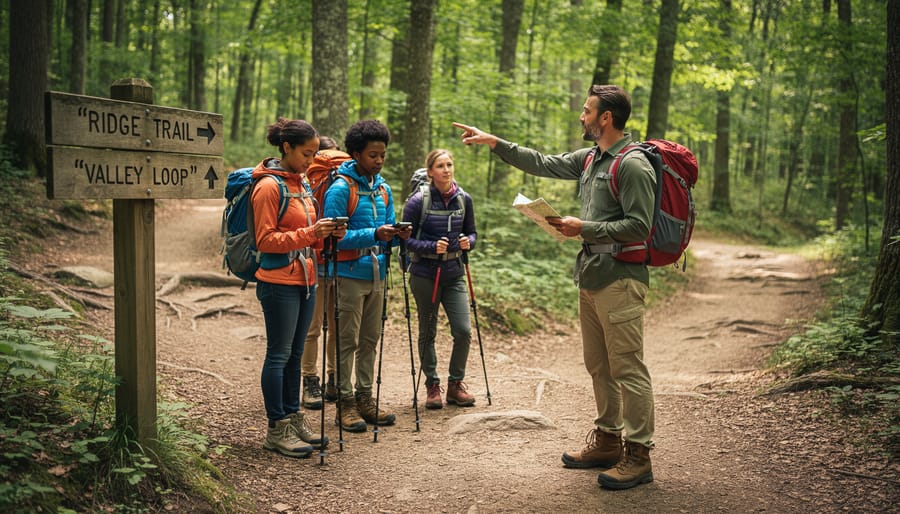
Wildland Trekking runs guided hiking and backpacking trips built around three things: all-inclusive packaging, small groups, and expert guides. If you’re new to organized trips, “all-inclusive” simply means the trip is bundled so you aren’t piecing together logistics yourself. Check each listing for exactly what’s covered, since inclusions can vary from trip to trip.
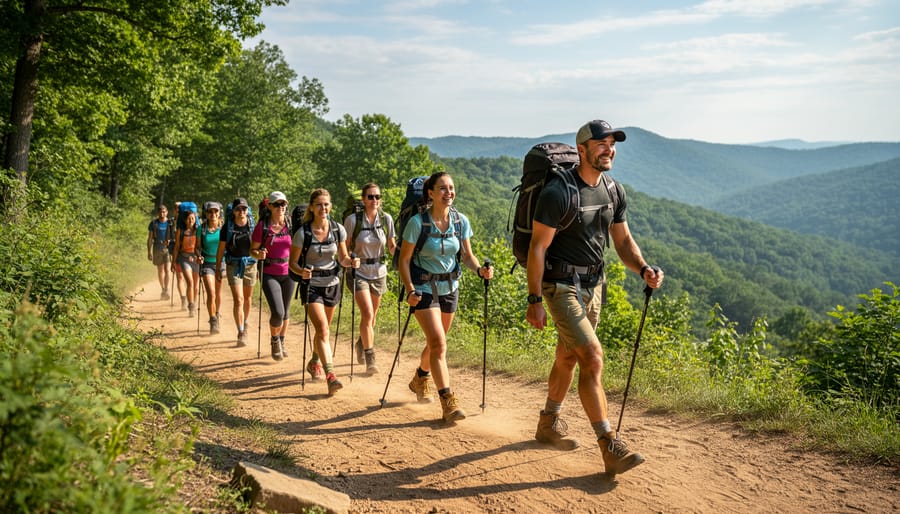
The small-group format is where this style of travel shines for us. With fewer people on the trail, the pace stays flexible, the guide can answer questions as they come up, and nobody gets lost in a crowd. It tends to feel more like hiking with a knowledgeable friend than following a tour bus route.
That’s the guide’s real value. An expert guide handles route choices, keeps an eye on conditions, and can explain the terrain and landscape as you walk through it. For beginners, that takes much of the guesswork out of a first backpacking trip. For seasoned hikers, it frees up headspace to simply enjoy the trail.
Difficulty level and meeting location aren’t confirmed here, so check the individual trip page before you book.
Road Scholar: National Park Hikes for Adults 60+
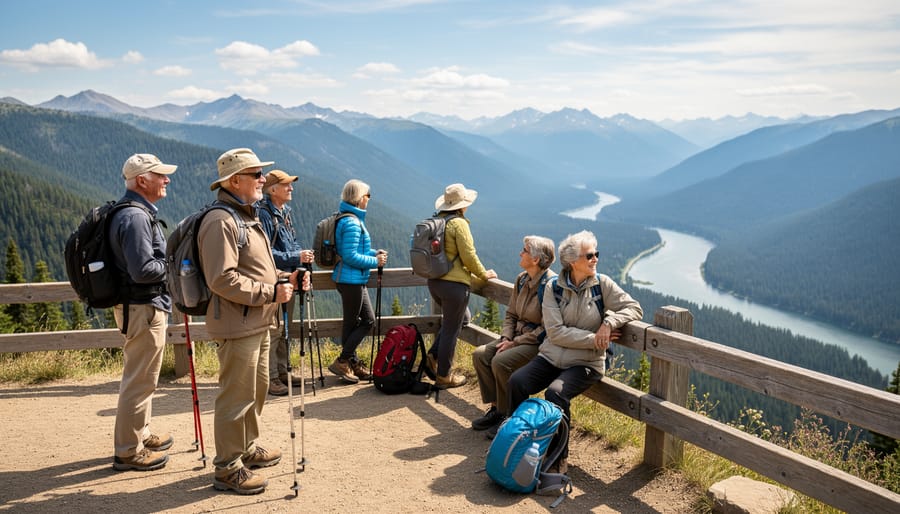
Road Scholar lists 139 hiking trips in national parks, and its hiking national parks tours are designed for adults 60 and over. That focus makes it a natural fit if you’d like a group of fellow travelers at a similar life stage, with the logistics already sorted.
What stood out to us is the breadth. The trips cover a long list of US states, including Alaska, Arizona, California, Colorado, Hawaii, Maine, Montana, Utah, Wyoming and Washington, D.C. You’ll also find options in the Canadian provinces of Alberta, New Brunswick, Nova Scotia and Prince Edward Island. That means a bucket-list national park and a quieter coastal walk can both show up in the same search.
One thing we can’t tell you from the listing overview is how demanding any single trip is. Difficulty level and meeting location aren’t something we can promise here, so check each trip’s page before you commit. It’s worth reading the physical requirements closely and matching them to your own pace.
Backroads: Hiking and Walking Tours Across the US
Backroads takes the widest-angle view of the three providers. Its US hiking and walking tours reach from Alaska and Hawaii to Maine, with stops across the Southwest and the Rockies in between. California options range from Yosemite and Death Valley to Joshua Tree, Palm Springs and Santa Barbara Wine Country.
The national park list is where hikers with a bucket list will linger. Backroads includes Acadia, Glacier, Grand Canyon, Zion and Yellowstone, along with Arches, Badlands, Grand Teton, Great Smoky Mountains and Olympic. If a specific park is the reason you’re shopping, scan that list first and work backward to the trip.
One planning perk stands out: the date filter on Backroads runs from November 2026 through September 2029. That’s a long runway, which helps if you’re coordinating vacation time, a group, or a trip you want to train for. Just don’t assume every park is open for every date in that window.
We’d treat the tour page as the final word on difficulty and meeting location, since those details vary from trip to trip.
Booking.com: Single-Outing Guided Hikes
Not every guided hike is a multi-day tour. Booking.com is a marketplace, so it lists shorter, single-outing hikes instead. One example is a guided hike in the Colorado Rocky Mountains near Denver that runs about 4 hours, which makes it a half-day option rather than a trip you build a vacation around. Think of it as a different category from Wildland Trekking, Road Scholar or Backroads.
Here’s a quick glossary so the labels make sense as you compare:
- All-inclusive tour
- A trip where the operator bundles guiding and logistics into one booking, so you’re not piecing details together yourself.
- Guided day hike
- A single outing led by a guide that starts and ends the same day, like the 4-hour Denver-area example.
- Backpacking trip
- A multi-day hike where you carry your gear and camp along the route.
- Walking tour
- A gentler, destination-focused outing, often on easier terrain than a trail-heavy hike.
- Small-group departure
- A scheduled trip capped at a limited group size for a more personal experience.
Check each listing for the meeting location and difficulty before you book.
Wildland Trekking vs. Road Scholar vs. Backroads, Dimension by Dimension
Routes and Destinations Compared
Where you want to hike matters more than which company you pick, so start with your bucket-list park and work backward. The three providers cover the map quite differently.
Road Scholar’s hiking trips span a long list of US states, from Alaska, Arizona and Utah to Maine, Tennessee and Washington, D.C. They also reach into Canada, with listings in Alberta, New Brunswick, Nova Scotia and Prince Edward Island. That makes it a good fit if you’d like to pair a national park with a Canadian coastal or Rockies trip.
Backroads builds its menu around named regions and parks. In our read of its listings, these stand out:
- Glacier, Grand Teton and Yellowstone for northern Rockies scenery.
- Grand Canyon, Zion, Arches and Bryce Canyonlands for desert and red-rock country.
- Yosemite, Death Valley, Joshua Tree and Channel Islands across California.
- Acadia, Great Smoky Mountains and Olympic for forest and coastline.
- Kenai Fjords in Alaska and Volcanoes in Hawaii for more remote picks.
Wildland Trekking takes a different angle. Rather than leading with a long destination list, it focuses on guided hiking and backpacking trips, so it suits you if the style of trip (small group, expert guide, possibly overnight) matters more than ticking off a specific state.
A simple way to choose: pick the park first, check which provider lists it, then confirm the meeting location and difficulty on that tour’s page before booking.
Trip Length, Price and Difficulty: What to Check Before You Book
Trip length is the first thing to pin down, because “guided hike” covers a huge range. A verified example from Booking.com is the guided Colorado Rocky Mountains hike near Denver, listed at 4 hours. That’s a half-day outing you can slot into a trip without rearranging everything else. Multi-day operators like Wildland Trekking, Road Scholar and Backroads stretch that into full itineraries, so the length on the listing really is the length of your commitment.
Price and difficulty are different. We can’t give you reliable figures for either, so treat both as things to confirm on the tour listing before you book. Prices shift with season, group size and what’s bundled in, and difficulty is set per trip, not per provider.
When you read a difficulty rating, look past the label and find the fitness requirement behind it. A phrase like “moderate physical fitness required” is a hint, not a guarantee. Check for these on the page:
– Daily hiking time and distance
– Elevation gain, which affects effort more than mileage does
– Terrain type, such as maintained trail versus rocky scrambles
– Pace of the group and rest stops
If a listing leaves any of that vague, ask the provider directly. Be honest with yourself about your current fitness, too. A tour that’s slightly easier than your limit is usually far more enjoyable than one that has you struggling to keep up.
What’s Included, Group Size and Meeting Points

When you compare US hiking tours, what’s bundled into the price tells you more than the itinerary does. Wildland Trekking runs all-inclusive trips with small groups and expert guides, which in plain terms means the logistics are handled for you and you’re not hiking in a crowd. Road Scholar and Backroads each describe their own packages differently, so don’t assume “included” means the same thing across providers.
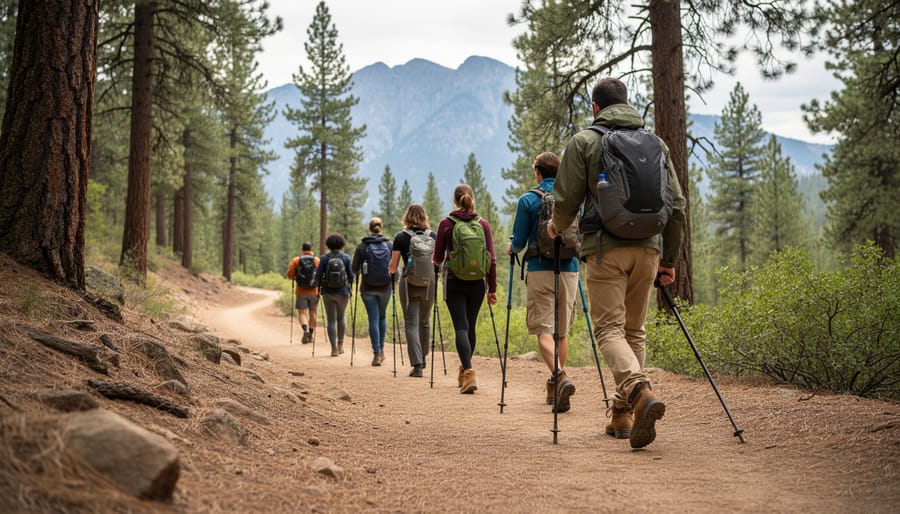
Group size matters more than most people expect. A small group tends to move at a friendlier pace and gives you more face time with the guide, while a bigger group can feel more like a parade. Think about how much attention and flexibility you want on the trail.
Then there’s the meeting point. We can’t tell you where any given tour starts, because that detail changes by trip and the listings we looked at don’t settle it. Confirm the exact location and start time before you book, especially if you’re flying in or driving a long way to reach a trailhead.
A quick pre-booking check: read the inclusions list line by line, look for the stated group size, and note the meeting instructions. If anything is vague, ask the provider directly.
Which US Hiking Tour Should You Choose?
The right tour mostly comes down to how much guidance you want and how far ahead you like to plan. Here’s how we’d match each hiker to an option, based on what each provider publishes.
- Choose Wildland Trekking if you want small groups, expert guides and an all-inclusive trip, whether you’re hiking or backpacking.
- Choose Road Scholar if you’re 60+ and want a national-parks focus, with 139 hiking trips to pick from.
- Choose Backroads if you like planning far ahead, since its dates run from November 2026 through September 2029.
- Choose a Booking.com day hike, like the 4-hour guided outing near Denver, if you only want a taste of guided hiking.
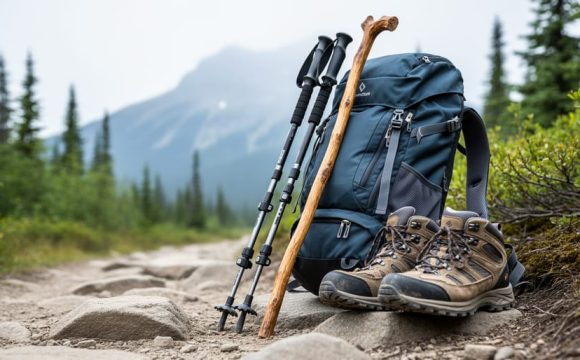
If you’re a gear-savvy hiker weighing guided against self-guided, think about how much route-finding you enjoy. A guide handles the logistics, but you still carry your own boots, layers and daypack. Whichever tour you pick, it pays to train for hiking beforehand so you can enjoy the trail rather than just survive it. And since difficulty and meeting location vary by listing, confirm both before you book. Good gear and a little prep make any of these trips better.
What to Pack for a Guided Hiking Tour
Even on an all-inclusive trip, you’ll usually still carry your own personal kit, so it pays to pack smart. We always start with the essentials below, then confirm anything specific on your tour’s listing, since what’s provided varies by operator.
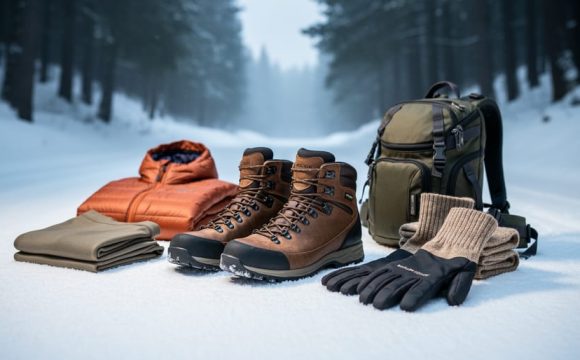
- Broken-in hiking footwear: blisters on day one can wreck a whole trip.
- A layering system: thin, adjustable clothing you add or remove as conditions change.
- A rain shell: mountain weather turns quickly, even on sunny mornings.
- A daypack: it carries everything you need between stops.
- A refillable water bottle or hydration bladder: steady sipping beats gulping at the trailhead.
- Sun protection: hat, sunglasses and sunscreen matter at any elevation.
A layering system sounds fancy, but it’s simple: a moisture-wicking base layer, an insulating middle layer like a fleece, and a protective outer shell. Three thin pieces beat one bulky coat because you can fine-tune your warmth as you climb.
Daypack capacity is measured in liters. For a guided day hike, something around 18 to 28 liters is a common sweet spot, roomy enough for layers, water and snacks without feeling like a full expedition pack. Pick one with padded shoulder straps and, ideally, a hip belt so the weight sits comfortably.
US Hiking Tour FAQs
Are guided hiking tours worth it?
For most beginners, yes. A guide handles route-finding and logistics, and operators like Wildland Trekking build trips around small groups and expert guides. If you’re unsure where to start, our guide on how to plan a hiking trip will help you decide whether to go guided or self-guided.
Do I need to be experienced?
Not necessarily, but fitness expectations vary by tour. Difficulty levels weren’t confirmed for every listing, so check the rating and any fitness requirements on the booking page before you commit.
Are there hiking tours for seniors?
Yes. Road Scholar’s national park hiking tours are designed for adults 60 and older, and the program lists 139 hiking trips in national parks.
Can I join a tour that visits national parks, and how far ahead can I book?
Absolutely. Backroads includes parks such as Zion, Yellowstone, Glacier and Acadia, and its date filter runs from November 2026 through September 2029, so you can plan well ahead.
A few practical notes before you book. Meeting locations and exact difficulty can differ from one departure to the next, so confirm both on the listing rather than assuming. Even on an all-inclusive trip, you’ll usually bring your own footwear, layers and daypack. Run through a hiking essentials checklist so nothing gets left behind. If your route involves steep climbs or long descents, trekking poles can take a surprising amount of strain off your knees.
So here’s where we land. Wildland Trekking is the pick for small groups and expert guides on hiking and backpacking trips. Road Scholar suits adults 60+ who want a national-parks focus. Backroads works well if you like a wide menu of destinations and want to plan far ahead.
Before you commit to anything, check the tour listing itself. Price, difficulty and meeting location can differ from trip to trip, and the provider’s page is the place to confirm them. We’d also read exactly what’s included, since “all-inclusive” can mean different things from one operator to the next.
The best tour is the one that matches your pace and your park wishlist. If you dream of Zion or Yellowstone, start there and work backward to a provider. If you’re newer to the trail, lean toward smaller groups and strong guide support. And once you’ve picked, don’t forget the gear side of things: broken-in boots and a comfortable daypack go a long way. Happy trails, and we’ll see you out there.