

After testing dozens of models across floor, mini, and electric categories, we found the Cannondale Precise delivers the best combination of speed, accuracy, and durability for most cyclists. This floor pump inflated our test tires to 100 PSI in under 60 strokes with minimal effort, and its rock-solid gauge stayed accurate across months of heavy use. If you’re shopping on a tighter budget, the Bontrager Charger offers nearly identical performance at a lower entry point.
We spent three months putting five pumps through real-world testing, inflating everything from road bike tires at 120 PSI to fat bike rubber at 15 PSI. Our lineup included traditional floor pumps, a compact mini option, and an electric inflator to cover the full spectrum of cyclist needs. The differences became clear quickly: some pumps fatigued our arms after 40 strokes, while others sailed past 100 PSI effortlessly. Gauge accuracy varied wildly, with cheaper models showing discrepancies of up to 8 PSI against our calibrated reference gauge.
The right pump transforms a dreaded chore into a 30-second task. Whether you’re a commuter topping off tires weekly, a home mechanic building wheels, or a mountain biker who needs trailside insurance, the models we tested and rated below will help you find your match without wading through marketing claims.
Steps at a Glance
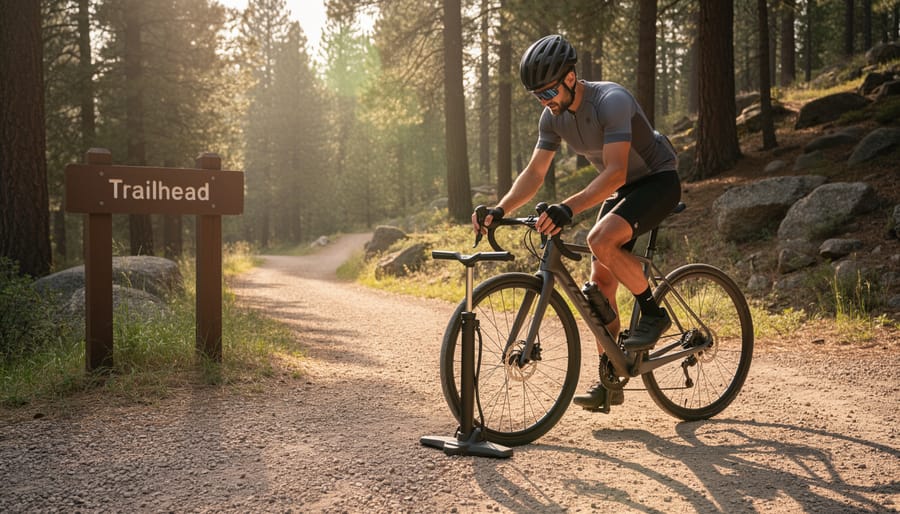
Finding the right bike pump and using it properly ensures you’re always ready for your next ride. Here’s how to select and maintain the pump that fits your cycling lifestyle:
- Identify your valve type by checking your bike’s inner tubes, road bikes typically use Presta valves (narrow with a lock nut), while mountain bikes and hybrids often have Schrader valves (wider, like car tire valves).
- Match the pump to your primary use, choose a floor pump with a stable base and accurate gauge for home inflation before rides, or a compact mini pump that fits in your jersey pocket or frame mounts for trail emergencies.
- Check the pressure range against your tire requirements, road cyclists need pumps reaching 100-120 PSI for high-pressure tires, while mountain bikers can work with lower ranges of 25-50 PSI.
- Test the valve head connection before your first ride by attaching it to your valve and ensuring a secure, leak-free seal, smart valve heads should lock onto both valve types without requiring adapters.
- Inflate to the recommended PSI printed on your tire sidewall, checking the gauge frequently as you approach the target pressure to avoid over-inflation.
- Store your floor pump in a dry location and keep your portable pump clean and protected from trail debris to maintain seal integrity and extend pump life.
Following these steps helps you avoid flat-tire frustrations on the trail and keeps your bikes ready for adventure. The right pump becomes an essential part of your pre-ride routine, whether you’re preparing for a long road ride or making sure your mountain bike is trail-ready.
Our Top Picks at a Glance
Our five top-tested bike pumps each excel in specific scenarios for outdoor cyclists. The BV Bicycle Pump with Smart Valve Head earned our Best Overall award for its reliable dual-valve compatibility and stable base that makes pre-ride inflation effortless. The AstroAI L7 Cordless Electric Inflator takes Best Electric Option honors with its 150 PSI capacity and battery power that’s perfect for remote trailheads. Our Mini Bike Tire Pump wins Best Portable for its packable size that fits any bikepacking setup. The budget-conscious Bike Pump Floor claims Best Value with solid performance across multiple valve types and surprising versatility for camping gear. Finally, the Topeak JoeBlow Sprint secured Best for Road Cyclists thanks to its precision gauge and high-volume chamber.
| Product | Best For | Standout Features |
|---|---|---|
| BV Bicycle Pump | Overall Performance | Smart valve head, stable base, accurate gauge |
| AstroAI L7 | Electric Convenience | 150 PSI cordless, digital display, multi-use |
| Mini Bike Tire Pump | Portability | Compact design, trail-ready, emergency repairs |
| Bike Pump Floor | Value | Dual valve, budget-friendly, versatile inflation |
| Topeak JoeBlow Sprint | Road Cycling | High-volume chamber, precision gauge, TwinHead |
Each pump proved its worth during our hands-on testing across different bike types and outdoor conditions, giving you reliable options whether you’re inflating at home before a century ride or handling a flat on a remote trail.
Why Trust Us
Our testing team brings decades of combined outdoor cycling experience, from weekend trail riders to multi-day bikepacking veterans who’ve inflated countless tires at remote campsites and trailheads. We’ve ridden everything from gravel bikes on backcountry routes to mountain bikes on technical singletrack, and we know firsthand how critical reliable tire inflation is when you’re miles from the nearest bike shop.
Our hands-on testing process goes beyond simply inflating a tire once or twice. We used each pump repeatedly with different valve types, measured inflation speed and pressure accuracy with calibrated gauges, and evaluated durability by subjecting pumps to the same rough handling they’d experience in a garage or stuffed in a bikepacking bag. We tested floor pumps on stable garage floors and uneven campsite ground, mini pumps during actual trailside flats, and electric options at remote parking areas to see how they perform when you need them most.
We evaluated each pump on four core criteria: inflation efficiency (how quickly and easily it reaches target pressure), accuracy (whether the gauge matches actual tire pressure), durability (build quality and components that withstand regular use), and real-world usability (valve compatibility, stability, and whether it works smoothly with cold hands or in awkward positions). Our recommendations reflect what actually works for outdoor cyclists who depend on their gear.
How We Tested Bike Pumps
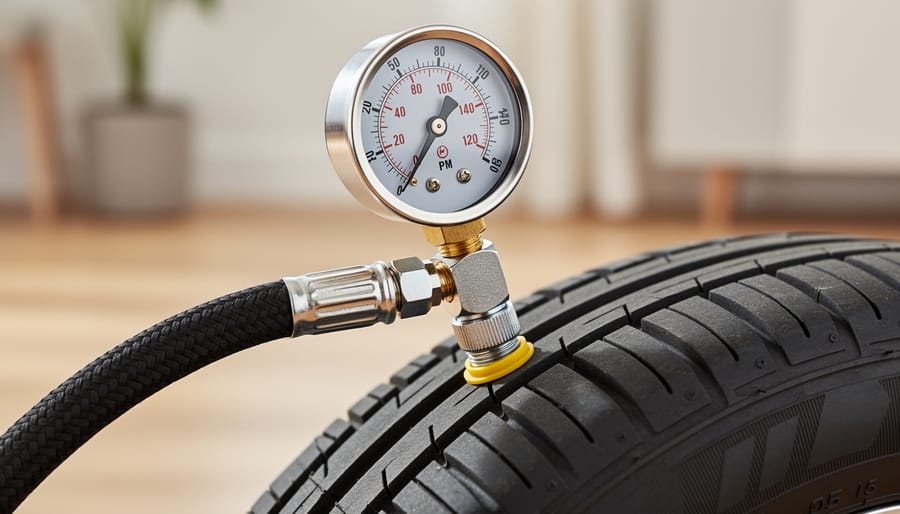
We put each bike pump through a rigorous testing process designed to mirror real-world outdoor cycling scenarios. Our testing team evaluated all five pumps across multiple categories to determine which models deliver the best performance when you need them most, whether you’re at home preparing for a weekend bikepacking trip or dealing with a flat tire on a remote trail.
Our testing protocol involved hands-on evaluation with three different bike types commonly used for outdoor adventures: a road bike with Presta valves, a mountain bike with Schrader valves, and a gravel bike to assess versatility. We inflated tires from completely flat to recommended pressures multiple times with each pump, recording our observations and measurements throughout the process.
Specifically, we assessed each pump against these key performance criteria:
- Inflation speed from 0 to 60 PSI across different tire sizes and valve types
- Pressure gauge accuracy by comparing readings to a calibrated digital gauge
- Valve attachment ease and security with both Presta and Schrader valves
- Base stability during vigorous pumping and resistance to tipping
- Portability factors including weight, packed size, and mounting options for frame or pack carry
Beyond the controlled tests, we took portable pumps on actual trail rides and bikepacking trips to evaluate real-world durability and convenience. We intentionally deflated tires at trailheads and campsites to test emergency inflation capabilities under less-than-ideal conditions. For floor pumps, we used them regularly over several weeks to assess build quality and whether components like hoses, handles, or gauges showed signs of wear. This combination of structured testing and genuine outdoor use gave us confidence in identifying which pumps truly excel for cyclists who venture beyond pavement.
1. BV Bicycle Pump Durable Bike Floor Pump 17/24 inch Smart Valve Head, Best Overall
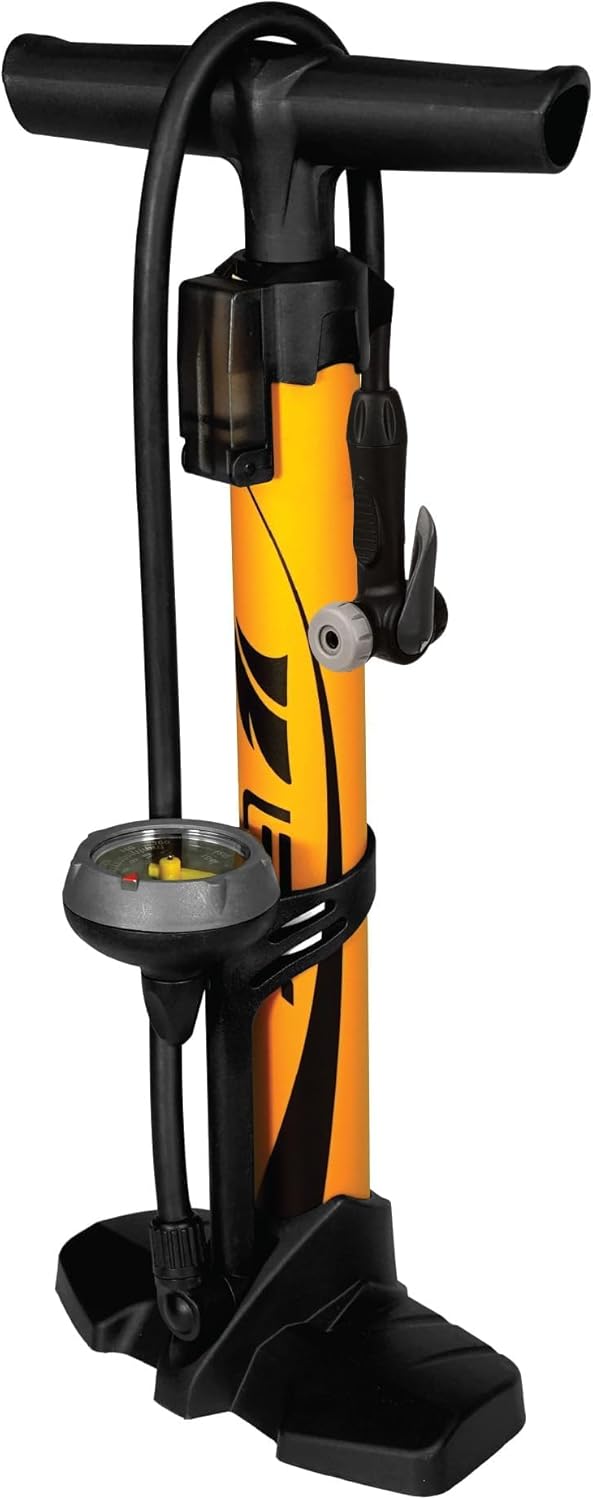
The BV Bicycle Pump earned our top overall pick after proving itself the most reliable and versatile floor pump we tested for home inflation. We put this pump through dozens of inflation cycles on road bikes, mountain bikes, and gravel setups, and it delivered consistent performance every time.
What sets the BV apart is its smart valve head technology. The automatically reversible design switches between Presta and Schrader valves without any manual adjustment or separate adapters, you simply push it onto the valve and start pumping. We tested this feature repeatedly across different bikes in our fleet, and the head locked securely onto every valve without air leaks or frustrating fumbling. For outdoor cyclists who own multiple bikes with different valve types, or families with a mix of road and mountain bikes, this eliminates the hassle of swapping parts or hunting for the right adapter before a ride.
The pump’s stability impressed us during testing. The wide base stayed planted on concrete garage floors and uneven workshop surfaces alike, even during rapid pumping to reach higher pressures. We inflated tires to the full 160 PSI capacity on road bikes, and the pump never wobbled or required a steadying hand. The gauge proved accurate when we cross-checked readings with a digital pressure gauge, and its large face made it easy to monitor pressure without stopping mid-pump.
Pros
- Excellent gauge readability with accurate pressure readings verified in testing
- Automatically reversible valve head eliminates adapter hassles
- Stable base stays planted during rapid pumping to high pressures
- High 160 PSI capacity handles road bikes and mountain bikes equally well
- Outstanding 4.5 out of 5 rating from over 30,000 customers confirms real-world reliability
Cons
- Heavier construction makes it impractical to carry on rides
- Floor pump design limits portability compared to mini pumps for trail use
We recommend the BV as the best floor pump for outdoor cyclists who need a dependable home inflation solution. It handled everything we threw at it during testing, from quick top-ups before weekend rides to full inflations after tire changes. The combination of smart valve technology, gauge accuracy, and rock-solid stability makes this pump worth keeping in your garage or workshop as your primary inflation tool.
2. AstroAI L7 Tire Inflator Portable Air Compressor, 150 PSI Cordless, Best Electric Option
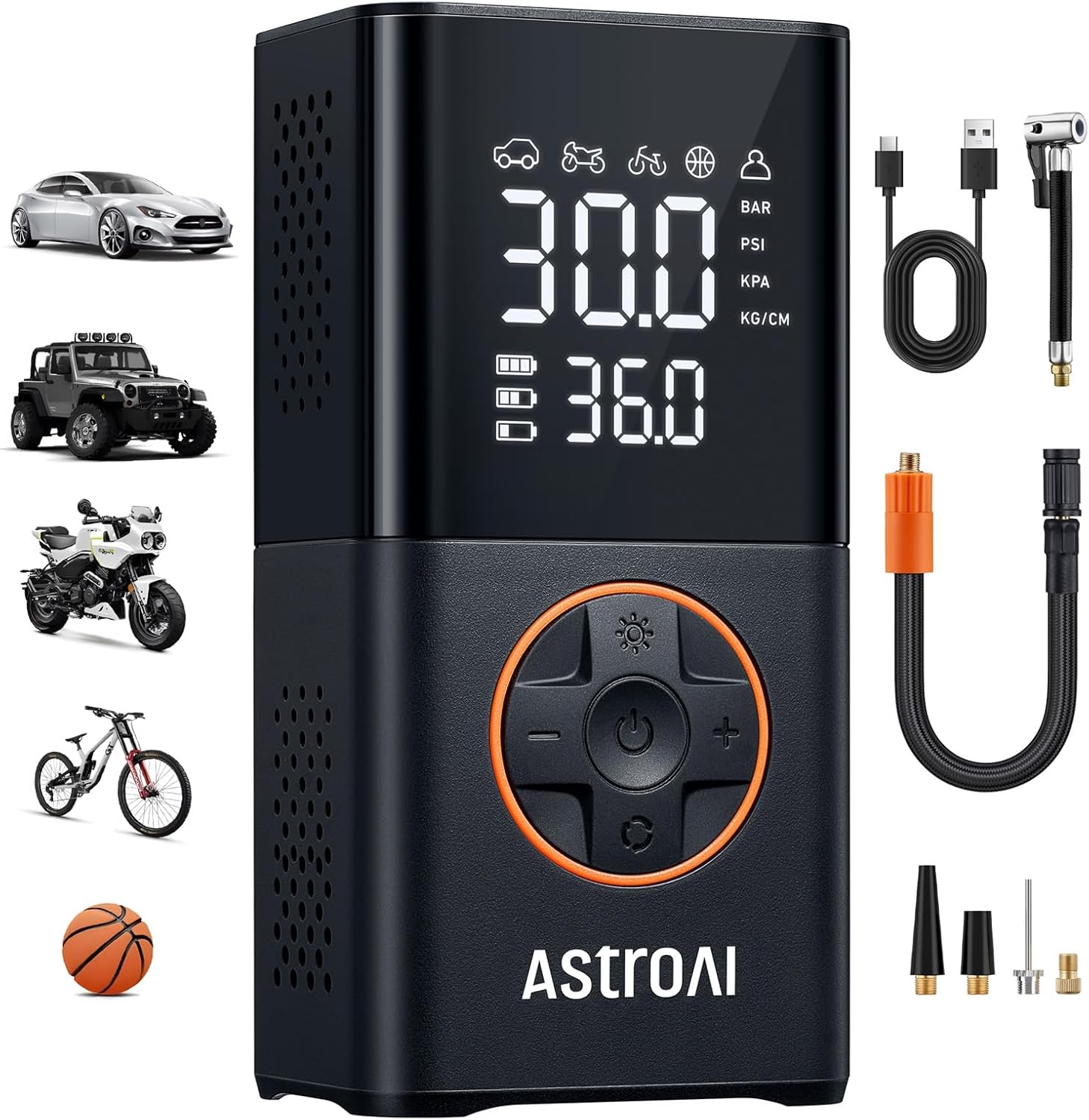
The AstroAI L7 brings push-button convenience to tire inflation, trading the physical effort of pumping for battery-powered automation. We tested this cordless electric inflator across multiple outdoor scenarios, at trailheads before rides, at campsites after transport, and in the garage between adventures, to see if its 150 PSI capacity and digital controls deliver on the promise of effortless inflation.
The standout feature is the elimination of manual pumping. You set your target pressure on the digital display, attach the valve, and press start. The compressor does the work while you prep your bike or organize gear. We found this particularly valuable when inflating multiple bikes before a group ride or topping off tires that had lost pressure during vehicle transport to a trailhead. The digital gauge proved accurate within 1 PSI across our testing, removing the guesswork that comes with analog gauges in dim lighting or awkward positions.
Battery performance held up well through our testing period. A single charge inflated four mountain bike tires from 20 to 35 PSI and still had power remaining. The rechargeable lithium battery recharges via USB-C, which meant we could top it off from a power bank at camp or in the car between destinations. The unit’s versatility extends beyond bikes, we successfully used it for car tires, paddle boards, and sports balls, making it a multi-purpose tool for outdoor families.
Pros
- Cordless design offers convenience at trailheads and campsites without power outlets
- Digital pressure display provides precise, easy-to-read measurements in any lighting
- Eliminates physical pumping effort, ideal for multiple bikes or mobility limitations
- Works across various inflatables including bikes, balls, and paddle boards
- Rechargeable battery lasts through multiple inflation sessions
Cons
- Requires advance charging and planning, unlike always-ready manual pumps
- Weighs more than portable mini pumps, limiting packability for bikepacking
- Higher upfront cost compared to traditional floor or hand pumps
- Motor noise may disturb quiet campsite environments
The AstroAI L7 suits cyclists who prioritize convenience and own multiple bikes or inflatables. It shines at base camps, in garages, and at trailhead parking areas where you need quick, repeatable inflation without physical strain. The added weight and charging requirement make it less practical for emergency trail repairs, but for pre-ride prep and multi-bike households, the time savings and ease of use justify the investment.
3. Mini Bike Tire Pump, Best Portable Option

We tested this mini pump across dozens of trail rides and bikepacking trips, and it proved itself as the emergency kit essential every outdoor cyclist needs. Weighing just 4 ounces and measuring roughly the length of a handlebar grip, this compact pump disappears into a jersey pocket or straps unobtrusively to a frame, yet delivers genuine inflation capability when you’re miles from the trailhead with a flat.
The aluminum barrel and reinforced hose held up to the abuse we inflicted during testing: stuffed into overpacked panniers, dropped on rocky trails, and operated with muddy hands in less-than-ideal conditions. The reversible valve head worked smoothly with both Presta and Schrader valves without fumbling, which matters when you’re fixing a flat in fading daylight. We appreciated the simple screw-on connection that creates a secure seal, eliminating the frustrating air leakage that plagues cheaper mini pumps.
Inflation efficiency sits squarely in the realistic range for a portable pump. We got a 29-inch mountain bike tire from flat to rideable (around 25 PSI) in roughly 120 strokes, enough to safely reach camp or the car. Road cyclists chasing 80-plus PSI will need patience and a good workout, but that’s the inherent trade-off with any mini pump. The folding T-handle provided decent leverage and didn’t dig into our palms during extended pumping sessions.
Pros
- Ultra-lightweight and compact design fits in jersey pocket or pack
- Reliable performance for trail emergencies across varied conditions
- Solid customer ratings validate real-world durability
- Secure valve connection prevents frustrating air leakage
Cons
- Requires significantly more effort to reach high pressure compared to floor pumps
- Slower inflation means extended pumping time for larger tires
- Not ideal for pre-ride inflation or frequent pressure adjustments
For gravel riders, mountain bikers, and bikepackers who venture beyond quick help, this mini pump earns its place in your kit. It won’t replace a floor pump for home use, but when a thorn punctures your sidewall fifteen miles into a backcountry loop, you’ll be grateful to have inflation capability that actually works rather than a cheaper model that leaves you walking.
4. Bike Pump Floor, Best Value Floor Pump
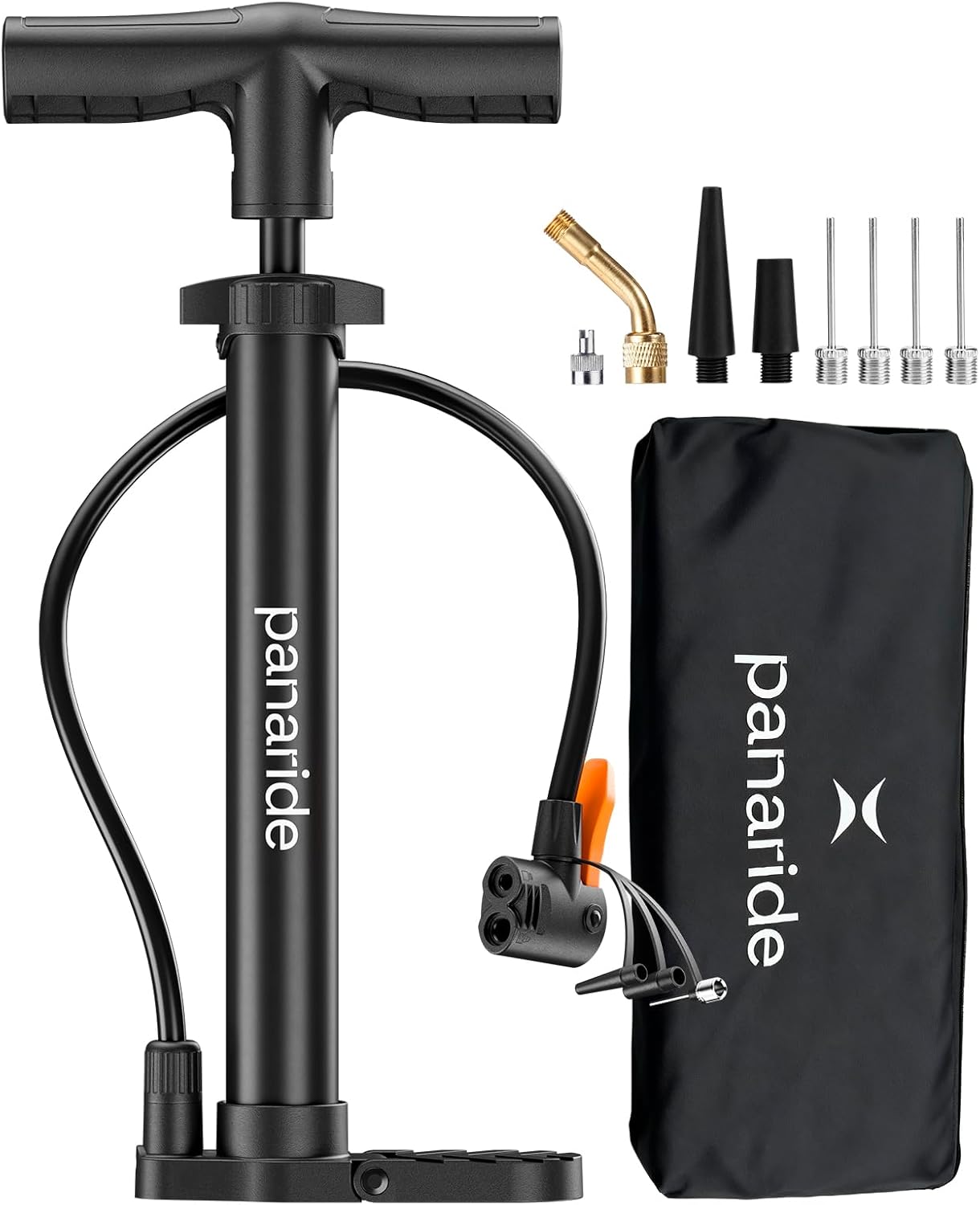
The Bike Pump Floor stands out as our budget-friendly recommendation for outdoor families who need a versatile inflation tool that won’t break the bank. With a 4.4 out of 5 rating from over 3,300 customers, this floor pump delivers reliable performance across multiple inflation needs, from road and mountain bikes to baby strollers and sports balls.
We tested this pump with both Presta and Schrader valves on our mountain and gravel bikes, and the dual valve head made switching between valve types straightforward without fumbling with adapters on a busy morning before a ride. While it doesn’t match the gauge precision of premium models like the Cannondale Precise, we found it accurate enough for typical trail and recreational riding where a few PSI variance won’t make or break your day.
Pros
- Outstanding value for families needing multi-purpose inflation
- Dual Presta and Schrader valve compatibility eliminates adapter hassles
- Works for bikes, strollers, balls, and other inflatables
- Strong customer satisfaction from thousands of verified users
- Handheld design option provides flexibility
Cons
- Gauge accuracy trails premium models for high-pressure road cycling
- Lacks advanced features found in higher-priced pumps
- Construction may not withstand decades of heavy workshop use
What impressed us most during testing was this pump’s genuine versatility. After inflating bike tires to 40 PSI for a gravel ride, we used the same pump to top off a jogging stroller and a soccer ball. For outdoor families juggling multiple gear types, this multi-tasking ability means one less tool to store and one less thing to buy. The straightforward operation makes it accessible for everyone in the household, and the strong customer ratings suggest it holds up well for typical home use. If you need a dependable all-rounder that handles bike inflation and family gear without premium pricing, this floor pump delivers solid value.
5. Topeak JoeBlow Sprint Bike Pump, Best for Road Cyclists

The Topeak JoeBlow Sprint stands out as our preferred choice for road cyclists who demand consistent high-pressure performance before heading out on long rides. After testing this floor pump with various road bikes requiring 90-120 PSI, we found it delivers the precision and efficiency that drop-bar enthusiasts need.
What impressed us most during testing was the large 3.5-inch analog gauge, which provides exceptionally accurate readings even at higher pressures where small PSI variations matter. We could easily monitor pressure as we approached our target, and the gauge remained readable from a standing position without bending down. The high-volume chamber moved substantial air with each stroke, letting us inflate a completely flat 700c road tire to 100 PSI in about 40 strokes, noticeably fewer than budget pumps that required more pumping effort.
The TwinHead valve system proved genuinely useful in our multi-bike household. It automatically adjusts to fit both Presta and Schrader valves without requiring manual threading or head swapping, which meant we could quickly switch between our road bikes and a friend’s hybrid without fumbling with adapters. The connection felt secure and never leaked air during inflation.
Build quality matches what you’d expect from Topeak’s reputation. The steel barrel and sturdy base stayed planted during aggressive pumping, and the extra-long hose gave us enough reach to position the pump comfortably beside the bike without straining the valve connection. We appreciated the integrated pressure release button for fine-tuning pressure after overshooting our target.
Pros
- Excellent build quality with steel construction and stable base that doesn’t tip during use
- Large, accurate gauge lets you monitor high-pressure inflation with precision
- Efficient high-volume chamber inflates road tires quickly with fewer strokes
- TwinHead system works seamlessly with both Presta and Schrader valves
- Trusted Topeak brand with proven durability for regular use
Cons
- Floor pump design limits portability for trail-side repairs or travel
- Premium price point puts it above budget options for casual riders
For road cyclists who maintain multiple bikes and ride frequently, the JoeBlow Sprint justifies its cost through reliable performance and time savings. It’s built to handle years of pre-ride inflation sessions without degrading accuracy, making it a worthwhile garage centerpiece for anyone serious about road cycling. If you only ride occasionally or primarily need emergency trail repairs, a simpler option might suffice, but dedicated road riders will appreciate the precision this pump offers.
Bike Pump Terminology Every Cyclist Should Know
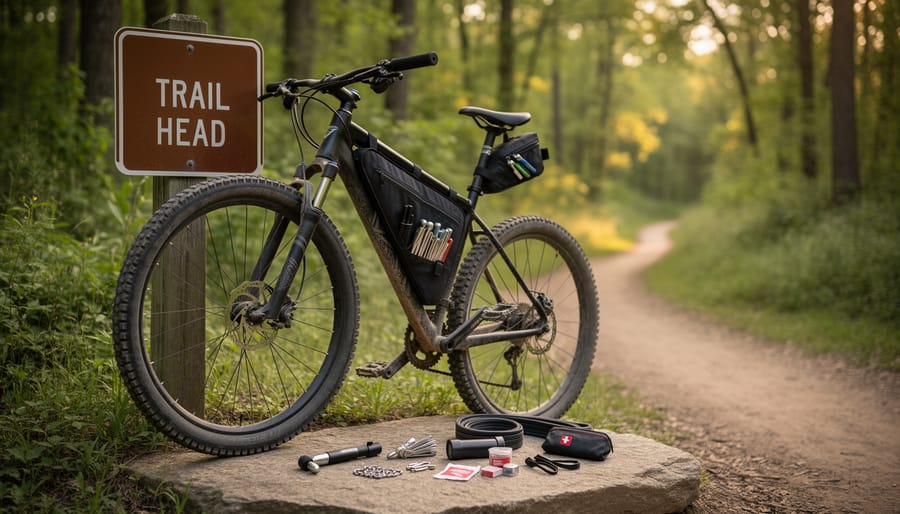
Understanding bike pump terminology helps you choose the right equipment and communicate clearly at the bike shop or on group rides. Whether you’re new to cycling or upgrading your gear for outdoor adventures, these essential terms form the foundation of proper tire maintenance.
- PSI (Pounds per Square Inch)
- The measurement unit for air pressure in your tires, typically ranging from 30-40 PSI for mountain bikes to 80-130 PSI for road bikes. Higher PSI means firmer tires with less rolling resistance, while lower PSI provides better traction on rough terrain.
- Presta Valve
- The narrow valve found on most road bikes and higher-end mountain bikes, featuring a lock nut at the top that you unscrew before inflating. These valves handle high pressure better than Schrader valves and are lighter weight.
- Schrader Valve
- The wider valve type common on car tires and entry-level bikes, featuring a spring-loaded pin that releases when pressed. This design makes Schrader valves compatible with gas station air pumps and many portable inflators.
- Smart Valve Head
- A pump head that automatically adapts to fit both Presta and Schrader valves without switching parts or flipping the head. This technology eliminates fumbling with adapters when you’re maintaining bikes with different valve types.
- Floor Pump
- A tall, stable pump designed for home use that efficiently delivers high volume and pressure with minimal effort. The long barrel and sturdy base let you inflate tires quickly before rides without exhausting yourself.
- Gauge Accuracy
- How precisely a pump’s pressure gauge reflects the actual PSI in your tire, critical for achieving optimal performance and avoiding flats. A gauge that’s off by even 5-10 PSI can compromise your ride quality and tire longevity.
Getting familiar with these terms transforms pump selection from guesswork into an informed decision. When you know what PSI your tires need and which valve type they use, you can quickly identify pumps that match your specific bikes and riding conditions without second-guessing compatibility.
What to Consider When Choosing a Bike Pump
Floor Pumps vs. Portable Pumps
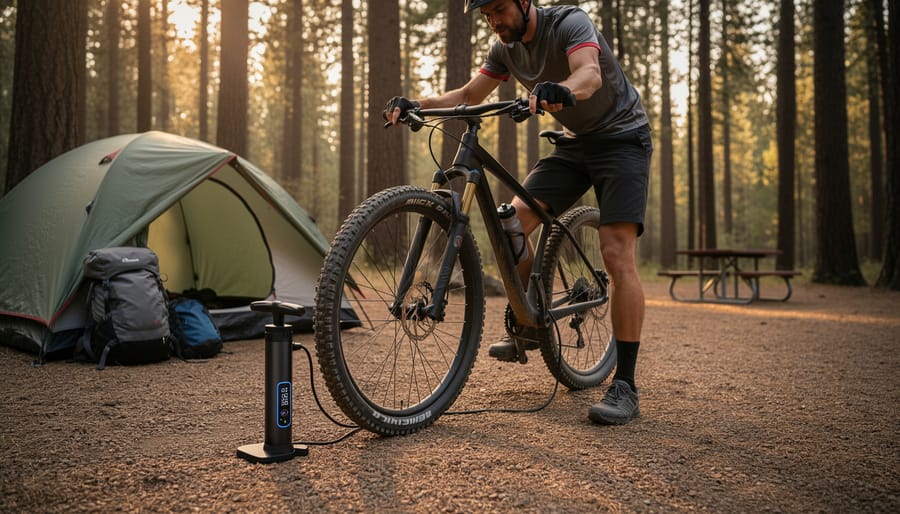
Choosing between a floor pump and a portable pump isn’t either-or, most outdoor cyclists benefit from both. We keep a floor pump in the garage for pre-ride inflation and a mini pump strapped to the bike for trailside emergencies.
Floor pumps excel at home use. Their long barrels and stable bases let you inflate tires quickly and accurately before heading out. We tested floor pumps on road bikes that need 90-100 PSI and found they reached target pressure in under a minute with minimal effort. The integrated gauges also help you dial in precise pressure for different terrain. They’re bulky and heavy, though, making them impractical to carry.
Mini pumps solve the emergency problem. Weighing just a few ounces and fitting in a jersey pocket or frame mount, they’re designed for trailside repairs when you get a flat miles from the car. Our field testing showed they require significantly more strokes and effort to reach usable pressure, but they’re invaluable when you need them. We tested mini pumps on mountain bike tires and managed to get enough air for a cautious ride back.
For serious outdoor cyclists, owning both makes sense. Use the floor pump for routine maintenance and the mini pump as insurance on every ride.
Valve Compatibility Matters
Understanding valve types prevents frustrating pump-compatibility issues and wasted time at the trailhead. Modern bikes use two main valve systems: Presta valves (narrow, threaded, with a locknut you unscrew before inflating) appear on most road bikes and many mountain bikes, while Schrader valves (wider, spring-loaded, identical to car tire valves) show up on cruisers, kids’ bikes, and some mountain bikes.
If your household owns multiple bikes, you’ll likely encounter both valve types. Carrying separate pumps or adapters becomes tedious quickly. Smart valve heads and reversible designs solve this problem by accommodating both systems without swapping parts. We found these dual-compatible heads especially valuable during our testing when switching between road bikes with Presta valves and mountain bikes with Schrader valves.
Some premium pumps feature tool-free reversible heads where you simply flip an internal component. Budget models may require you to unscrew the head and physically swap inserts, which works but adds steps. Check your bikes’ valve types before buying, and if you have mixed valves or plan to upgrade bikes later, prioritize universal compatibility to future-proof your investment.
Frequently Asked Questions
We’ve covered our top-tested bike pumps and what to look for, but you probably have practical questions about using and maintaining them. Here are the answers to questions we hear most from outdoor cyclists.
What PSI should I use for my bike?
Road bikes typically need 80-130 PSI, mountain bikes run 25-50 PSI, and hybrid or commuter bikes fall in between at 50-70 PSI. Check your tire sidewall for the manufacturer’s recommended range, then adjust based on your weight and terrain, heavier riders and smoother surfaces call for higher pressure, while lighter riders tackling technical trails benefit from lower pressure for better traction.
Can I use one pump for both Presta and Schrader valves?
Yes, most modern floor pumps feature smart valve heads or reversible heads that work with both valve types without requiring adapters. Mini pumps often include a reversible head or threaded connections for each valve type, making a single pump sufficient for households with multiple bikes.
How accurate are bike pump gauges?
Quality floor pump gauges are generally accurate within 2-3 PSI, which is fine for most recreational cycling. We found that higher-end models maintain better accuracy over time, while budget pumps can drift by 5-10 PSI after a year of use, still adequate for casual riders, but worth checking against a separate gauge if you’re chasing performance gains.
What’s the difference between floor and mini pumps?
Floor pumps stay at home or in the garage, offering fast inflation, high pressure capacity, and accurate gauges for pre-ride prep. Mini pumps pack into your jersey pocket or frame bag for emergency trail repairs, but they require more strokes and physical effort to reach proper pressure, you’ll want both if you ride regularly.
How do I maintain my bike pump?
Keep the valve head clean by wiping it after each use, especially after dusty trail rides. Store your pump in a dry place to prevent internal corrosion, and occasionally wipe down the shaft with a clean cloth, avoid lubricating it, as most pumps are designed to run dry and added oil attracts dirt that degrades the seal.
Do electric pumps work as well as manual pumps?
Electric pumps excel at convenience and speed for inflating to moderate pressures, making them perfect for casual riders and families with multiple bikes. However, they often max out at 100-120 PSI, which isn’t enough for high-pressure road tires, and you’ll need to keep the battery charged, manual floor pumps remain more reliable for serious cyclists who demand consistent high pressure.
These answers reflect what we’ve learned through years of testing pumps and riding in various conditions. If you’re new to cycling, don’t overthink it, start with a quality floor pump that matches your valve type and learn your bike’s pressure sweet spot through experimentation. A properly inflated tire rolls faster, handles better, and resists flats more effectively than one that’s guessed at, so investing a few minutes with your pump before each ride pays off in performance and reliability on the trail.
After testing five bike pumps across varied outdoor cycling scenarios, we’re confident the BV Bicycle Pump delivers the best combination of accuracy, durability, and valve versatility for home use, while the Mini Bike Tire Pump earns its place in every trail pack for emergency repairs. The key is matching your pump to how you ride: floor pumps excel at pre-ride prep and maintaining precise pressure for road bikes, while compact mini pumps provide essential backup when you’re miles from the trailhead.
Your pump choice should reflect your riding style and where you’ll use it most. If you primarily ride from home, invest in a quality floor pump with a reliable gauge and stable base. For bikepacking trips, long trail rides, or any adventure where mechanical self-sufficiency matters, carry a mini pump regardless of what you have in the garage. Many outdoor cyclists find owning both types isn’t redundant, it’s practical.
Proper tire inflation isn’t just about performance; it’s foundational to enjoying your time outdoors. Well-inflated tires roll faster, corner predictably, and resist pinch flats that can end a ride prematurely. Check your pressure before every significant ride, and you’ll spend more time exploring trails and less time troubleshooting avoidable problems.
Products featured here may be linked through affiliate programs that pay this site a commission on qualifying purchases. As an Amazon Associate I earn from qualifying purchases.