
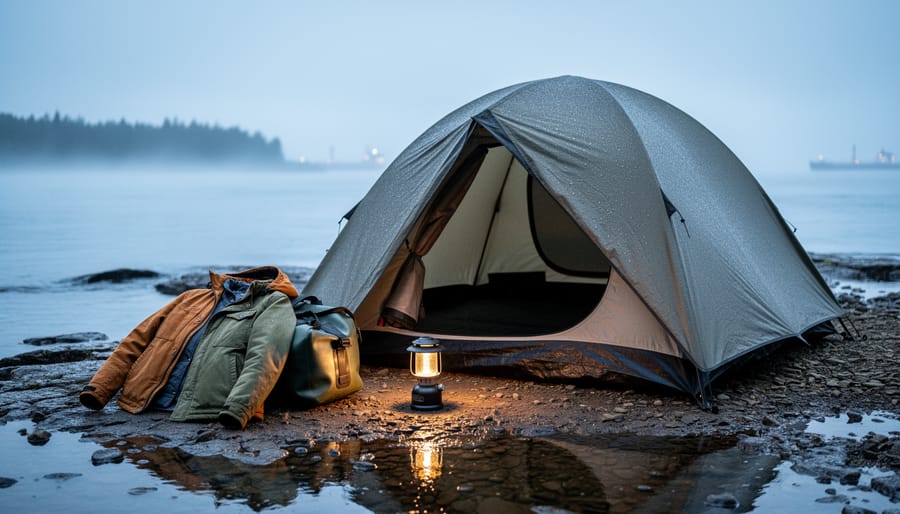

Planning a camping trip to Rivière-du-Loup means preparing for Quebec’s unpredictable St. Lawrence coastal climate, where fog can roll in by afternoon and temperatures drop sharply after sunset. Success here depends on choosing the right campground for your setup and packing gear that handles humidity, wind, and rapid weather shifts without weighing you down.
The region offers two main municipal options: Camping Du Quai, open May 1 to October 12, 2026, with over 160 sites including 88 full-service voyageur spots, and Camping municipal de la Pointe, featuring 118 serviced emplacements and 12 no-service sites for minimalist campers. Both sit close enough to the waterfront that you’ll feel the marine influence, especially at dawn and dusk when damp air settles in.
Your packing list needs to account for Rivière-du-Loup’s unique position where the river widens into an estuary. That means layers for sudden temperature swings, a reliable tent with proper ventilation to combat condensation, and rain gear that performs in sustained drizzle rather than just brief showers. Spring and fall visitors can take advantage of Camping Du Quai’s off-season rate of 39 dollars per night, but the cooler months demand even more attention to insulation and moisture management.
This guide walks you through campground selection based on your rig and comfort level, breaks down the essential gear categories for coastal Quebec camping, and provides a clear planning timeline so you arrive prepared for everything from afternoon thunderstorms to clear nights perfect for watching ships navigate the St. Lawrence. Whether you’re bringing a fully equipped RV or pitching a tent in one of Du Quai’s nine shaded spots, the right preparation makes the difference between a memorable trip and a soggy slog.
What You’ll Need for Rivière-du-Loup Camping
Gear for Full-Service vs. Primitive Sites
Your site choice fundamentally reshapes your packing list. At a full-hookup emplacement, like Camping Du Quai’s 88 voyageurs sites with water, electricity and sewer, or Camping municipal de la Pointe’s 118 serviced spots, you can skip the portable water containers, rechargeable battery packs and grey-water disposal totes. You’ll plug into 30 or 50 amp power for your cooler, lights and charging needs. Your focus shifts to comfort: bring appliances, electric heaters for cool coastal evenings, and cook indoors if your RV allows it.
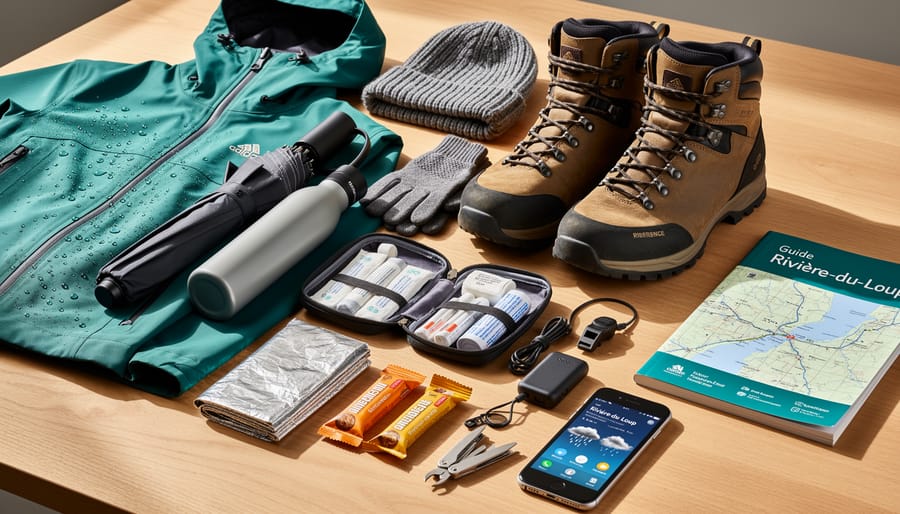
Primitive sites demand self-sufficiency. At Camping Du Quai’s 9 shaded tent sites or Pointe’s 12 emplacements sans service, you’re carrying everything. Pack collapsible water jugs (at least 5 gallons per person for a weekend), a headlamp with spare batteries, and one of the best camping stoves rated for wind resistance, the St. Lawrence shoreline gusts hard. Choose a sleeping bag rated 10°F below the forecast low; coastal humidity makes nights feel colder than inland Quebec. Two-service sites (water and electricity only, like Du Quai’s 10 options) split the difference: bring the stove and water storage, leave the battery bank home.
Safety and Weather Considerations
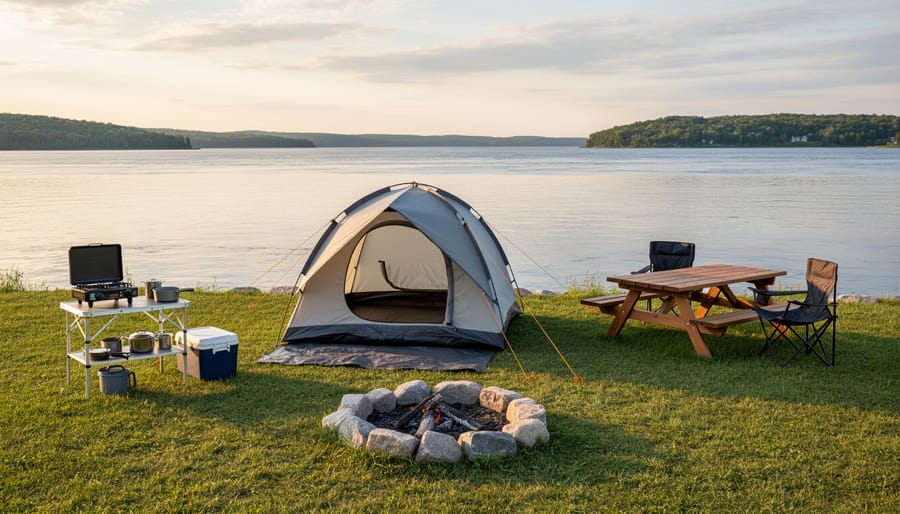
Camping near the St. Lawrence River requires careful attention to coastal weather patterns that can shift rapidly. Afternoon fog rolling in from the water can reduce visibility within minutes, and wind speeds increase noticeably as storms approach from the northeast. Check marine forecasts before your trip, not just general Quebec weather, since conditions on the coast differ from inland areas. June through August brings the most stable weather, but even summer nights can drop to 10°C (50°F), so pack insulated layers regardless of season.
Wildlife encounters in this region typically involve raccoons, porcupines, and occasionally black bears passing through from forested areas south of town. Store all food in sealed containers inside your vehicle or a hard-sided cooler, never in your tent. Hang scented items (toiletries, sunscreen, insect repellent) from a tree branch at least four metres high and two metres from the trunk. The coastal location means fewer mosquitoes than inland Quebec camping, but black flies peak in late May and early June.
Don’t camp if Environment Canada issues wind warnings exceeding 70 km/h, as tent stakes struggle in the sandy soil common to these campgrounds. Postpone your trip if thunderstorms are forecast during setup or takedown, being the tallest object near water creates lightning risk. Following standard camping safety tips matters more on the coast, where help takes longer to arrive and weather compounds minor problems into serious ones.
Step-by-Step: Planning Your Rivière-du-Loup Camping Trip
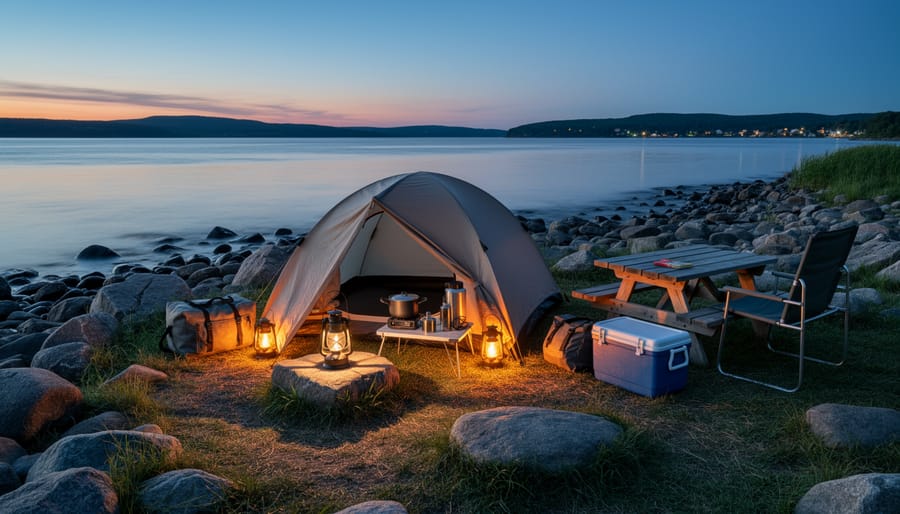
Step 1: Choose Your Campground and Site Type
Rivière-du-Loup offers two main campground choices, each suited to different camping preferences and equipment setups.
Camping municipal de la Pointe provides 118 serviced emplacements with water, sewer, and either 30 or 50 amp electricity, ideal if you’re bringing an RV or trailer that needs full hookups. They also maintain 12 emplacements sans service for campers who prefer a more primitive experience or are setting up tents without needing electrical connections.
Camping Du Quai operates from 1 May to 12 October 2026 and features more than 160 emplacements across three service categories. Their 88 sites voyageurs offer direct access plus water, electricity, and sewer, making them excellent for larger RVs and trailers. For those who need less infrastructure, they have 10 two-service sites (water and electricity only) and 9 shaded sites specifically designated for tents and tent-trailers.
Matching your site type to your equipment is straightforward. If you’re arriving with a full-size RV that requires sewer hookup, the serviced emplacements at either campground will support your setup. Tent campers can choose the unserviced sites at de la Pointe or the shaded tent areas at Du Quai. Those camping with a small trailer might find the two-service sites at Du Quai sufficient, depending on whether you need the convenience of a sewer connection or can manage with a holding tank.
Your campground choice determines what gear you’ll pack and how you’ll set up camp once you arrive.
Step 2: Understanding Site Services and What They Mean
Quebec campgrounds use specific French terminology that directly impacts what you’ll pack. An “emplacement” is simply a campsite, and understanding the service levels offered at Rivière-du-Loup’s two main campgrounds helps you plan accordingly.
Full-hookup sites (called “3 services”) provide water, sewer and electricity, typically 30 or 50 amp. These emplacements let you run your RV appliances, refrigerator and air conditioning without generator noise or battery management. You can skip the portable water containers and gray-water jugs entirely.
Two-service sites offer water and electricity but no sewer connection. You’ll need a gray-water tank or portable tote for dishwater and shower drainage, but you can still plug in your camper and fill fresh water on-site. This setup works well for shorter stays when you won’t generate much wastewater.
“Emplacements sans service” are primitive tent sites with no hookups. Here you’re packing completely self-contained: tent, sleeping system, camp stove, cooler with ice, headlamps and all water you’ll consume. No electrical shore power means battery packs for devices and traditional camping lighting.
The service level you book determines whether you’re hauling a 30-pound cooler or plugging in a residential-style fridge, plan your gear list accordingly before you reserve.
Step 3: Check Season Dates and Pricing
Before you finalize your campground choice, confirm the operating season and current rates to avoid surprises. Camping Du Quai opens 1 May and runs through 12 October 2026, covering the prime spring-through-autumn camping window on the St. Lawrence. If you’re flexible with travel dates, target their low-season promotion: $39 per night, taxes included, during spring and fall periods. That rate applies outside peak summer weeks and represents significant savings compared to high-season pricing.
Check the campground’s website or call directly to confirm exact promotional dates and whether your preferred travel window qualifies. Rates typically vary by site type (full-service emplacements cost more than two-service or tent sites), so ask about pricing for your specific service level when you inquire. Municipal campgrounds like Camping de la Pointe set their own seasonal schedules and rates, so verify those separately if you’re comparing options.
Locking in your dates early clarifies your planning timeline and helps you monitor weather patterns as your trip approaches. Confirm whether deposits are required and what the cancellation policy allows in case St. Lawrence coastal weather forces a schedule change.
Step 4: Pack Based on Your Site Selection
Once you’ve confirmed whether you booked a full-hookup emplacement or a primitive tent site, revisit your initial gear list and remove items you won’t need. If you secured one of Camping Du Quai’s 88 sites voyageurs with water, electricity, and sewer, you can leave bulky water containers at home and rely on hookups for power instead of packing extra batteries or solar chargers. Your focus shifts to comfort items, camp chairs, outdoor rugs, portable grills, rather than survival essentials.
For two-service sites (water and electricity only), you’ll need basic sewer alternatives like a portable waste tank if you’re in an RV, but you can skip hauling extra water jugs. If you chose one of the 12 emplacements sans service at Camping municipal de la Pointe or Camping Du Quai’s nine shaded tent sites, triple-check that your list includes everything from Section 2: sufficient water storage, reliable lighting (headlamps and lanterns with backup batteries), a complete cooking setup with fuel, and all shelter components.
Run through your checklist item by item, comparing what you’ve packed against your confirmed site services. This final cross-reference catches gaps before departure and prevents the frustration of arriving with either too much gear or critical missing pieces.
Step 5: Plan Your On-Site Experience
Once you’ve confirmed your site and packed your gear, shift your focus to what you’ll actually do during your stay. Start by reviewing any confirmation materials from your campground for details about check-in procedures, quiet hours, and site-specific rules. Most campgrounds provide this information at booking or via email, so read through it before you arrive rather than discovering restrictions after you’ve set up.
Consider the location itself when planning activities. Rivière-du-Loup sits on the St. Lawrence River’s south shore, positioning you within reach of coastal exploration, local trails, and the town’s walkable waterfront district. Research nearby attractions before you leave home, check municipal tourism sites for current trail conditions, beach access points, and any seasonal events that align with your travel dates. Download offline maps of the area in case cell service is spotty at your chosen campground.
Set realistic expectations for downtime at your site. Even full-hookup emplacements are still camping, not hotel stays. Plan for weather variability by having both outdoor activities (hiking, kayaking, exploring) and backup options (card games, reading, campfire cooking projects) ready. Check the forecast two days before departure and adjust your activity list accordingly, coastal weather can shift quickly.
Contact your campground directly if you have questions about specific amenities, pet policies, or equipment restrictions that weren’t clear during booking. A five-minute phone call now prevents surprises at check-in and helps you pack the right gear for the experience you’re actually getting.
How to Know Your Planning Is Complete
Your planning is complete when you can answer “yes” to every checkpoint without hesitation. Start with confirmation documentation: verify your reservation email or booking reference, confirm your arrival window fits the campground’s operating dates (1 May to 12 October for Camping Du Quai), and save contact information offline in case you need to reach the campground from the road.
Next, cross-check your gear against your specific site type. For full-hookup emplacements with water, sewer, and 30 or 50 amp electricity, confirm you have the correct power adapters and hoses. If you booked a two-service site with only water and electricity, verify you packed battery-powered lights and know how to generate power for any electronics beyond what your vehicle can charge. For primitive tent sites, run through your complete self-sufficiency checklist: water containers, portable lighting, cooking fuel, waste disposal supplies.
Check the three-day weather forecast for Rivière-du-Loup specifically, not just general Quebec forecasts. Coastal conditions near the St. Lawrence can shift quickly, so know what to expect and whether you need to adjust your arrival timing. Review your safety equipment one final time: first aid kit, emergency shelter, weather protection layers, and any wildlife deterrents appropriate for the region.
Finally, set a decision point. If conditions deteriorate or a critical gear item is unavailable, know your threshold for postponing. Having a backup weekend or refund understanding removes the pressure to proceed when conditions aren’t right.
Common Questions About Camping in Rivière-du-Loup
Planning a camping trip to Rivière-du-Loup raises practical questions about site selection, timing, and what to expect from this St. Lawrence River destination. Here are answers to the most common planning questions, based on verified campground details and the regional context covered throughout this guide.
Which campground should I choose in Rivière-du-Loup?
Camping Du Quai offers the most variety with 160+ sites ranging from full-hookup voyageur sites to shaded tent areas, while Camping municipal de la Pointe provides 118 fully-serviced emplacements plus 12 unserviced sites. Your choice depends on whether you prioritize service options or prefer specific site characteristics.
When is camping season in Rivière-du-Loup?
Camping Du Quai operates from May 1 to October 12, 2026, with low-season spring and autumn rates at $39 per night (taxes included). Check directly with campgrounds for their specific operating calendars and current availability.
Do I need different gear for the east coast location?
Yes, the St. Lawrence coastal climate requires additional weather protection including rain gear, wind-resistant tent stakes, and layered clothing for temperature fluctuations. Full-hookup sites reduce equipment needs compared to primitive tent sites.
What’s the difference between site service levels?
Full-hookup sites provide water, sewer, and 30 or 50 amp electricity; two-service sites offer water and electricity only; unserviced sites have no connections. Your service level determines which camping equipment you’ll actually need to bring.
Most planning confusion stems from matching your camping style to the right site type. If you’re bringing an RV and want full amenities, the 88 voyageur sites at Camping Du Quai or the serviced emplacements at Camping municipal de la Pointe meet that need. Tent campers have options ranging from the 9 shaded sites at Du Quai to the 12 unserviced spots at municipal de la Pointe, each requiring a different packing approach.
The verification checklist from the previous section helps you confirm you’ve addressed these questions before your departure date. Once you’ve selected your campground, confirmed your site type, and packed accordingly for Quebec’s east coast conditions, you’re ready for a successful Rivière-du-Loup camping experience.
Rivière-du-Loup offers something many east coast destinations can’t: genuine variety in camping experiences, from full-service riverside emplacements to quiet tent sites tucked under the trees. Whether you’re drawn to the 160+ site options at Camping Du Quai or the municipally-managed simplicity of Camping de la Pointe, this destination rewards thoughtful planning.
The step-by-step framework you’ve worked through, choosing your site type first, understanding what services mean for your gear needs, checking seasonal dates and pricing, then finalizing your packing, turns what could be overwhelming into manageable decisions. You’re not guessing about what to bring or hoping your equipment matches the site. You’ve built a plan that fits your camping style.
Proper gear selection matters here. The St. Lawrence coastal climate doesn’t forgive shortcuts, and arriving with the right protection for weather shifts makes the difference between a memorable trip and a frustrating one. That preparation starts with understanding your site services and packing accordingly.
Your Rivière-du-Loup camping trip is now mapped out from reservation through setup. The planning’s done. The gear’s ready. Time to go.